Showing posts with label Europe Travel Blogs. Show all posts

Tuesday, June 10, 2014

Travelore Tips: Top 10 Things To Do In Berlin


SAMSUNG CAMERA PICTURES
The second largest city in the European Union, Berlin buzzes with history, art and a vibrant air of liberal acceptance.
With its central role in World War II and the Cold War, the German capital city has been home to some of the darkest moments in modern history. Yet from these shadows of oppression and terror, today the city echoes peace and freedom of expression from nearly every corner.
In a city where every square inch is packed with history, unique street art or people ready to party and it can be difficult to narrow down the top sights. Here are ten must-sees for your next visit.
1.    Berlin Wall Memorial
wall memorial
For 28 years, the Berlin Wall divided the city and country between East and West and Capitalism and Communism. Though the wall fell in 1989, several sections still stand. The best place for an in-depth examination of the wall and its history is the Berlin Wall memorial, a collection of open-air exhibits and a visitor’s center.
2.    Brandenburg Gate
bradenbourg
Perhaps the most noticeable landmark in Berlin, the Brandenburg gate was constructed in 1791, as a sign of peace under the rule of King Frederick William II. As German politics took tumultuous turns toward anything but peace, the gate served as a backdrop to some of the country’s darkest moments.
Today this gate marks the entrance to Unter den Linden, a fashionable tree-lined boulevard in the western city center that is great for strolling. A photo here is completely necessary to prove you’ve been to Berlin.
3.    Climb German Parliament
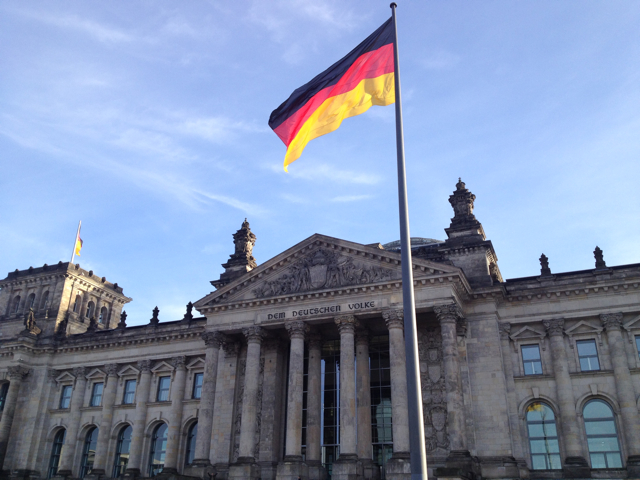
reichstag
Embellished with the phrase to the German People, and marked by a large glass dome, the Reichstag building is a dominant feature in formerly West Berlin. Construction in 1894, the Reichstag building has served as the center for several political governments. Today this building is home to the German Bundestag, or parliament, and visitors can ascend the unique Dome of the building for an interesting exhibition on German politics and sweeping views of the city.
4.    Walking tour with SANDEMAN’s New Europe
memorial
City center highlights. Royal Berlin. Red Berlin. Third Reich Berlin. Potsdam. Alternative city art…. There’s so much history in Berlin it would be a shame to not at least explore the facet that most interests you on a visit.
SANDEMAN’S New Europe provides cheap (think 20 Euros or less), informative tours with knowledgeable guides that will unite you with fellow history buffs.
5. Memorials to victims of National Socialism
memorial2
Berlin does not shy away from acknowledging the atrocities committed by Germany during World War II and the Cold War. Around the grounds of the capital are a handful of memorials that pay tribute to the hundreds and thousands of people murdered under National Socialism in Germany. Groups commemorated by these memorials include the Jewish, Sinti and Roma, gay and lesbian and politician and Soviet victims.
6.    Check Point Charlie
SAMSUNG CAMERA PICTURES
The most touristy section of Berlin lies around Checkpoint Charlie, the former crossing point between East Berlin and West Berlin during the cold war. Skip the pricey and unorganized museum, shuffle past McDonald’s and a myriad of souvenir shops to a replica of a former border sign and guard shack, and imagine how the area was almost 30 years ago.
7.    Mauerpark Flohmarkt
SAMSUNG CAMERA PICTURES
The alternative flea market in Mauerpark, located near a remaining section of the Berlin Wall, operates on Sundays. From trendy souvenirs and soap products to Soviet war medals and antiques, there’s a little bit of everything to be found here, along with a bustling, upbeat atmosphere and diverse selection of food.
8.    Nightlife
Berlin has one of the best nightlife scenes in Europe. Hopefully you will have more energy on your visit than I did and be able to experience it. Clubbing is the way to go in Berlin and top clubs include Tresor, Trust andWatergate.
9.    Berlin TV Tower
tv tower
One of the most popular attractions here, the Berlin TV Tower offers 360-degree views of the city. This is a great place to get a feel for the city’s size and layout.
10. East Side Gallery
EAST SIDE 2
The longest section of the Berlin Wall that is still standing has been transformed into an open-air art gallery. The 1.3 kilometer strip is decorated with murals dedicated to peace. Unfortunately many of the paintings have been covered with graffiti and the surrounding area is a bit gruff. This is however, a great place to take an iconic picture in front of the wall.
Contributed by Lauren, http://somethinginherramblings.com/
Follow us on Twitter: @TraveloreReport

Monday, June 2, 2014

Travelore Tips: 5 Things To Do In Salzburg, Austria

A walk from the Salzburg central station to the castle, a visit at the castle and then back again will take you past many of themost famous sites in Salzburg.
On the way you will pass stores and restaurants where you can sample the local cuisine and even a fresh produce market – the following 5 top attractions in Salzburg can be seen in one day by following the route through the old town and up to the castle.
salzburg-austria

1. Mirabellgarten

These landscaped gardens interspersed with ponds and statues are best known from the film The Sound of Music when the kids sang and danced along the edge of the ponds. The gardens are part of the Mirabell Palace grounds.
The palace was built in 1606 and the gardens were designed in the 1600s and again in the 1700s. The Pegasus Fountain dates back to 1913 and the 17th century statues around the fountain represent the four elements. Other features of the gardens include the 18th century Hedge Theatre, the Dwarf Garden and the Orangerie. The gardens are open from 6am to dusk and entrance is free.

2. Salzburg Dom

This huge baroque 17th century church has seen several reincarnations having suffered from fire, and having been renovated and enlarged on several occasion since the original church was constructed in the 700s.

The church has an impressive façade, a large dome and twin bell towers. The majestic doorways, beautiful organ and high vaulted ceilings are just some of the features. The church still holds the font where Mozart was baptized. Open from 8am to 5pm, 6pm or 7pm depending on the month and on Sundays from 1pm, entrance is free.

3. Getreidegasse

Wander through the cobbled Grain Lane where each store has an old-fashion style shingle and the window fronts are designed to look like they would have looked 100 years ago.
There are a range of stores here including the modern big brand name fashion stores but you’ll also find souvenir stores, quaint cafes and chocolate stores selling Mozart chocolates.

4. Mozart’s Home (Number 9 Getreidegrasse)

For 26 years from 1747 to 1773 Wolfgang Amadeus Mozart lived with his family on the third floor of Hagenauer House. See where he lived, furniture from the same era, memorabilia and several musical instruments he would have played.
There are documents and paintings as well as the violin Mozart played as a child. Open from 9am to 5:30pm and until 8pm in July and August. Admission is €10 for adults, €4 for youths and €3.5 for kids aged 6-14.

5. Hohensalzburg Castle

The hill top fortress was originally constructed in 1077 and is the biggest completely preserved fortress in Europe. It overlooks the city and is the number one must-see site in Salzburg.
Several rooms of the castle have been furnished in period furniture and other rooms are used to display medieval weapons. From the courtyard there are stunning views of the city below and you can enjoy a meal at the hill top restaurant.
You can take the funicular to the hill top or walk up. Open 9:00am to 5pm or 7m depending on the month. Admission, together with the funicular ride is €11 for adults and €6.3 for kids.

Contributed by 

Follow us on Twitter: @TraveloreReport

Wednesday, May 28, 2014

Travelore Tips:A Guide To The UK Airport Lounges, Luxury Comfort And Amenities For Much Less Than You Might Think


Contributed by   Follow us on Twitter @TraveloreReport

There’s a definite bonus to know when you’re about to embark on a long journey, that it’s going to start in comfort before you even board the plane. That’s what airport lounges are for, and these days, you don’t necessarily have to be holding a ticket for Seat 1A, you can buy your way in – and sometimes, it’ll work out even cheaper than sitting in a cafe in the terminal.

That’s the case when you’re travelling through the UK. Oftentimes, it’d be cheaper to check yourself into a lounge than have a meal and flick through a Hello! magazine. However, not all airport lounges are created equally – voila, here’s a guide to airport lounges in the UK, a travel industry secret.

Airport Lounges KarryOn

Travelore Tips: How To Skip The Longest Lines In Paris

Tourists from all over the world queue up outside Paris museums and monuments, but the worst lines are at the Eiffel Tower and the Louvre. You can avoid many a wait with the right pass—there’s the Paris Museum Pass, which provides entry to 60 museums over a two-, four-, or six-day period, and the pricier Paris Pass, which admits you to additional tourist attractions—but these make financial sense only if you’re planning to blitz at least two or three museums per day for at least two days in a row. Neither made sense for my family on our trip to Paris this past April: We wanted to visit museums only when it was raining, and of course we couldn't predict when rain would hit. Nor did it make sense to reserve—and prepay for—entry to the Eiffel Tower, since that would mean committing to a date and time: We wanted to ascend the Tower only when it wasn't raining and visibility was good, and of course we couldn't predict that either.
So I had to find other ways to avoid the lines. The kids were too jet lagged for us to arrive at sites early in the morning (my usual tactic for minimizing wait times), so here’s what we did:

When we arrived at the Pyramid that is the main entrance to the Louvre—on a Wednesday at 1 p.m.—the wait was more than an hour long.

So we walked three minutes away to a side door called the Porte des Lions, where there was no line at all.

As for the Eiffel Tower, we arrived on a Thursday at 10:30 a.m. The line at the elevator was 2 hours long.  …there was no line to take the stairs to the second floor, then the elevator from there to the top. (You can’t ascend the stairs beyond the second floor.) So we bought tickets to walk the 670 steps to the second floor, then ride the elevator.

Contributed by Wendy Perrin, www.cntraveler.com

Follow us on Twitter: @TraveloreReport

Monday, May 26, 2014

Travelore Tips: 5 Top Places to Visit in Croatia


Croatia looks like it may be the next big thing in European travel – the beautiful country has history, recreational facilities and plenty of nature but has not yet been overrun by tourists – here are the top Croatian locations to visit.

Screen Shot 2013-04-08 at 6.39.43 AM

1. Dubrovnik

“The Pearl of the Adriatic” and one of the country’s most famous cities, Dubrovnik is a fortified city with winding narrow cobbled lanes perched on a cliff top overlooking the sea. The city is rich with Baroque and Renaissance architecture in its pedestrian-only Old City.
There are sidewalk cafes, elegant restaurants, all the tourist amenities you could ask for and the city is framed by the green mountains (Dinaric Alps) behind the city and the white sand beaches below.

2. Hvar

Take a ferry ride out to the UNESCO island of Hvar, one of 1,000 Croatian islands. It is considered the Mediterranean’s best preserved ancient Greek landscape with rural beauty in the islands olive groves, fruit orchards, vineyards and farms.
Hvar town is a quaint town on the edge of a bay, the rest of the island has a number of small villages like Starigrad and Jelsa.

3. Split

The Roman remains in Split have put it on the map but it also has the longest coastline of any Croatian city with the Riva promenade running along the water front. The magnificent Roman UNESCO Diocletian’s Palace is a unique and well preserved architectural masterpiece used for shops, restaurants and luxury apartments.
The pine forest in the Peninsula Park adds green to the city. Visit the underground caverns, the St. Domnius Cathedral and see the Grugr Ninski Statue – the historic harbor town of Trogir is a popular day trip from Split with Venetian buildings and palaces and a 13th century island fortress.

4. Zagreb

This city looks like many of the beautiful Western European cities with many medieval buildings but with an Eastern twist. Zagreb is the country’s largest city it is located on the slopes of the Medvednica Mountains and the Sava River snakes through the city.
The city has a rich cultural life with historic theatres, a cathedral and impressive museums.  The city has urban parks, pedestrian streets and a deep and interesting history.

5. Plitvice Lakes National Park

For natural beauty visit this untouched paradise which has 16 lakes and lush forests, it is located near the Bosnia Herzegovina border in the mountain karst area. The cacophony of colors, green trees, bright blue lakes and the many colored leaves make this a nature lover’s dream.
There are a number of animals like the brown bear, lynx and wolf as well as a variety of birds including owls and eagles.  See the many waterfalls, prehistoric caves and flora and fauna as you follow the marked paths through the park.
Contributed by 
Follow us on Twitter: @TraveloreReport

Travelore Tips: 7 Free Things To Do In Rome


Rome is probably not the first destination you think of when it comes to budget travel, but the great thing is that there are so many free things to do in Rome that once you have found cheap apartments in Rome– the rest of your budget planning is easy.

The city is practically an open-air museum, and there are so many historical sites that won’t cost you a dime - to give you an idea, here are 7 free things to do in Rome …

Take A Stroll In Foro Romano

Stroll among the ruins of what once was the commercial, governmental and religious center of ancient rome and its powerful empire.
Used as a venue for public speeches, criminal trials, gladiatorial games, it was the heart of ancient Rome and one of the most important meeting places in history – an ancient beauty not to be passed up!

Toss A Coin In Trevi Fountain

Rome is home to many incredible piazzas and almost as many fountains.
One of the most famous is the Trevi Fountain, where the Swedish beauty Anita Ekberg splashed in La Dolce Vita – a scene that would become one of the most iconic in film history.
The flamboyant baroque fountain was completed in 1762 by Niccolo Salvi, and legend says that if you throw a coin in the fountain over your shoulder you will return to Rome again some day.

Visit The Pantheon

The Pantheon is the oldest standing domed structure in Rome, built in 27 B.C. as a temple honoring the Roman gods (in 609 it was converted into a Christian church).
The structure is the burial place of several famous artists, and the reason for the huge 30 ft hole in the ceiling is still a mystery.
One of the most popular explanations is that the opening was built as a sundial to illuminate the emperor as he entered on important occasions.
It’s the largest unreinforced concrete dome in the world, and a must see when in Rome.

Try Your Luck At La Bocca della Verita

Literally translated to “the mouth of truth”, this quirky sculpture is thought to once have been a piece of an ancient Roman fountain.
A legend from the middle ages has it that if you put your hand in the gaping mouth of this grotesque sculpture and tell a lie, you will pull out nothing but a stump!

Relax In Nature

For panoramic views of Rome, Park Gianicolo on Janiculum Hill is perfect!
Another great place to get away from the hustle and bustle of the huge city are the fardens at Villa Borghese, some of the largest and most beautiful gardens in Rome and a great place for a picnic.

Check Out The Free Events

Summer is the high-season for free events in Rome, with music, film and theater festivals accompany wine-tastings and food events.
The International Urban Theater Festival has plenty of spontaneous and free dance, music and acting performances throughout the city in September.
The main summer festival, Estate Romana, is dedicated to outdoor performances and practically the whole of Rome becomes a stage.
During the festival hundreds of concerts, film showings, art displays and dances are held, many of them free of charge in all sorts of places, from the ancient ruins at Ostia Antica to open squares.

Visit These Two Churches

There are many absolutely stunning churches in Rome, but you can only see so many churches until you get so sick of them that if you see another church you swear you will go mad.
But before that happens, there are two amazing churches in Rome you should take the time to visit – the first one is St. Peter’s Basilica, the largest Roman Catholic building in the world and an amazing work of art.
Make sure you rub the foot of the bronze statue of St. Peter before leaving, as it’s supposed to bring good luck!
The second church is San Clemente, which actually holds three churches in one. Made up of three levels, the lowest one is an ancient worship site, the second level is the first version of the church as a Christian worship site and the third a sanctuary from the 12th century with beautiful mosaics!
Follow us on Twitter: @TraveloreReport
Contributed by  in Destinations, Europe, Italy