Lights on the Eiffel Tower will soon be turned off more than an hour earlier at night to save electricity, the Paris mayor announced Tuesday, as Russia’s war in Ukraine deepens an energy crisis in Europe.
Mayor Anne Hidalgo said the iconic tower that is normally illuminated until 1 a.m. is only one of the city’s monuments and municipal buildings that will be plunged into darkness earlier in the evening as the French capital — like the rest of France and Europe — faces risks of power shortages, rationing and blackouts when energy demand surges this winter.
Russia has reduced natural gas supplies to several European countries as they support Ukraine, sending prices for gas and electricity surging. It’s fueled inflation and raised fears about shrinking supplies as the heating season draws near, forcing countries to enact conservation measures and relief for consumers and businesses. While some European companies have reduced or halted production as energy prices surge, the European Union is looking to pass proposals to ease the crisis.
Lights on the Eiffel Tower will be turned off after the last visitor leaves at 11:45 p.m., starting Sept. 23, Hidalgo said. Other landmarks operated by the city, such as Saint-Jacques tower and City Hall, will be turned off at 10 p.m.
“It’s a symbolic, but an important step,” Hidalgo said, brushing off criticism that Paris authorities could do more to reduce energy consumption by 10% — the target set in July by President Emmanuel Macron as part of a nationwide “sobriety plan” to conserve energy.
For safety reasons, streetlights will stay on across Paris and the ornate bridges over the Seine River also will remain illuminated at night, Hidalgo told reporters.
To align with France’s savings plan, she said she will press the government to adjust the lighting on national monuments in Paris, such as the domed Pantheon and the Arc de Triomphe, the famous Napoleonic arch that dominates the Champs-Elysees Avenue.
Paris authorities also aim to save energy by moving back when they turn on the heat in public buildings by a whole month, from mid-October to mid-November. They also plan to lower the temperature in public buildings by 1 degree, from 19 to 18 degrees Celsius (66 to 64 degrees Fahrenheit) during office hours, and to 16 C after hours and on weekends.
Facing a jump in COVID-19 hospitalizations, France’s government is trying to push through a law requiring vaccination to enter any restaurant and many other public places, and warning of tougher measures if the current surge of infections doesn’t recede.
The government on Tuesday dropped efforts to require a health pass for all workplaces, however, amid opposition from unions and employers..
French Prime Minister Jean Castex spent the day Tuesday meeting with French mayors and lawmakers to persuade them to support tougher vaccine rules.
French travelers and families, meanwhile, were flocking to virus testing tents ahead of the holidays.
France’s virus hospitalization numbers have shot up in recent weeks, with some 16,000 people currently hospitalized with COVID-19 and 60% of the country’s ICU beds occupied by virus patients, according to the state health agency. Confirmed weekly virus infections are at the highest level in France since the pandemic began.
Most are infected with the delta variant, but more than one in three new cases in the Paris region is the fast-spreading omicron variant, French government spokesman Gabriel Attal said.
“We don’t have a second to lose,” he told reporters. “The situation in the hospitals is tense.”
The French government wants a law passed by Jan. 15 requiring vaccination to enter restaurants and many public venues, he said. Currently a “health pass” is required to enter all such spaces in France, but people can get the pass with either a vaccination certificate, a negative virus test or proof of recent recovery from COVID-19.
France also is ramping up vaccination and booster efforts, with doses made available to all children 5-11 starting Wednesday. More than 89% of French people 12 and over have had at least two vaccine shots, and about 40% of adults have had three doses, Attal said.
PARIS (AP) — With “Welcome” messages in multiple languages, the Eiffel Tower greeted tourists Friday for the first time in nearly nine months, reopening to the public even as France introduces new virus rules aimed at taming the fast-spreading delta variant.
Smiles were broad and emotions palpable as the first masked visitors mounted the elevators heading to the top of the Paris monument.
“It’s such a lovely place and wonderful people...and now the wonderful Tour Eiffel,” German tourist Ila Mires said, using the French name for the tower. She came with her 19-year-old daughter before the young woman leaves for studies in Amsterdam. Seeing the tower on their last day together in Paris “is such a gift to mother and daughter,” Mires said.
The “Iron Lady” of Paris was ordered shut in October as France battled its second virus surge of the pandemic, and remained shut for renovations even after other French tourist draws reopened last month.
The tower’s reopening came four days after President Emmanuel Macron announced new measures aimed at warding off a fourth surge, including mandatory vaccinations for health workers and mandatory COVID-19 passes to enter restaurants and tourist and other venues.
Starting Wednesday, all visitors to the Eiffel Tower over age 18 will need to show a pass proving they’ve been fully vaccinated, had a negative virus test or recently recovered from COVID-19.
Masks are required, and the number of daily visitors to the tower will be limited to about half the pre-pandemic norm of 25,000.
The rules didn’t seem to scare crowds away on Friday, July 16th.
“Bienvenue - Welcome - Wilkommen - Bienvenido” flashed on a screen as families, couples and groups lined up or posed for photos beneath the tower.
“We worked, we worked, we worked (for this day). And when I saw my first visitor, I was very, very happy. Emotion and happiness,” Eiffel Tower director Patrick Branco Ruivo told reporters.
“Before COVID, it was 80% foreigners, 20% French. Last year, it was 80% French, 20% foreigners. And this year, it’s amazing because it’s fifty-fifty. And for us, it’s the time that foreigners are coming back to the Eiffel Tower,” he said.
France has opened to international tourists this summer, but the rules vary depending on which country they are coming from. While visitors are trickling back to Paris, their numbers have been far from normal levels, given continued border restrictions and virus risks.
Looking over the elegant French capital, Philippe Duval of Bordeaux and his family admired the view.
“It’s an event we didn’t want to miss,” said Duval, who was among the first to make it to the tower’s top-floor viewing deck. “To be on top of the world’s most beautiful city, what else can you ask for.”
The Musée Carnavalet in Paris is dedicated to documenting the city's history with an eclectic mixture of artifacts.
A trip to Paris is incomplete without a stop at the Louvre, but this iconic museum isn't the only one worth visiting in the City of Lights. After a five-year closure and €58 million renovation, the Musée Carnavalet is finally set to welcome visitors again starting May 29 — just in time for France's reopening to international tourists on June 9.
Opened in 1880, Musée Carnavalet is one of the oldest in Paris and an often-overlooked gem dedicated to recording the city's history. Set inside two neighboring mansions, the museum takes visitors through time with an eclectic mix of artifacts, including paintings, sculptures, and some of Marie Antoinette's belongings. From the Mesolithic period (9600-6000 BCE) to the 21st century, everything in Musée Carnavalet is presented in chronological order — a welcome change that came with the renovations, Lonely Planet reports.
Musée Carnavalet closed in 2016 after the collection had grown so large that curators could not find a way to present all of the information in a layout that would make sense for visitors. But with the renovations, which were completed in part with the help of François Châtillon, chief architect for France's historical monuments, the museum is reopening with a reimagined, more modern experience.
Other updates include the addition of ramps and lifts that make the space more accessible, as well as the lowering of over 10% of the museum's exhibits — including paintings, sculptures, posters, photos, and artifacts — so children can easily enjoy them, too. Digital displays have also been introduced for a touch of modernity, while the basement — the oldest part of the museum — has been fully renovated and now houses the Mesolithic and Renaissance exhibits.
Visitors can also expect to start their experience in the two new introductory rooms, and when they find themselves in need of refreshments, they can head to the new restaurant overlooking the gardens.
Entrance to the permanent collection of the Musée Carnavalet is free. Admission will be charged for temporary exhibitions. The museum opens on May 29, and booking a time-stamped ticket is mandatory.
For more information, please visit: https://www.carnavalet.paris.fr/musee-carnavalet
Paris’ Louvre Museum, which houses the world’s most famous portrait, reopened Monday after a four-month coronavirus lockdown and without its usual huge throngs.
The reopening of the world’s most-visited museum was a bright spot in what is otherwise shaping up as a grimly quiet start to the summer tourist season in France, with far fewer visitors than was normal before the pandemic closed borders.
Paris tour guide Katia Besnard Rousseau said she has had no groups to show around since France gradually started coming out of its strict two-month lockdown in May. On Monday, as the Louvre reopened, she and dozens of other guides demonstrated outside, forming a long line and holding up images of the “Mona Lisa” to highlight the hardship afflicting their industry.
“My whole season collapsed. There is no one around. It’s very dramatic,” said Besnard Rousseau. “To live in Paris and not be able to guide is horribly frustrating. I really miss it.”
Inside the museum, face masks were a must and visitor numbers were limited, with reservations required. Among the trickle of returning tourists was Zino Vandenbeaghen, who traveled from Belgium to enjoy the unusual space at both the Louvre and the Palace of Versailles.
“It’s super,” he said. “The ideal moment to visit.”
About 70% of the giant museum — 45,000 square meters (484,000 square feet) of space, or the equivalent of 230 tennis courts — housing 30,000 of the Louvre’s vast trove of works is again accessible to visitors starved of art in lockdown.
“It’s very emotional for all the teams that have prepared this reopening,” said Jean-Luc Martinez, the museum director.
The bulk of the Louvre’s visitors before the pandemic used to come from overseas, led by travelers from the United States.
Americans are still barred from the European Union that is gradually reopening its borders. The Louvre is hoping to instead attract visitors from closer to home, including the Paris region, but is bracing for a plunge in numbers.
Martinez said the museum was expecting just 7,000 visitors on reopening day.
Before the pandemic, as many as 50,000 people per day toured the Louvre in the busiest summer months.
The Rodin Museum in Paris, which is dedicated to the works of sculptor Auguste Rodin, is also steeling itself for a glaring plunge in typical visitor traffic when it reopens on Tuesday. The museum usually attracted 2,500 people per day - again led by Americans - during the summer months and is preparing to see a drop of as much as 80%.
The Rodin also expected o make a profit this year of 1.4 million euros ($1.6 million) but is now forecasting a loss of 3 million euros because of the pandemic’s impact on visitor numbers and other sources of revenue. It hopes to make up some of the shortfall by selling limited-edition versions in bronze of some Rodin works.
Paris is one of the best cities on the planet to visit. According to Reuters.com, in 2017, 33.8 million visitors arrived in Paris and the Ile de France. Paris is a city that should not be rushed. Like a good love affair, the relationship should not be rushed. Design your schedule so that you have at least 5 days to get a sense of the city and the “uniquely French” way of life.
So Much to Love
Infatuation with Paris
1. Subway/Metro. There is a difference between the Metro/subway, RER and SNCF. The Metro is the subway (inside the city), the RER is the suburban train system, and the SNCF is the rail system throughout France.
The excellent news is that the French rail system works (although all cars may not be air conditioned)! The Metro is the quickest and most efficient method for getting around the city while the SNCF (using Rail Europe) is the best way to travel throughout the country.
While accessing the Metro and bus systems are not easy/peasy – even for a New Yorker, there is some logic to the operation, and thanks to Google Maps, can be navigated with a significant degree of accuracy and efficiency.
Most of the time Google is spot on, however, there are parts of London that have not been fully integrated into the Google system, and the old-fashioned methods of paper maps and asking shopkeepers and people on bicycles for directions continues to be the best resources for getting to a location.
2017 is a year for celebration in Paris and the rest of France, offering a delectable assortment of cultural initiatives, major openings and anniversaries for all to come and experience and fall in love with France.
These countrywide developments and major events will allow visitors to explore along the way France’s diverse landscapes and heritage – from renewed cities to medieval villages, enticing vineyards, towering alpine settings, pristine countryside, and the expanses of the Atlantic and Mediterranean coasts.
• December 15, 2016
Opening of the Lascaux IV, the complete facsimile of the most famous prehistoric cave in the world. Click here for details.
• February 23 to May 22,2017
Major Vermeer retrospective at the Louvre: "Tout contre Vermeer", Masters of genre painting in the Golden Age at Musée du Louvre. Click here for details.
• April 2017
Opening of the Cité Musicaleon the Seguin Island to the west of Paris, designed by Japanese architect Shigeru Ban and French architect Jean de Gastines. A plastic and visual arts portal "R4" designed by French architect Jean Nouvel. Click here for details (French language only).
• April 1 to May 1, 2017 1st Côte d’Azur Garden Festival.The Alpes-Maritimes department has decided to celebrate this priceless heritage with a brand new event: The Côte d’Azur Garden Festival, which will take place between 1 April and 1 Mai 2017 with the theme “Awaken your senses”. The gardens in the Côte d'Azur region have significantly contributed to the area's reputation as a top tourist destination and today harbour an exceptional wealth of botanical heritage. The Côte d’Azur was the playground of the 19th century aristocracy, and botanical enthusiasts wintering in the area had plenty of time on their hands to acclimate many of the species they brought back from their travels to the Mediterranean environment, thus creating extraordinary gardens. These include botanical gardens, acclimatisation gardens, conservatories of fragrant plants for perfumes and flower gardens. These sites can be found both on the coast and in the mountains, and several have earned the label “Remarkable Gardens” of France. Click here for details
• May 27 to October 8,2017
The 500th Anniversary of the founding of Le Havre by Francois 1er– The great Impressionist artist Claude Monet painted the famous “Impression, Sunrise” in Le Havre, in 1872. To this day, Le Havre offers a captivating mix of industrial and natural grandeur. Reaching the centre of town, though, where estuary and Channel meet, there’s a remarkable feeling of space and light in this port city almost completely rebuilt after the terrible destruction wrought through World War II. Just a handful of historic buildings made of fine stone survived the appalling devastation. A modern architect with a big vision was put in charge of the post-war reconstruction. Auguste Perret was one of the world’s pioneers in employing concrete. Not only was concrete readily available, Perret reckoned he could achieve many new effects with it, and Le Havre is a result of it. The whole design, though altered many times, turned out to be bold and grand. Perret’s modern transformation of Le Havre helped the place become the first modern town in France recognized as a World Heritage Site by UNESCO.
During the entire summer season, the whole of the city and its port will come alive with art installations, street parades, concerts and exhibitions. The festivities will begin on 27 May with an impressive opening ceremony orchestrated by the Art Point M Collective, the team behind the popular N.A.M.E electronic music festival that takes place every year in Lille. The event will be a spectacular celebration of all things cultural, with festivities extending all the way from the upper town in the hills to the beach. The highlight of the summer will be the return from 7 to 9 July of the Royal De Luxe Company’s impressive giant mechanical marionettes for a unique show which will take place throughout the entire city.
From 9 September to 8 October 2017, Monet's masterpiece returns to Le Havre from its home at the Marmottan Museum in Paris. Claude Monet's “Impression, Sunrise”, which gave its name to the Impressionist movement, returns to the city where it was originally painted in 1872. During a one-month exhibition at the MuMa (Modern Art Museum), visitors will be able to view the painting alongside a selection of works by Eugène Boudin, William Turner or Raoul Dufy. On 8 October, the closing ceremony will be a huge public get-together and visual spectacle, starting with an impressive firework display at sunrise. An interactive digital installation will also be unveiled as a new landmark for the city and will act as a permanent legacy of the anniversary celebrations. Click here for details.
Summer 2017
• June 24th, 20172017 marks the ongoing centennial anniversary of WWI and is the anniversary year of the entry of the United States into the conflict. The Franco-American Museum at the Chateau de Blerancourt in Picardy, France will reopen June 24, 2017 after a significant expansion and re-organization of its large collection. Franco-American Museum - Click here for details.
Fall 2017
• Opening of a Yves Saint Laurent museum at 5 Avenue Marceau in the 16th arrondissement, in the historical headquarters of the couture house. Click here for details.
• Opening of Lafayette Anticipation, contemporary art foundation designed by Dutch architect Rem Koolhaas at 9 Rue du Plâtre in the Marais. 2,500 m² of exhibition space in a historic building dated 1891 with an impressive glass tower. Click here for details.
RECENTLY OPENED
• June 2016
Opening of La Cité du Vin in Bordeaux. Situated in Bordeaux, La Cité du Vin is a unique cultural facility where wine comes to life through an immersive, sensorial approach, all set within an evocative architectural design. La Cité du Vin gives a different view of wine, across the world, across the ages, across all cultures and all civilisations. Click here for details.
• July 2016
The opening of the Cité internationale de la Tapisserie in Aubusson – a cultural center created in response to UNESCO incorporating the craftsmanship of tapestry into its list of intangible Cultural Heritage of Humanity in 2009. The task of the Cité Internationale de la Tapisserie is to preserve, increase and highlight the great craftsmanship of tapestry in Aubusson. Click here for details.
2017 marks only the beginning of developments and news from France. On the 2018 horizon lies the opening of the much anticipated Cité de la Gastronomie in Lyon. Further ahead the iconic Ryder Cup will take place in France in 2018 at Le Golf National near Versailles, marking the second time that the tournament will be held in continental Europe since its inception in 1927.
Whether you find yourself in the French West Indies or mainland France, there is a place for all to enjoy the Art de Vivre of French culture.
Come join us and visit France in 2017 for an enriching journey into the past, present and future.
Think you know everything about the world’s most-visited museum? These fun facts may surprise you.
For many people all over the world, a visit to the Louvre is a major bucket list item during a trip to Paris.
The most-visited museum in the world is also one of the largest—the
total length of the façade measures nearly two miles—and one of the
richest in artistic treasures (the Louvre exhibits 38,000 works and has
an additional 422,000 in storage). The museum employs 2,290 staff
members, including 65 curators and 145 conservationists. (Keep in
mind: 1,200 of those staff members are security guards). The Louvre even
has its own squad of 48 firefighters on call 24 hours a day. That’s
just the tip of the iceberg. This monumental museum contains many
secrets inside its hallowed halls, just waiting to be discovered.
It was originally built as a palace by François I
The Renaissance king famed for the gorgeous castles in the Loire Valley
actually razed a 12th-century fortress on the right bank to make way
for the Louvre palace. Construction began in the mid-1500s, but only
part of the building was completed. Every subsequent French king added
onto the structure: if you pay attention, you can spot several different
architectural styles. One of the most impressive parts is the
Colonnade, which was designed by Louis Le Vau, Claude Perrault, and the
painter Charles Le Brun, whose handiwork you can admire in the Apollo
Gallery.
You can still glimpse remnants of the original moat
Though the 13th-century fortress built by King Philippe Augustus was
destroyed, archeologists excavated the original moat 23 feet below the
Cour Carré during construction of the glass pyramid. Today you can peek
at it in the medieval part of the Sully wing.
It took 200 years for the entire building to become a museum
Louis XIV was the last king to use the Louvre as a royal residence—he
moved his court to Versailles in 1682. In 1793, during the French
Revolution, the Musée Central des Arts opened to the public in the
Grande Galerie. Napoleon Bonaparte and Napoleon III both added to the
Louvre, enhancing their own prestige. It wasn’t until 1993, however,
that the whole building was used as a museum for the first time.
Many of the works in the Louvre were plundered by Napoleon as spoils of war
Many of the French kings were great art collectors and commissioned
the most talented architects of the day to contribute to the building,
but many of the museum’s greatest works were looted during Napoleon’s
campaigns in Italy, Egypt, and beyond.
I.M. Pei’s famous glass pyramid was enormously controversial
The glass pyramid by American architect I.M. Pei today is seen as a
symbol of the Louvre itself, but when it was first revealed in 1989,
some critics called it “sacrilegious” to tamper with the architectural
integrity of the historic palace. Designed to welcome 4.5 million
visitors per year, the Louvre received 8.6 million visitors in 2015. A major construction project is currently working to alleviate the long lines by reconfiguring the entrances and reception areas around the pyramid.
The museum’s largest painting is in the same room as the Mona Lisa
The Mona Lisa may be the Louvre’s most famous painting, but many
people don’t realize that the museum’s largest painting is actually in
the same room. The Wedding Feast at Cana by Venetian Renaissance master
Veronese is sometimes mistaken for the Last Supper, but actually depicts
Christ’s first miracle of transforming water to wine.
Da Vinci Codefans can embark on a themed route of the museum
The Louvre has several official routes recommended to help visitors navigate the enormous museum, and the Da Vinci Code inspires one of them. If you embark on this path,
you’ll follow in the footsteps of the protagonists Robert Langdon and
Sophie Neveu and learn to separate fact from fiction. You can also do a
themed scavenger hunt with THATLou.
You can see what the building looked like in Napoleon III’s day
Tucked away in a remote corner of the Richelieu wing, Napoleon III’s
drawing room gives visitors a glimpse at what the sumptuous palace
looked like when the emperor used it for state functions.
Skip the line and become a Louvre expert
To beat the crowds, you can purchase tickets at any FNAC bookstore
(the $1.75 surcharge is well worth it) and enter through the Passage
Richelieu. Download the museum’s official app ($1.99) for pre-planned
paths through the museum and commentary by the curators. You can even
plan your own night at the museum—it stays open until 9:45 pm on
Wednesdays and Fridays.
The Louvre is still acquiring additional works
Even though the museum's collection only includes art made until the
19th century, it's still acquiring works. In fact, the Louvre recently announced a joint acquisition with the Rijksmuseum in Amsterdam
of two portraits by Rembrandt—the master painter’s only full-length
portraits. They are on view until June 13, 2016 and then will be moved
to the Rijksmuseum.
PARIS, France - A new mobile app has been launched to help tourists visiting Paris find areas of the French capital where their native tongue will be understood.
'Yes I speak touriste' has been launched to help foreigners struggling with their French find some respite.
The app provides users with an interactive map showing locations like restaurants and hotels where their respective language is spoken.
Users select their preferred language and locations appear where they can find fellow Mandarin, Arabic and English speakers.
Selecting Mandarin, for example, and around 20 addresses pop up, including a pharmacy.
The French capital's chamber of commerce released the app, which is available in nine languages, at the start of the peak summer tourism season.
Along with the app, there is a paper guide and a website with a list of locations compiled by the chamber of commerce and the regional tourism board.
The website, called 'Do you speak touriste?' also offers businesses personality profiles for different nationalities.
According to the profiles, Russian tourists are 'traditional and passionate', and Chinese are 'serial shoppers and connected'.
Now, the service has moved to mobile, and is available free of charge for Android and iOS phones.
Paris consistently ranks as the most visited city in the world, with 46 million visitors - 58 per cent French and 42 per cent international - each year, according to the chamber of commerce.
The organization said 'the perception of the destination by tourists is positive, with a satisfaction level of 94 per cent in 2014'.
Not all tourists are satisfied, though. Japanese reported 58 percent satisfaction, and Chinese 54 percent - with security an issue.
'Cultivating hospitality shows the world that each visitor is welcomed. It also encourages jobs and growth,' the statement said.
The Champs-Elysées may once have been the most beautiful avenue in the world, but its fortunes have risen and fallen many times over the years, and it's currently overrun with global chain stores, auto dealerships, and movie multiplexes. Aside from the über-glam Vuitton flagship, which draws label addicts in droves, you'll find yourself dodging throngs of teens as you trudge past McD's and Sephora, wondering what in God's name all the fuss is about. And whatever you do, don't succumb to hunger on this strip: The cafés prey on tourists, and a local wouldn't be caught dead in one.
Instead: Follow in the well-heeled footsteps of locals.
Die-hard fashionistas should head straight to the designer shops of the Rue des Francs-Bourgeois in the chic Marais neighborhood, while haute-couturistas should point their stilettos in the direction of the Avenue Montaigne, for the likes of Chanel, or the Rue du Faubourg St. Honoré, home of trendsetting concept shop Colette. For old-fashioned ambience, look to Paris's covered passages. Dating back to the 19th century, these were the city's first malls, and beneath their vaulted ceilings of glass and wrought iron, you'll find more unusual wares: French designers, but also antique book dealers, art galleries, quirky toy shops, and more. Galerie Vivienne, just north of the Palais Royal, in the second arrondissement, is the most elegant of the lot.
Home to 66 Michelin-starred restaurants, Paris is a foodie's paradise. But a lot of pomp and circumstance—not to mention sky-high prices—accompany most of these traditional fine-dining establishments. (The prix fixe dinner at three-star L'Arpège, for example, will set you back a staggering $480. And that's before wine!) Does the idea of half a dozen waiters hovering buzzardlike around your table sound appealing? Or how about spending as much on dinner as you did on your plane ticket? No, we didn't think so.
age fotostock Spain, S.L.
Instead: Have your dinner à la mode.
Recently, several Michelin-starred chefs have abandoned the rigid confines of haute-cuisine restaurants to open convivial bistros that serve up simpler (yet still outstanding) meals. And the locals are just crazy about them. Yves Camdeborde's pioneering Le Comptoir du Relais, in the sixth arrondissement, is so popular that it can be hard to get a table. But once you're sampling Camdeborde's famous foie gras terrine for a fraction of what you'd pay elsewhere (the weekday dinner prix fixe is about $68), you'll understand why the place is booked months in advance. If you can't get in at dinner, try arriving by 11:45 am for lunch (reservations are not accepted, so it's first come, first serve). Christian Constant's charming Café Constant, in the seventh, is another popular option that serves impeccably prepared favorites, such as roast chicken, for a mere $20. Still hell-bent on a Michelin-star meal? Try booking at lunchtime, when many restaurants offer excellent-value prix fixe menus.
3) Don't Spend All Day at the Louvre or Musée d'Orsay
The Louvre and the Musée d'Orsay are Paris's most celebrated museums, and yes, they do house some famous works of art. But don't for a second think that they're your only—or, indeed, even your best—options. The lines to get in can be harrowing in high season, the crowds are exhausting, and the sheer quantity of art on display is overwhelming. If the prospect of beating back the hordes seems like it will detract from the experience (and, really, how could it not?), don't despair.
Instead: Get to know Paris's lesser-known museums.
Many of Paris's smaller museums contain equally important and beautiful art—and are often more pleasant, since you won't be elbowed out of the way by a photo-snapping swarm. You'll find Monet's famous Nymphéas (water lily) murals in the Musée de l'Orangerie, at the far end of the Tuileries Gardens. The Musée Marmottan is home to the world's largest collection of Monets. And the Musée Rodin, housed in a luminous villa with a lovely garden, is one of the most romantic places in all of Paris. Not in the mood for an art lesson? There are plenty of museums in Paris that focus on lighter and frothier fare, including fashion, wine, and money. Once you've discovered the pleasures of these intimate galleries, you might be hard-pressed to bother with the Louvre at all.
Carin Olsson
4) Don't Commit a Fashion Faux Pas
For starters, don't ever, even in the sweltering dog days of summer, think about wearing a pair of shorts in Paris unless you really want to be treated like a hapless tourist. As the French would say, ça ne se fait pas(it simply isn't done). And while you're at it, leave those gleaming white running shoes at home, too. As a general rule, Parisians avoid dressing like they're going to climb Mount Everest, and while you're in their town, so should you. On the other end of the spectrum, don't overdo it just because you're headed to the world's fashion capital.
Instead: Take a crash course in French style.
Parisian style isn't really about dressing to the nines; the French are quite casual these days—they've just mastered the art of the clean, coordinated look. Here are a few tips to keep your attire simple, tidy, and thoughtfully assembled: Black is always a good bet (or gray, if you really want to go nuts); accessorize with a single bold scarf, hat, or jewel (but, please, not all three at once); and make sure things fit the way they should (no sagging or squeezing). Complete your outfit with a fitted jacket and the best shoes in your closet. The final effect should look utterly effortless.
Taxis can be hard to come by and can't be flagged down on the street (you need to call ahead for one or find a taxi stand). Cabbing around town also leaves you vulnerable to Paris's famously snarled traffic: Careening to a halt on a narrow one-way street, then watching the meter tick ever upward while you're trapped behind a double-parked car, is a definite buzzkill.
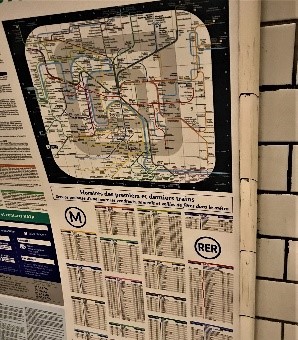
While flâner technically means "to stroll," it more generally suggests "to walk the city in order to experience it"—words to live by in the City of Light. The center of Paris is only a couple of miles wide, maps are ubiquitous, and the rewards for taking to the streets on foot include world-class window shopping, observing flirtatious exchanges taking place in sidewalk cafés, and walking off that extra croissant. Worried about dog droppings? Fear not, the city has cleaned up its act. When going longer distances, hop on the Métro. From any given spot in Paris, you're never more than 500 yards from the nearest station; it's cheaper than a cab and often faster, too. So there's really no excuse—unless you've stayed out late (the Métro closes at 2 am on Friday and Saturday nights and 1 am the rest of the week). We wish we could recommend Paris's inexpensive Vélib' bikes (the gray models you see lined up on the street), but the rental program is off-limits to most visitors since a smart chip–enabled credit card is required to access the system.
6) Don't Seek Out Bohemian Ambience on the Left Bank
Sartre and de Beauvoir may have loved Les Deux Magots on the Boulevard St. Germain, but these days, this onetime hangout of intellectuals has all the authenticity of Times Square. You're far more likely to find yourself cheek to jowl with your tourist brethren than eavesdropping on any famous philosophers. You may, however, find yourself delivering a tirade on the immorality of charging $16 for buttered toast and orange juice.
Instead: Find the "real" Paris on the Canal St. Martin
Bobo (short for bourgeois bohemian) hipsters have laid claim to the area around the Canal St. Martin, a once-derelict part of the tenth arrondissement that now buzzes with cafés and hip boutiques, particularly along the Rue Beaurepaire. Settle at a sidewalk table at Chez Prune, the see-and-be-seen ground zero for this trendy Right Bank 'hood (36 Rue Beaurepaire; 33-1-42-41-30-47), sip your café crème, eavesdrop on the locals, and enjoy the views of the picturesque canal—and bask in the smug knowledge that you've found a corner of real Paris.
In 2009, 6.6 million people visited the Eiffel Tower and, like lemmings, embarked on the laborious task of reaching the top. After trudging through one labyrinthine line for tickets and re-queuing for the cattle car–like elevators, you'll start to lose faith in the whole endeavor. And just when you think the ordeal is over, there are the lines to get back to terra firma.
An infinitely more civilized approach to the whole Eiffel Tower business is to book a table at Les Ombres, the rooftop restaurant of the Musée du Quai Branly. The restaurant's glass latticework ceiling (like a dragonfly's wing) makes the most of its tall neighbor by enabling diners to feast their eyes on the tower in its gorgeous entirety while dining on French classics such as foie gras, oysters, and grilled steak. The view is at its most magical at night, when the tower glows ethereally and bursts into manic sparkling every hour. At dinner, main courses start at $40, but there are excellent deals to be had at lunchtime ($34–$52 for two to three courses). Or you can just head to the adjoining salon de thé to toast your savvy tourist skills with an alfresco flute of champagne.
Finding a decent Paris hotel for a reasonable price can bring even the savviest travelers to the brink of despair. You might find a screaming deal at a big chain hotel and think you've got it made, but once you're sitting in a beige I-could-be-anywhere cube on the outskirts of town, you'll realize that you're missing out on the Parisian atmosphere in the city center.
Furnished apartments can be found to suit absolutely every budget and taste. You'll be amazed at how much living space you get for your money—especially if you plan to stay for more than a couple of days—and you don't have to eat out for every meal. The real estate mantra "location, location, location" definitely applies. When in doubt, opt for an apartment in a single-digit arrondissement and check how close the nearest Métro station is. And if the price seems too good to be true, try to find out what they may be hiding. Do-it-yourself services abound (Airbnb, VRBO), but if you want to leave it to the experts, try a rental agency (Paris Perfect Guest Apartment Services and Haven in Paris are reputable options). Once you're in your private pied-à-terre, glass of wine in hand, listening to the sounds of the neighborhood through the open windows, you'll feel like you've truly arrived.
Courtesy Perfectly Paris
9) Don't Fill Up on Croissants
We all swoon over those flaky golden crescents. But it would be a big mistake to limit yourself to Paris's best-known pastries and miss out on deluxe confections that aren't as well known, or as easily accessible, across the pond.
Unlike macaroons, the dense coconut cookies in the United States, French macarons consist of two meringue-like cookies bound together by a delicious ganache. A few patisseries, Ladurée in particular (pictured), have been carrying macarons for ages, but recently these have become the hottest sweet in town. Debate rages among Parisians over which are the city's best; to decide for yourself, sample rose atPierre Hermé, caramel with sea salt at Ladurée, and orange-ginger at Gérard Mulot.
Courtesy Misha Hettie and Amanda Gentis
10) Don't Buy Into Stereotypes
Yes, we've all heard plenty about Parisians' legendary rudeness: The waiters are surly, the salespeople unhelpful, and everyone else is snobby and standoffish. It's true that Parisians are more reserved than most Americans and less apt to break into wide, toothy grins every time they meet someone new. Theirs is not a culture of instant BFFs and "Hi, how can I help you today?" extroversion. But you won't be doing yourself any favors by assuming that the locals don't like you—and then being rude in return.
Try to understand (and imitate) the local customs and you'll no doubt be amply rewarded for your efforts. Do learn a few French words and phrases. Even if it's just a crash course on the flight over, and your delivery is less than perfect, the fact that you're trying will win points. Salespeople in smaller boutiques greet customers and expect to be greeted in return: A simple "Bonjour, Madame" upon entering a shop will do wonders for your status there. And note that French people tend to talk softly—their voices never carry in the streets, on the Métro, or even when they're sitting at the next table. Keep your voice low, too, and some of your neighbors might even venture a smile.