Showing posts with label Mexico City. Show all posts

Saturday, July 25, 2026

The Battle Over Frida Kahlo: Activists Sue To Keep Her Art From Leaving Mexico

In the art world, few names command as much reverence and passion as Frida Kahlo. For travelers and art lovers who flock to Mexico City to experience her profound legacy, seeing her masterpieces in person is a pilgrimage. But a fierce legal battle is currently raging over one of the most important private collections of her work—and whether it will be allowed to leave Mexico indefinitely.


The Gelman Collection’s Controversial Move


At the center of the controversy is the renowned Gelman Collection (recently rebranded as the Gelman Santander collection). Boasting 160 works of 20th-century Mexican art, the collection includes 18 pieces by Frida Kahlo alongside masterpieces by Diego Rivera and José Clemente Orozco. Following a deal with [Banco Santander](https://apollo-magazine.com/defence-of-gelman-collection-lawsuit-mexican-government-banco-santander/), the works are slated to be exported to Spain for a long-term exhibition at the new Faro Santander cultural center.

The agreement allows the artwork to remain in Spain until at least 2030, with the possibility of an extension. For Mexico's cultural community, this sparked immediate outrage.

Activists Take Legal Action


In early July 2026, a citizen collective of historians, artists, and curators calling themselves the [Defence of the Gelman Collection](https://www.theartnewspaper.com/2026/07/10/could-mexicos-treasured-kahlo-works-leave-the-country-forever) filed a lawsuit in a federal court in Mexico City. The group is suing Mexico’s Culture Ministry and the National Institute of Fine Arts and Literature (INBAL), demanding an injunction to stop the collection from leaving.

The activists are not fighting the private ownership of the collection, which was purchased by the Zambrano family in 2023. Instead, they are challenging the legality of the export agreement itself. They argue that the prolonged, renewable timeline acts as a permanent export in disguise—a direct violation of Mexican heritage laws.

The 1984 Presidential Decree


Why is Kahlo's art so fiercely guarded? In 1984, Mexico issued a presidential decree declaring all of Frida Kahlo's work an "artistic monument." Under this strict legal framework, her artwork cannot be permanently exported. Temporary export permits are typically granted for only one or two years for specific cultural exhibitions, and they require strict financial guarantees to ensure the art's return.

Activists argue the Santander deal circumvents these rules, setting a dangerous precedent that could see Mexico's national treasures permanently dispersed abroad. As one historian noted, it is already easier to see Kahlo's work outside of Mexico than within her home country.

What’s Next for Kahlo’s Masterpieces?


As the lawsuit unfolds, the Mexican Supreme Court is also stepping in to examine a separate but related case: whether the 1984 decree banning the permanent export of privately owned Kahlo art is constitutional. The court’s decision could completely reshape how privately owned "artistic monuments" are managed and circulated globally.

For now, the fate of these masterpieces hangs in the balance. Whether they remain a cornerstone of Mexico's cultural heritage or become permanent global ambassadors in Spain, the battle over Frida Kahlo is a powerful reminder of how deeply her legacy is intertwined with Mexican identity.

Thursday, October 9, 2025

A First Look At The New Frida Kahlo Museum In Mexico City

The Museo Casa Kahlo, spearheaded by Kahlo’s descendants, focuses on her early years.
The new Frida Kahlo museum is adjacent to the famed Casa Azul in the Coyoacán neighborhood of Mexico City.Photo by Rafael Gamo/Courtesy of Rockwell Group

Nearly 70 years after her death, Frida Kahlo remains one of the most recognizable, and mythologized, figures in art history. Though her face, framed by bold brows and often floral headdresses, frequently adorns everything from mural walls to tote bags, less is known about the making of the artist. However, a new museum in Mexico City is attempting to change that by sharing a new chapter in her story.

Opened September 27 in the heart of the Coyoacán neighborhood of Mexico City, the Museo Casa Kahlo—also known as Casa Roja—offers an intimate counterpoint to the famous Casa Azul, Kahlo’s longtime residence and more recently a popular museum (officially known as Museo Frida Kahlo). The two museums are adjacent to each other.

While Casa Azul focuses on her adult life, including her artistic achievements and her marriage to Diego Rivera, a famed Mexican muralist, the new museum delves into her early years and the familial influences that shaped her (with a strong focus on her father, Guillermo Kahlo, a photographer who is often credited for nurturing his daughter’s artistic passion). The project is spearheaded by Kahlo’s descendants, including her grand-niece Mara Romeo Kahlo and great-grand-nieces Frida Hentschel Romeo and Mara Deanda Kahlo, who aim to present a more personal and comprehensive narrative of Kahlo’s life.

“This is a dream long held by our family,” said Mara Romeo Kahlo in a press release. “Frida’s legacy belongs to the world, but it begins here—on this land, in these homes, and in the culture that shaped her. Museo Casa Kahlo will allow us to tell new stories, share family secrets, host new voices, and build a future that honors her spirit.”

Visitors to Museo Casa Kahlo will have the opportunity to view never-before-seen personal artifacts, such as letters, childhood photographs, Kahlo’s first oil painting, and her only known mural. The museum will also feature rotating contemporary exhibitions from Mexican, Latin American, and female artists.

The establishment of Museo Casa Kahlo is supported by the newly formed Fundación Kahlo, a nonprofit organization based in New York that will oversee the museum’s development and operations. In addition to this museum project, the group plans to invest in Latin American and Indigenous art through grants and monetary prizes. Currently, there are no concrete collaborations established between Museo Casa Kahlo and Museo Frida Kahlo, the latter of which is managed by a trust under the Central Bank of Mexico (the building was donated to the state following Kahlo’s death in 1954).

By offering locals and visitors a deeper understanding of the artist beyond her widely recognized works, Asami Robledo-Allen Yamamoto, director of education and outreach at Latinos in Heritage Conservation, a nonprofit organization dedicated to preserving and celebrating Latinx heritage, said the new museum allows fans to “expand how we understand her legacy—not only as a symbol of Mexican identity and artistic innovation but as a deeply complex, multilingual, politically engaged feminist who lived with chronic pain.”

“Dedicating space to Frida’s work opens the door to essential conversations about embodiment, illness, culture, and resilience,” Robledo-Allen Yamamoto told Afar. “Museo Casa Kahlo can serve as a dynamic site of dialogue, inviting new generations to interpret her work through evolving cultural narratives and lived experiences—especially those rooted in the communities Frida called home.”

Beyond Museo Frida Kahlo and Museo Casa Kahlo, travelers can see Kahlo’s work throughout Mexico City. Her renowned painting The Two Fridas hangs at the city’s Museo de Arte Moderno, while The Broken Column and Henry Ford Hospital are some of her works on display at Museo Dolores Olmedo. There’s also the Museo Casa Estudio Diego Rivera y Frida Kahlo, a museum complex with a small selection of works that once served as the studio and residence for both Kahlo and Rivera.

The new Museo Casa Kahlo is located at Aguayo 54 in the Coyoacán neighborhood of Mexico City, and is open Wednesday through Monday, 9 a.m. to 7 p.m. It is closed on Tuesdays. Guided tours will be available from 9 a.m. to 4:50 p.m, with free tours available from 5-6 p.m.

https://www.afar.com/authors/bailey-berg

Wednesday, June 12, 2024

Mexico City: One Of The Best Destinations For Celebrating Pride

As Pride Month kicks off worldwide, Mexico City stands out as a vibrant, inclusive, and welcoming destination for celebrating LGBTIQ+ pride. Known for its rich cultural heritage, dynamic arts scene, and warm hospitality, Mexico City offers an unparalleled experience for all visitors, making it a perfect place to honor love, diversity, and equality.

A Hub of Inclusivity

Mexico City is celebrated for its progressive stance on LGBTIQ+ rights and its commitment to fostering an inclusive environment year-round. The city's diverse neighborhoods, from the bustling historic center to the trendy Roma and Condesa districts, are known for their acceptance and support of the LGBTIQ+ community. This inclusivity is evident in the numerous LGBTIQ+-owned businesses, inclusive nightlife, and a wide range of events and activities that celebrate diversity.

In fact, since 2019 Secretaria de Turismo CDMX, the Mexico City Secretary of Tourism, has carried out important actions and campaigns to develop, promote, and position the LGBTIQ+ segment, positioning the city as a world center for encouraging inclusivity and discrimination-free tourism.

The city obtained the Queer Destinations certification, which aims to ensure respect for people's rights in terms of accessibility, equality, inclusion, and diversity. Mexico City has also earned the Best Urban Destination Award for the second consecutive year, highlighting its commitment to LGBTIQ+ tourism.

Pride Parade 2024: A Spectacular Celebration

One of the highlights of Pride Month in Mexico City is the annual Pride Parade, which draws millions of participants and spectators from around the world. The parade is a vibrant display of unity, with colorful floats, dynamic performances, and an atmosphere of joy and solidarity. Starting at the iconic Angel of Independence and culminating at the Zócalo, the city's main square, the parade is a testament to Mexico City's dedication to LGBTIQ+ rights and its vibrant culture.

We demand to live with dignity!” is the motto of the Colectiva de Organizaciones Civiles (Civil Organizations Collective) who announced that the event will take place in Mexico City on Saturday, June 29. Let us remember that for 46 years, it has been celebrated on the last Saturday of June.

But the parade is just the beginning when it comes to the tapestry of events that take place across the city.

Starting from June 20, the city will kick off the Festival Mix Mexico. Nearly LGBTIQ+-themed films are part of the showcase that will be exhibited in the city. The opening takes place at the Teatro de la Ciudad Esperanza Iris, featuring a screening of the film, "Todo el silence," (All the Silence).

High Heel Race: This fabulous event, held June 22, invites everyone to don their best stilettos to participate in the High Heel Race, taking place from the intersection of Sonora and Durango streets in Roma to Parque Espana. A participation fee of 200 pesos is required and the proceeds will go to Inspira Cambio A.C., an organization that supports LGBTIQ+ individuals' sexual and mental health needs.

LGBT Cup 2024 in Mexico City: This year's Copa LGBT will take place from June 27 to 30 at Ciudad Deportiva de la Magdalena Mixhiuca. The competition includes tennis, soccer, basketball, diving, swimming, Olympic wrestling, and many other sports. It is expected to draw more than 2,000 athletes from different states across Mexico. There will also be a five-kilometer nighttime race on Paseo de la Reforma, which kicks off on June 28 at 6 p.m.

Latin American Pride 2024: Latin American Pride 2023 will remain in the city’s memory forever, which is why CDMX invites everyone to attend Latin American Pride 2024 on June 27. The promise is a bigger and more spectacular pride celebration than last year.

Groove City Pride: Groove City presents a night filled with music, color, and community to celebrate diversity and love in all its forms. Expect DJs from the Mexican scene playing the best of house, afro house, and tech, along with drag shows, exclusive Groove City merchandise, and local artists. It’s an inclusive and safe environment where attendees can be themselves and celebrate with pride. Get ready to dance all night on the terrace with the best view of Reforma at this dynamic PRIDE party on June 29th.The event will run from 7:00 p.m. on June 29th to 12:30 a.m. on June 30.

Sáfica Party and Lesbian Sunset: Also on June 29, in collaboration with Fiesta Sáfica and Lesbian Sunset, CDMX is offering a unique experience at one of the city’s most exclusive Polanco venues. With two stages and a variety of performances, Bian’s party promises to be the best night for women and non-binary individuals.

ELLA CONECTA SUMMIT: ELLA CONECTA is an international network of diverse professional women. Its goal is to connect, inspire each other, create business synergies, and empower LGBTQ+ women. They provide spaces to showcase women’s projects, collaborate on joint initiatives, and offer inspiration by sharing life experiences. This year's summit will be held June 27 and 28.

A Year-Round Inclusive Destination

While Pride Month is a special time, Mexico City's commitment to inclusivity extends throughout the year. The city hosts a variety of LGBTQ+ events, including film festivals, art exhibitions, and cultural festivals, ensuring that there is always something exciting happening. Additionally, the city's progressive policies and strong support networks make it a safe and welcoming place for LGBTIQ+ travelers at any time.

Join Us in Celebrating Pride

Mexico City invites everyone to join in celebrating Pride and experience the warmth, diversity, and vibrancy that makes it a standout destination. Whether you are marching in the parade, exploring cultural landmarks, or enjoying the lively nightlife, Mexico City offers an unforgettable Pride celebration that reflects its spirit of inclusivity and love.

For additional information, please visit https://mexicocity.cdmx.gob.mx/

Friday, December 29, 2023

Mexico City Has It All For The LGBTQ+ Community

Mexico City, a vibrant and diverse metropolis, welcomes travelers with rich tapestry of neighborhoods, each offering a unique flavor of the city. As visitors plan their stay, it's essential to consider not only the budget and attractions but also the inclusivity and LGBTQ+ offerings. Whether they're drawn to historic charm, stylish ambiance, or the vibrant LGBTQ+ scene, Mexico City has something for everyone.

To mention a little history about Mexico City’s innovation towards this segment, in December 2009, the Legislative Assembly of the Federal District (ALDF) approved Equal Marriage, and on November 23, 2015, the local government signed a declaration in which Mexico City is recognized as a "Friendly City" with the LGBTQ+ community. Mexico City was also named a Queer Destination by the Mexico City Secretary of Tourism, Nathalie Desplas Puel.

It is a declaration to the national and international community that Mexico City is a welcoming destination; since it has demonstrated that it is a progressive city with clear progress in the recognition of the human rights of all people without distinction.

In a sprawling metropolis like Mexico City, the abundance of accommodation options can be overwhelming. Here's a breakdown of some neighborhoods to help visitors make the right choice:

1. Condesa and Roma Norte: Stylish and Affordable

For those seeking a blend of style and affordability, Condesa and Roma Norte top the list. These neighborhoods boast a plethora of dining and drinking options, along with interesting shops featuring local designers' work. The tree-lined streets and numerous small parks make them ideal for leisurely strolls day or night.

2. Centro Histórico: Immersed in History

Travelers with a penchant for Mexico City's oldest historic attractions should consider staying in the Centro Histórico, the city's historic center. While the area may quiet down after dark, its proximity to significant landmarks adds historical charm to your stay.

3. Polanco: Upscale and Chic

For a truly upscale experience, Polanco is the go-to neighborhood. Dotted with shops showcasing international designer brands and restaurants helmed by award-winning chefs, Polanco caters to those with a taste for the finer things.

4. Zona Rosa: LGBTQ+ Nightlife Hub

If proximity to vibrant LGBTQ+ nightlife is a priority, travelers should consider staying in or near the Zona Rosa. This lively neighborhood comes alive after sunset, offering a vibrant array of bars, clubs, and entertainment options.

To reaffirm Mexico City as a friendly destination, for the second consecutive year, it received the LGBTQ+ Travel Awards as “Best LGBTTTIQ+ Urban Destination” from the National Union of LGBT Tourism Entrepreneurs (UNET LGBT+). The winners are selected by voters who vote on different categories to determine the winners.

Recently Mexico City was ranked in the top 8 Best Gay Cities 2023. Gay Cities showcases LGBTQ+ friendly destinations and businesses so travelers can feel secure when booking trips and exploring cities, therefore the winner cities were selected by votes of the visitors to the page, which is ranked #1 on ComScore in the LGBTQ+ Category.

For more information, please visit: mexicocity.cdmx.gob.mx

Thursday, November 30, 2023

Christmas In Mexico City Should Be On Your List.

Mexico City, the City that Has It All, will show off its best during the December season with more than 264 must-see events and activities for national and international tourists of all ages.

There will be posadas and pilgrimages in the 16 neighborhoods that make up Mexico City, at no charge from December 16 to 23, with the traditional Mexican fruit punch and the symbolic 7-spike piñatas.

On Paseo de la Reforma, the emblematic avenue of Mexico City, the Christmas Eve Flower Festival will take place, with the presence of flower farmers who will dress the city in red and offer unbeatable prices; Let us remember that 59% of the land in Mexico City is conservation.

Also, in Reforma, the Christmas Tourism Festival will take place from December 12 to 17, with all 32 States of Mexico bringing their crafts and cuisines.

At the Casitllo de Chapultepec, the Amalia Hernández Folkloric Ballet will perform, with the show titled “Christmas in Mexico.” The Christmas Craft Festival will be held at the Casa del Risco Museum; and the Coffee and Chocolate Festival, at the Palacio de Minería.

In an international press conference, Armando Machorro, Coordinator of National and International Promotion and Marcela Ortíz, Deputy Director of Information and Digital Content, of the Ministry of Tourism, Mexico City, reported that the Bolo Festival and the Candlelight Ballet will also be held.

In the heart of the Historic Center, you will enjoy the Verbena del Zócalo, with its Christmas fair and its spectacular and colorful Christmas lighting; live music and pastorelas, which will be free and will start mid-December and run until the first days of January 2024, from Monday to Sunday, 10:00 a.m. to 10:00 p.m.

To end the year, the countdown will be celebrated in Latin Times Square style, at the Ángel de la Independencia, with music, food, plus the must-see New Year's Eve concert.

Sports Tourism has been growing in Mexico City and will be represented with the “Santa Run” race, which will be attended in costumes and with a mascot.

The Christmas Bazaar will also be held at the World Trade Center, an emblematic business location; and where the famous San Silvestre race will take place.


Santa Fe, Paseo de la Reforma, Chapultepec, Zócalo, the Monument to the Revolution, Coyoacán, San Ángel and the Basilica, as well as Xochimilco and Polanco, are some of the metropolitan areas with the greatest tourist attraction and have prepared recreational activities.

In Religious Tourism, 6 million parishioners are expected to attend on December 12, to celebrate the Virgin of Guadalupe, in La Basílica, the second most visited Marano temple in the world.

Six Flags, one of the busiest amusement parks and known by national and foreign visitors, began Christmas celebrations on November 24, 2023, and running until January 14, 2024. On Christmas Day, the amusement park with its stages, lighting and ornaments inspired by Christmas in which the music, songs and dances are enjoyed, as well as the Mexican traditions of the season – posadas and piñatas, included.

Finally, the UNAM and OFUNAM Philharmonic Orchestras also dress up and will offer Christmas concerts, more information can be found on their billboards.

The dates and times of all CHRISTMAS events in Mexico City, The City that has it ALL, can be found at the following addresses and social networks: https://cartelera.cdmx.gob.mx and https://mexicocity. cdmx.gob.mx; @turismocdmx

Saturday, October 21, 2023

Come Live Día De Los Muertos, Day Of The Dead In Mexico City

Mexico City sets the scene for one of the most important holidays in Mexico — Dia de Los Muertos, or Day of the Dead. This ancestral tradition dates back to pre-Hispanic Mexico, with roots originating in the cultures of Mesoamerica. Over time, these traditions were blended with Catholic beliefs to give rise to the holiday we know today, celebrated across Mexico.

The central pillar of the celebration is remembering the lives of those no longer living. Loved ones and family members take to cemeteries and each other's homes with offerings of flowers, water, photographs of the deceased, their favorite food and drink, and other items that help to remember those who passed.

The celebration is so integral to Mexican culture that UNESCO has established it as a Cultural and Intangible Heritage of Humanity, and nowhere in Mexico celebrates Day of the Dead as vibrantly and passionately as Mexico City. This year’s celebration promises to be just as magical, poignant, and beautiful as ever.

The month-long celebration kicked off on October 6 with the Festival de la Llorona en el Embarcadero de Cuemanco, which took place on the canals of Xochimilco, the Venice of the Americas. The evening show takes place aboard the colorful trajineras and includes a performance on the legend of La Llorona (The Crying Woman).

On October 18, the Festival de las Flores de Cempasúchil takes over Paseo de la Reforma with thousands of brilliantly colored marigolds illuminating the path of the dead. It is estimated that five million marigold flowers will be produced this season.

October 21 marks one of the most highly anticipated events of Day of the Dead in Mexico City: the Desfile de Alebrijes Monumentales, a parade of giant puppets that measure up to eight feet tall. Alebrijes are gorgeous works of art that blur the lines between reality and surrealism. They have become one of the most time-honored traditions of Mexico City's Day of the Dead.

The parade is a precursor to the next magnificent event. The following day, October 22, begins the Mega Procesion de Catrinas. This spectacle is a massive parade that begins at the Angel of Independence in Reforma and ends at the Zocalo, in the heart of the Centro Historico. Hundreds of gorgeous Catrinas take to the streets, with hauntingly beautiful painted faces, elaborate costumes, flowers, and music. La Catrina is the primary figure of Day of the Dead, a representation of an Aztec figure, The Goddess of Death, who was later popularized by engraver Jose Guadalupe Posada.

Engines rev on October 26 at the Formula 1 Mexico City Grand Prix, one of the most important events in professional car racing.

All of this is, of course, a build-up to the actual Day of the Dead. Celebrated between October 31 and November 5, this is when the offerings are made to the dearly departed. In Mexico City, the Zocalo hosts an Ofrenda Monumental, or massive offering that fills the entire plaza with altars, flowers, incense, photographs, and much more. Thousands of people take to the streets dressed as zombies for another festive, colorful, decked-out parade.

All are invited to participate in the events spread out over the month of October. Celebrations are held in every city across the country. But there is no better place in Mexico to experience Dia de Los Muertos than in the beautiful, vibrant, exciting capital city.
Getting There

Mexico City is one of the easiest destinations to access, thanks to thousands of non-stop flights from around the world, as well as from around Mexico. Benito Juarez International Airport is one of the main hubs of Latin America, with direct U.S. flights from Houston, Los Angeles, Miami, New York, Chicago, Dallas, San Francisco, Atlanta, San Antonio, Orlando, Las Vegas, Newark, Denver, Austin, Detroit, Minneapolis, Phoenix, Salt Lake City, Seattle, Washington, D.C., Charlotte, Oakland, and Sacramento.

Sunday, April 10, 2022

Mexico’s Navy Will Manage Tourism In Converted Island Prison

A small archipelago off Mexico’s Pacific coast that had been home to an island prison colony is finalizing preparations to receive tourists.

Getting to Islas Marias, however, is currently a challenge for even the sturdiest tourist: a 4-hour boat ride in often choppy waters. But Mexico’s government plans to make things easier, putting the country’s navy in charge of tours in the latest new function assigned to Mexico’s armed forces under President Andrés Manuel López Obrador.

Some people, like Beatriz Maldonado, are already imagining the voyage. When Maldonado was imprisoned between those “walls of water” — as a Mexican writer also confined there described it — she thought she would never see her mother again.

Maldonado only spent one year of her six-year sentence there for drug and weapons possession, but it was the most painful. “I lost my smile, my happiness,” she said. Now at age 55, a laundry worker and an activist advocating for other imprisoned women, she wants to return to close wounds.

The Islas Marias prison colony was founded in 1905 on Mother María Island, the largest of the four islands and the only inhabited one more than 60 miles off the coast of Nayarit state. Frequently buffeted by hurricanes scraping along Mexico’s coast, the government closed the prison in 2019.

López Obrador had it converted into an environmental education center, though which some 150 youths have passed. Now the government wants to make it an ecotourism destination where visitors can watch sea birds and enjoy the beaches and local history.

On Saturday, Mexico’s president announced that the navy will be in charge managing tours, the island’s airport will expanded and two ferries will be added that can make the trip in 2.5 hours.

Visitors will stay in the old houses - of prisoners or workers - that are being rebuilt to avoid having to construct new buildings that could damage the archipelago’s nature reserve.

Everything could be ready in three months, López Obrador said. But it is unclear when tours will start because hurricane season begins in June. Many wonder whether Islas Marías will become a tourist draw like Alcatraz, the infamous prison accessed from San Francisco, or a place like the Panamanian island prison colony Coiba, closed in 2004, which became a natural paradise that is being reclaimed by the jungle.

Although the government has been criticized for giving many functions to the military, from construction works or plant nurseries to controlling Mexico City’s new airport, Maldonado sees nothing wrong with the navy taking charge of tourism.

“I hope there is no nepotism and we all have the opportunity to visit it,” she said in a message after the announcement.

The island now is nothing like the dirt-floored warehouse-like prison dorms with five bathrooms for 500 women that Maldonado remembers. “We lived in a chicken coop,” she said.

Now a colorful mural of former South African leader Nelson Mandela, himself held for years on an island prison, welcomes visitors to remodeled buildings, a whitewashed church and a museum with the Mexican writer José Revueltas, imprisoned there during the 1930s for his work in the Communist Party, as main character.

“What was a hell is becoming a paradise,” López Obrador said.

There was a time when it was considered the “tomb of the Pacific.” Revueltas said the prison was much more terrible than he could describe in his book “Walls of Water.” The worst couldn’t be described, he said, because of modesty or because you don’t know how to show that it’s really true.

Island prison colonies were common around the world to make escapes nearly impossible or to rehabilitate through forced labor. Most tried to be self-sufficient.

Prisoners on Mother María Island harvested salt and farmed shrimp. They tried to make a little money brewing their own alcohol from fermented fruits, illegally trading exotic birds or killing boa constrictors to make belts.

In later years, it was known as a “prison without walls” where some prisoners lived with their families in semi-freedom and relatively good conditions.

That changed when President Felipe Calderon launched the war against the drug cartels in 2006 and hundreds of new prisoners were sent there. In 2013, the inmate population reached 8,000.

Maldonado served her time during that era. She said the women, who were the minority, were the worst treated. Unlike the men, they weren’t allowed outside the fences even though they had skills and barely received enough food. Maldonado’s weight dropped to about 45 pounds. “They didn’t pay attention to us when someone got sick,” she said. “My friend’s gallbladder ruptured.”

The extreme isolation was the most punishing part, broken only on the 15th of every month when they were allowed a 10-minute phone call with a relative. Some who tried to escape drowned. Occasionally the Navy rescued others who set out on improvised crafts.

“The boats came on Thursdays to bring us supplies and letters, and I saw the tears of my mother on the stained pages,” Maldonado said. “The worst was thinking that I would never see her again.”

Infrequently some relatives made visits that then involved 12 hours at sea.

Maldonado’s one colorful memory was of a tube of red lipstick, the only personal item she took. When it ran out she solemnly buried it because she felt like it gave her life.

A year after Maldonado was transferred to a prison in Mexico City, six people died on the island in a riot sparked by a lack of food.

It was closed in 2019 because of the high operating costs, some $150 a day per prisoner, which was much higher than on the mainland. Prison reform had also significantly reduced its inmate population.

Devil’s Island in French Guiana, immortalized in the film “Papillon,” closed in 1946. Alcatraz closed in 1963. Later, others in Chile, Costa Rica and Brazil were shuttered. The most abrupt was Peru’s El Fronton in 1986 when the government used gun boats to put down a riot, killing more than 100 inmates.

Maldonado applauded the Islas Marias closure and supports the idea of inviting visitors. She said the proceeds should go to re-insertion programs for inmates.

She has already written to former cellmates to see if they’d like to go with her to the place she thought she’d never see again.

Sunday, October 3, 2021

Mexico Displays Pre-Hispanic Artifacts Recovered From Abroad

MEXICO CITY (AP) — Two Mexican museums have opened a massive show this week of 1,525 pre-Hispanic and historical artifacts, more than half of which were recovered from abroad.

Mexico has long had a problem with collectors or traffickers taking artifacts out of the country, even though that has been illegal since 1972.

But 881 of the sculptures, vessels and other artifacts on display in Mexico City were returned, either voluntarily by foreign collectors or through police seizures abroad. They were returned from the United States, Italy, France, Germany and the Netherlands.

For most, it is the first time they have been seen in Mexico.

Many of the other 644 pieces had been seized in Mexico or had long sat in warehouses. Forty-six of them are on loan from museums abroad.

“What is being gained here is the possibility for us Mexicans to see these pieces again, or even to see them for the first time,” said Miguel Angel Trinidad, one of the curators.

One example, an impressive Mayan stela, shows a warlord grasping a captured rival. It had previously been on display in Los Angeles, California.

The show is called “The Greatness of Mexico,” and the pieces on display come from pre-Hispanic cultures like the Mayas, Aztecs and Olmecs, as well as later pieces. The pieces will be on display in Mexico City’s National Anthropology Museum and the colonial-era museum of the Public Education Department.

The show coincides with the 500th anniversary of the 1521 conquest of Mexico City by the Spanish, and the 200th anniversary of the consummation of Mexico’s independence from Spain in 1821.

Friday, March 5, 2021

Mexico City Launches Latin America’s Latest Cable Car Line

MEXICO CITY (AP) — Mexico City has launched the first of what it hopes will be several cable-car lines serving the poorer outskirts of the city of 9 million.

Thursday’s inauguration of the first leg of the “Cablebus” line marks the latest chapter in Latin America’s love affair with cable cars, which are seen in much of the world as largely for tourists and ski slopes.

The neighboring State of Mexico already has a cable car serving one northern Mexico City suburb, and the city’s own first line was also built on the poor, crowded north side.

Cable cars are seen as a cheaper, quicker way to bring public transport to poor communities located high up hillsides. Since they’re airborne, the car lines also don’t have as many difficulties with Latin America’s notoriously difficult issues of chaotic development, bad traffic and lack of rights-of-way.

By June, the line will run almost 9.2 kilometers (6 miles) from Cuautepec, a working class neighborhood on the northern edge of Mexico City, to the nearest subway and bus station. The stretch inaugurated Thursday covers just 1.7 kilometers (1.06 miles) of that route, to the neighborhood of Tlalpexco.

At present, officials explained, residents at the top of the hill in Tlalpexco have to board crowded, small vans that travel much more slowly. Plus, they don’t have the nice view the cable cars offer from their big windowed cars that can seat 10 passengers at a time. The cars run on electricity and can travel about 13 miles (20 kilometers) per hour, far faster than most traffic in the city.

“There are nearly a million inhabitants living in the area around the Cablebus, and they make their trips in small vans that descend through narrow streets, and that may take, from the highest point ... as long as 55 minutes or an hour,” Guillermo Calderon, director of the electrical transportation system Mexico City.

Traditional transport solutions like bus or subway lines are almost impossible here, both because there are no rights of way in the densely packed slums, and they are crowded along hillsides on steep 15-degree slopes.

Mayor Claudia Sheinbaum said a second cable car line is being built in Iztapalapa, another working class neighborhood, to the east.

“Having the best transportation for the poorest parts of the city reduces inequality,” Sheinbaum said.

Cuautepec resident Evelyn Sánchez said that, like most people here, her biggest challenge is getting to the nearest subway station.

“It does take us a long time, and now with this, well now it is going to be a lot quicker,” Sánchez said.

The city of Medellin, Colombia, launched its cable cars in 2004. Since then, many other Latin American cities have followed suit, ranging from from Rio de Janeiro, Brazil to La Paz, Bolivia.

Sunday, March 13, 2016

CDC: Travel OK To high-Elevation Cities In Zika Countries

FILE - In this Tuesday, March 8, 2016 file photo, a health agent scoops water from a boat docked at... Read more
 (AP) — The U.S. government revised its Zika travel warnings Friday, saying it's OK for pregnant women to travel to Mexico City and other places at high elevation in outbreak regions.
The kind of mosquito that spreads the Zika virus is rare at higher elevations because of the lack of humidity and other conditions, according to the Centers for Disease Control and Prevention. Infections from Zika or the related dengue virus haven't been seen high up.
Since mid-January, the health agency has advised pregnant women to avoid travel to areas with Zika outbreaks because the virus may be linked to a surge of birth defects in Brazil. The list has grown to about three dozen destinations, most in Latin America or the Caribbean.
Friday's revision excludes any part of those countries above 6,500 feet (2,000 meters).
CDC officials insisted science drove the change, but acknowledged there were concerns that overly broad travel warnings might unnecessarily hamper trade and tourism.
"I suspect several countries will be quite pleased" by the revision, said Dr. Martin Cetron, who leads CDC's division of global migration and quarantine.
Five of the countries have large cities or sizeable areas at high altitudes, including Mexico City, Bolivia's La Paz and Colombia's Bogota.
Mexico Health Department's Dr. Cuitlahuac Ruiz Matuz said authorities there had objected to a blanket travel advisory for the country before it was issued, and had lobbied CDC for a change.
"Now they are correcting things a little bit," Ruiz said.
He argued that the CDC should be even more specific and report where Zika has been detected. There have been 143 confirmed cases in Mexico, 128 in the southern states of Chiapas and Oaxaca. The remaining 15 are spread over six other states.
Besides the capital, Mexico has other large cities such as Puebla, Toluca and Guanajuato and the popular tourist destination of San Cristobal de las Casas at elevations above 6,500 feet.
Experts think most people infected with Zika virus don't get sick. And those that do usually develop mild symptoms — fever, rash, joint pain, and red eyes. But the unexpected numbers of birth defects in Zika outbreak areas of Brazil have raised alarms.
An estimated 40 million U.S. travelers went to Zika outbreak destinations last year, including about a half million pregnant women, CDC officials estimate. The CDC advises all travelers to Zika areas to use insect repellent and take other steps to avoid mosquito bites.
By MIKE STOBBE 
___
AP writer E. Eduardo Castillo in Mexico City contributed to this report.
___
Online:

Tuesday, January 5, 2016

Top Reasons To Travel To Mexico In 2016


 Ring the New Year by exploring new destinations in Mexico and rediscovering the ones you’ve already been to by taking off the beaten path adventures. Whether travelers decide to embark on a winter getaway to a colonial city or a pristine beach, they will find all year-round perfect weather, friendly locals, world-class services and amenities, and an unbeatable shopping experience. From local crafts and jewelry to luxury clothing and international brands, visitors traveling to Mexico will encounter a great variety of shopping offerings. But did you know with MONEYBACK you can receive a refund on the total amount you spend when you shop in Mexico? No more excuses for not bringing back home the perfect souvenir.

Top reasons to travel to Mexico in 2016

1. Receive a refund when you shop- MONEYBACK, Mexico’s leading tax-refund company, offers shoppers a rewarding shopping experience by refunding 8.9% of the total amount they spend when shopping in Mexico at any of the participating stores. Receiving your money back is fast and convenient. Submit your invoices along with the shopping incentive refund form, credit card vouchers, copy of your passport, cruise ID or immigration form and boarding pass at any of MONEYBACK’s 55 service locations and your 8.9% will be refunded directly to your card in 45 days.

2. Explore hot destinations- It’s no surprise some of the most sought-after and popular destinations in Mexico are its beaches. Puerto Vallarta, Cancun, Los Cabos and Riviera Maya offer the ideal getaway to start the year. Whether you select a beach destination or a city for your next trip, with over 55 service locations throughout the country, covering 98% of all the points of departure, travelers can submit their forms in a matter of minutes at cruise ports, shopping malls and airports before leaving the country. MONEYBACK modules are located at major tourist destinations including Cancun, Los Cabos, Puerto Vallarta, Cozumel, Puerto Escondido, Mazatlán, Guadalajara, Puebla, Queretaro, Guanajuato and Mexico City.

3.  Get more value for your money- With the strong dollar and wide selection of luxury products and items to choose from, international travelers get more value for their money. Items including jewelry, clothes, electronics, alcohol and handcrafts among others are eligible for a tax-refund. With over 6,000 participating stores, including Diamonds International, Louis Vuitton, Costco, Sears, Coach, Nine West, MAC, Kenneth Cole and many more travelers can find international brands and luxury items for a better value and at the same time receive a refund on their purchase. For the complete list of participating stores visit: http://moneyback.mx/shophere-taxback.html)

To learn more about MONEYBACK, participating stores and locations please visit:http://moneyback.mx/

Thursday, December 10, 2015

Sealed Chambers At Ancient Aztec Site In Mexico City Could Hold Rulers' Tombs

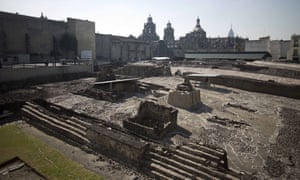
The Templo Mayor (Great Temple) in the heart of modern Mexico City, where archaeologists have discovered a long tunnel leading into a circular platform where Aztec rulers were believed to be cremated.
 The Templo Mayor (Great Temple) in the heart of modern Mexico City, where archaeologists found a tunnel into a circular platform where Aztec rulers are believed to have been cremated. Photograph: Eduardo Verdugo/AP

The answer to the mystery of leaders’ ultimate fate could be revealed behind two doors at the end of a tunnel into a platform at Tenochtitlán’s Great Temple

Archaeologists in Mexico have found a passageway and two sealed chambers beneath one of the largest temples of the ancient Aztec capital, raising hopes that excavations will uncover a ruler’s tomb beneath the city.
The tunnel, only 18in wide and 5ft high, leads 27ft directly into a circular ceremonial platform at the Great Temple or Templo Mayor complex of Tenochtitlán, the ruined Aztec capital that overlaps with modern Mexico City. At the end of the tunnel the archaeologists found two sealed doors.
According to the Spaniards who wrote of the conquest of Mexico, the Aztecs burned their kings’ remains on the circular structure – suggesting to lead archaeologist Leonardo López Luján that the sealed portals may lead to tombs.
“Once we freed the passage from earth and stone, we knew it led directly into the heart of the Cuauhxicalco,” López Luján said, using the Aztec name for the large stone platform, meaning “eagle cup”. “At the end appear two old entrances sealed up with masonry.”
The passage is actually an extension of a tunnel unearthed in 2013, discovered when a researcher noted signs of a continuation. That year archaeologists heaved a three-ton rock away from the mouth of the tunnel, finding a large box in a hollow space beneath it. The box contained gold ornaments, stone knives and the bones of children and eagles.
The human remains included two skulls belonging to children, aged five to seven, as well as bones from a hand and two feet. The knives and three vertebrae found with the skulls suggested they were sacrificed, a ritual practice relatively common among Aztec people, in which young children were often the preferred victims.
“From what the sources say, the Cuauhxicalco was a structure of a funerary character, so we can speculate that behind these walls there might be two small rooms that contain the incinerated remains of several leaders,” López Luján said.
López Luján said he suspected any remains might be of Moctezuma I and his successors, Axáyacatl and Tízoc, given the dating of the structure, referring to three of the earliest Aztec rulers. The trio ruled sometime during the 14th and the 15th centuries.
The discovery of any Aztec ruler’s remains would stand as a historic achievement – what the civilization did after leaders died remains one of the most enduring mysteries of the Aztec people.
López Luján urged caution and patience, saying that the tomb hypothesis was only that. He noted that archaeologists’ hopes had been dashed many times before and said excavations on the doorways will begin in 2016.
Unlike the tombs of the classic-period Maya, who laid out their kings in occasionally lavish chambers, Aztec burials from after 1000AD have eluded archaeologists, said Rosemary Joyce, a professor at the University of California, Berkeley.
“They keep digging down hoping they’re going to find the big guy,” she said, “but they’re running out of places to look in Tenochtitlán.”
Aztec images show dead rulers “bundled up in cloth, seated upright, with little crowns on”, she said, and indigenous people drew pictures of cremation ceremonies, but what they did with these ashes or bundles is unknown.
The clues together present a tantalizing case for the tentative hopes of a tomb. The eagles – associated with the cremation stone and the sun god Huitzilopochtli – could also suggest a leader who wanted their own associations with the deity. Joyce noted that the dual doorways could be a reflection of how the Aztecs governed: with two rulers, a tlatoani – translated as “emperor” but more literally “speaker” – and a cihuacoatl – a word with an ambiguous meaning, possibly “woman twin” or “skirt serpent”.
And while the Aztecs may have dispersed ashes or simply not buried them, Joyce agreed that the early rulers of Tenochtitlán may have constituted a special case for a people who, unlike the Maya, did not have a cult of their ancestors or necessarily inherit power through family lines.
“The remains of the first or founding generations of the Aztec rulers” may have deserved their own tomb, she said, comparing to the symbolism Americans use to venerate George Washington. “He’s not Barack Obama’s great-great-great-grandfather, but he is the father of the nation.”
Susan Gillespie, an archaeologist at the University of Florida, agreed with Joyce that researchers are not sure whether the Aztecs dispersed ashes or made any special arrangements for their leaders at all.
“It is not surprising that these cremains have not yet been found or identified,” Gillespie told the AP. “Archaeologists don’t quite know what they’re looking for.”


Wednesday, October 14, 2015

The Ritz-Carlton Set To Debut In Mexico City In 2019


Legendary luxury hotel brand to introduce stunning new hotel on Avenida Reforma
The Ritz-Carlton Hotel Company, L.L.C. today announced plans to open its first hotel in Mexico
 City in 2019. Upon completion, the 153-room Ritz-Carlton, Mexico City will operate under a long
 term management agreement with Thor Urbana Capital and Heldan Hotels & Resorts. The hotel 
marks a significant milestone for Ritz-Carlton development in the Caribbean and Latin America,
 representing its entree into one of the region's most prominent capital cities.  
The Ritz-Carlton Set to Debut in Mexico City in 2019; legendary luxury hotel brand to introduce stunning new hotel on Avenida Reforma
"We are thrilled to collaborate with Thor Urbana Capital and Heldan Hotels & Resorts to expand our
 presence in the Caribbean and Latin America, particularly in Mexico City - an epicenter of commerce
 and culture," said Herve Humler, president and chief operations officer for The Ritz-Carlton. "Mexico
 remains one of the largest and most important international markets for our company, and we are
 confident that our legendary Ritz-Carlton service and culture is a perfect match for this vibrant,
 exciting destination."

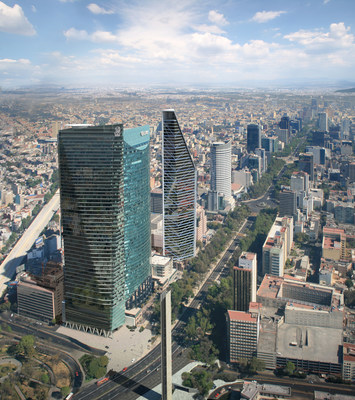
The hotel will be part of the Chapultepec Uno mixed use project, prominently located at the
 intersection of Avenida Reforma and Circuito Interior in the heart of the city's financial center.
 Once completed, the stunning structure will include 58 floors and 1.1 million square feet of space,
 rendering it one of the tallest buildings in the city. KMD Architects and Taller GLOBAL are leading
 the design and architectural efforts for the project.

The Ritz-Carlton, Mexico City will occupy floors 36-47 of the building, featuring unobstructed views
 of Chapultepec Park. The hotel will include signature Ritz-Carlton luxury services and amenities
 including a Club Lounge and spa.

"Mexico City is the country's economic, industrial and cultural center," said Jaime Fasja, chief 
executive officer of Thor Urbana Capital. "We are so proud to be a part of this extraordinary project
 that we know will bring a new level of luxury hospitality to the city."

"Travel to Mexico continues to grow for both business and leisure travel throughout the Caribbean 
and Latin America region and for inbound travel to the United States," said Gabriel Helfon, chief 
executive officer of Heldan Hotels & Resorts.  "This project will play a helpful role in the continued
 emergence and success of Mexico City as a leading international destination."

Recently named by highly reputed London-based consultancy, Luxury Branding, as the world's
 most popular luxury hotel brand, The Ritz-Carlton currently offers a collection of seven luxury
 hotels throughout the Caribbean and Latin America including The Ritz-Carton, Santiago, The
 Ritz-Carlton, Aruba, The Ritz-Carlton, Grand Cayman, The Ritz-Carlton, St. Thomas, The Ritz-
Carlton, Cancun, The Ritz-Carlton, San Juan, and Dorado Beach, a Ritz-Carlton Reserve (Puerto Rico).
  In addition to The Ritz-Carlton, Mexico City, future locations in the region include Panama City,
 Panama (2016) and Los Cabos, Mexico (2017). The Ritz-Carlton portfolio currently includes 90
 hotels around the world, with expectations for the brand to reach 100 hotels by the end of 2016.

Note on forward-looking statements : The Ritz-Carlton expectations for future hotel openings in
 the Caribbean and Latin America region and reaching 100 hotels by the end of 2016 are "forward-
looking statements" within the meaning of U.S. federal securities laws and are subject to numerous
 risks and uncertainties, including changes in market conditions, supply and demand changes for
 hotel rooms, the availability of capital to finance hotel growth, and other applicable "Risk Factors"
 that Marriott International discloses in its most recent quarterly report on Form 10-Q, any of which
 could delay or prevent hotel openings or otherwise cause growth to be different than we anticipate. 
 We make these forward-looking statements as of the date of this news release, and undertake no
 obligation to publicly update or revise any forward-looking statement, whether as a result of new
 information, future events or otherwise.

About The Ritz-Carlton Hotel Company, L.L.C.
The Ritz-Carlton Hotel Company, L.L.C., of Chevy Chase, Md., currently operates 90 hotels
 in the Americas, Europe, Asia, the Middle East, Africa, and the Caribbean.  More than 40 
hotel and residential projects are under development around the globe. For more information 
or reservations, visit the company web site at www.ritzcarlton.com, and for the latest company
 updates, visit news.ritzcarlton.com.  The Ritz-Carlton Hotel Company, L.L.C. is a wholly-owned
 subsidiary of Marriott International, Inc. (NASDAQ:MAR).


Monday, March 16, 2015

MONEYBACK Offers Refund To 98% Of Cruise Passengers Shopping In Mexico


Mexico’s Leading Tax Return Company Refunds 8.9% to International Travelers at Major Cruise Ports


With more than 10 offices in all major cruise ports- including Cozumel, Ensenada, Cabo San Lucas, Puerto Vallarta and Mazatlán, among many others- 98.1% of cruise passengers traveling to Mexico are eligible to receive an 8.9% refund on personal shopping expenses through MONEYBACK, Mexico’s leading tax return company.

The end of 2014 marked a record year for Mexican ports with a 24 percent increase in cruise visits over the previous year, and with more than 4 million cruise passengers expected to visit Mexico in 2015, MONEYBACK provides travelers the fastest and easiest way to get their refund.

MONEYBACK offers cruise passengers an 8.9% refund of the total amount they spend when shopping in Mexico at any of the 6,000 affiliated stores. There is no limit when paying with credit card, but the minimum purchase required is $1,200 pesos (approx. $83 USD). Purchases in cash don’t require a minimum but are limited to $3,000 (approx. $200 USD).

“Cruise travelers spend three times more money in personal shopping when traveling to Mexico than other visitors,” said Danielle van der Kwartel, General Director of MONEYBACK. “MONEYBACK wants to give back by offering them a tax refund in a simple and fast way.”

To file a refund, international travelers must request a VAT itemized invoice at any of the 6,000 participating stores when making a purchase and submit it at the closest MONEYBACK office along with the shopping incentive refund form, credit card vouchers, copy of their passport, cruise ID or immigration form and boarding pass, before leaving the country. In less than 45 days, cruise passengers will receive their refund directly in their credit card.

MONEYBACK works closely with travel agents by providing training on its services to help them assist their clients when traveling to Mexico. For more information on MONEYBACK and to download presentations and other resources travel agents should visit: http://moneyback.mx/travelagent-taxback.html.

MONEYBACK’s tax refund service is an initiative created along with Mexico’s Ministry of Finance to increase tourism, incentive travel and shopping in Mexico. To learn more about MONEYBACK, participating stores and locations please visit: http://moneyback.mx/

Monday, January 26, 2015

MoneyBack Tax Return Company Refunds 8.9% on Personal Shopping Expenses In Mexico

International travelers shopping in Mexico can receive an 8.9% refund of the total amount they spend when shopping in Mexico through MONEYBACK. MONEYBACK, Mexico’s leading tax return company, refunds the value added tax when shoppers purchase at any of the 6,000 affiliated stores. There is no limit when paying with credit card, but the minimum purchase required is $1,200 pesos (approx. $83 USD). Purchases in cash don’t require a minimum but are limited to $3,000 (approx. $200 USD).

With more than 50 offices in all major cruise ports, shopping malls and airports- including Mexico City, Los Cabos, Puerto Vallarta, Mazatlán, Acapulco, Cancun, Cozumel, Guadalajara, and many more- MONEYBACK covers 98% of Mexico’s air and maritime points of departure, providing cruise travelers and air passengers the fastest and easiest way to get their refund.

To file a refund, international travelers must request a VAT itemized invoice at any of the 6,000 participating stores when making a purchase and submit it at the closest MONEYBACK office along with the shopping incentive refund form, credit card vouchers, copy of their passport, cruise ID or immigration form and boarding pass, before leaving the country. In less than 45 days international travelers will receive their refund directly in their credit card.

MONEYBACK’s tax refund service is an initiative created along with Mexico’s Ministry of Finance to increase tourism and shopping in Mexico. All international travelers arriving to Mexico by cruise or air are eligible to receive it. To learn more about MONEYBACK, participating stores and locations please visit: http://moneyback.mx/

About MONEYBACK
MONEYBACK is Mexico’s leading tax refund service provider for international travelers with over 50 service locations throughout the country, covering 98% of all the points of departure. MONEYBACK opened its doors in August 2008, offering tax refund services in Mexico City and Los Cabos. Since then, the company has expanded to Cancun, Cozumel, Puerto Vallarta, Guadalajara, among many other destinations in Mexico. Operated by travel industry professionals who understand the needs of international travelers visiting Mexico, MONEYBACK prides in offering fast and efficient tax refund services to leisure and business travelers. Mexico’s leading tax return company refunds 8.9% of shopping expenses to international travelers. MONEYBACK’s goal is to promote the best leisure and business shopping destinations in Mexico. For more information please visit: www.moneyback.mx.