In a major win for international travelers and culture enthusiasts, the UK government has officially confirmed that access to England’s world-renowned national museums will remain completely free for all visitors, regardless of where they are from.
Culture Secretary Lisa Nandy announced the decision on September 28, 2026, putting to rest months of speculation over a potential "tourist tax" on museum entry.
The Debate Over Charging Overseas Tourists
Since 2001, entry to the permanent collections of England’s national institutions—such as the British Museum, the National Gallery, and the Natural History Museum—has been free of charge. However, in March of this year, the government began exploring the idea of introducing admission fees specifically for foreign visitors to help boost financial sustainability and support building maintenance across the sector.
Many of the UK's European and international counterparts already charge tourists for entry, making the proposed policy change seem like a plausible route to generate much-needed revenue.
However, after months of consultation, the Department for Digital, Culture, Media and Sport ultimately decided against the move. Officials concluded that the impacts and benefits of charging would not be felt equally across the museum sector and warned that introducing fees could inadvertently deter domestic visitors as well.
"Places That Light Up The World"
In her announcement, Culture Secretary Lisa Nandy emphasized the philosophical importance of universal access to history and art.
“Our museums are the places that light up the world,” Nandy stated. “They remind us of our shared history and enable us to step outside the confines of our lives. There is something incredibly special about that. That's why they must be free, forever, for everyone to access.”
London Mayor Sadiq Khan also welcomed the news, praising the government's commitment to keeping museums accessible to everyone.
A Billion-Pound Economic Engine
While the permanent collections themselves do not generate ticket revenue, these institutions are massive economic drivers. National museums contribute more than £1 billion (roughly $1.3 billion) to the UK economy every year.
They are also among the most visited attractions on the planet. Last year alone, the Natural History Museum in London welcomed 7.1 million people, while the British Museum drew 6.4 million visitors. By keeping the doors open for free, England ensures that these historic sites remain a cornerstone of its global tourism appeal.
(Note: While access to permanent collections remains free, visitors will still need to purchase tickets for special, temporary exhibitions.)
What This Means for Your Next Trip
For travelers planning a trip to London or other parts of England, this announcement means you can continue to build your itineraries around some of the world's greatest cultural treasures without worrying about escalating admission costs. Whether you want to marvel at the Rosetta Stone, explore the halls of the National Gallery, or stand beneath a blue whale skeleton, England's history remains open to the world.
Alongside the current museum policy, the government has also announced plans to work with the Arts Council to develop a long-term strategic plan for the future of the museum sector to ensure its ongoing sustainability.
Stay tuned to the Travelore Report for the latest updates on travel policies, destination news, and global tourism trends.
British Airways is elevating the luxury of flying at the front of the plane with a major refresh of its long-haul First Class experience. Rolling out from the airline's London Heathrow hub starting October 1, 2026, the revamp promises an elevated journey with brand-new serviceware, luxury bedding, and refined dining options.
Focusing on the "Soft Product"
After several years of development, the airline is introducing its biggest First Class upgrade since 2019. Rather than changing the physical seats, this revamp strictly targets the "soft product"—the tangible amenities and services that passengers interact with throughout their flight.
While the exact brand partnerships are still being kept under wraps, the new design direction will reportedly lean heavily into British Airways' signature blue color scheme. Passengers can look forward to a complete overhaul of:
Serviceware and Glassware: Expect high-end British craftsmanship for a premium dining presentation.
Bedding: Upgraded luxury bedding to complement the 6-foot, 6-inch fully flat beds.
Pyjamas and Amenities: New loungewear and amenity kits to keep travelers comfortable and refreshed.
Elevated Dining and Personalized Service
Dining in First Class is also getting a stylish update. While the quintessential British Afternoon Tea service will proudly remain a staple of the inflight experience, the a la carte "Dine Anytime" menu is getting a refresh. Travelers can anticipate the addition of new grill dishes and superfood salads, providing a balance of hearty comfort and wellness.
To complete the experience, British Airways is rolling out updated service standards designed to offer a more personalized, intuitive approach to hospitality, all while maintaining the airline's distinctly British charm.
What This Means for Your Next Trip
If you're booked in First Class on a long-haul British Airways flight out of London Heathrow on or after October 1, you will be among the first to experience these new touches. Whether you are settling in for a movie in your Temperley London loungewear or enjoying a perfectly prepared grill dish on bespoke crockery, the airline is clearly investing heavily in ensuring its most premium passengers are flying in ultimate comfort.
Stay tuned to the Travelore Report for the latest updates on travel policies, destination news, and global tourism trends.
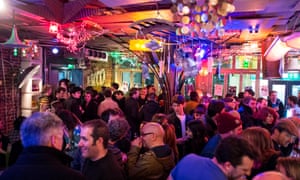
‘Junkyard wonderland’… The Hope & Ruin, a bar, diner and gig venue
Brighton’s festival scene in May could be the reason for a spring visit but this creative and collaborative seaside town has inspirational art, music, food and drink on tap year-round
You might imagine that Brighton, the seaside resort and party town, and Brighton, the lefty, bohemian city (the only one in the UK with a Green MP), co-exist independently. Talk to local creatives, however, and that distinction blurs.
It is a matter of attitude. As with any city, Brighton has problems. Despite having one of the UK’s largest per-capita concentrations of creative businesses and artist-makers, this is an expensive place to live. Affordable space, like that available at the Phoenix arts complex, is rare. “We own the building,” says its executive director Sarah Davies. Consequently, artists are forced out to Hastings or Worthing. “I’m lucky,” says the musician and Fat Dog Partypromoter Georgina Stott. “I live in a property guardianship unit where we’ve built a soundproofed rehearsal studio, but prices are similar to London here. It’s tricky.”
At the same time, everyone enthuses about Brighton’s spirit of collaboration, the determination among its alternative tribes to make things happen despite such obstacles; to enjoy life on their own terms. In other cities, alternative communities often simmer with resentment. In Brighton, the attitude is: “Hey, the sun’s out. Let’s do this.”
Phoenix arts complex. Photograph: Julian Vilarrubi
“Brighton is about collaboration generated by the enthusiasm of the people running spaces here,” says Nicola Haydn, artistic director at production company Otherplace, “which means that grassroots comics and musicians can come and play in those places. In Brighton everyone’s a hippy. People get on. It’s not cut-throat. You can see the sea, you can hear seagulls. There is a more relaxed vibe.”
That inclusive, DIY sensibility explains, perhaps, the conspicuously large number of bars and cafes in Brighton that double as performance and (often radical) community spaces. Brighton is home to the UK’s biggest artists’ “open house” festival (6-29 May), while the city’s foremost music festival, the Great Escape (18-20 May), has spawned a free Alternative Escape programme. Likewise, May’s Brighton Festival runs alongside the world’s third largest fringe arts festival (5 May to 4 June).
Bucking the system is not limited to the arts. Like any city, mainstream Brighton has its chain stores. But, famously, the city has a remarkable number of unusually sophisticated meat-free restaurants (where else would you find Hail Seitan, a co-operative vegan kitchen?). It is also the location for ethical supermarket HiSbe, and Silo, a zero-waste restaurant. Michael Bremner – part of the team behind the crowdfunded Brighton pub the Bison Arms and the chef-owner of arguably Brighton’s best restaurant, 64° – says that cooking responsibly and sustainably is obligatory here: “People expect it. I see it as a duty. And the chefs I know are of the same mentality.” The Bison Arms was bought in part to stop a chain operator bagging the site.
Musically, Brighton’s proximity to London is a mixed blessing (it is easier to book acts; harder to establish a distinct musical identity), but it maintains a vibrant local scene of niche labels and gig/club promoters as diverse as the psych and garage evangelists Acid Box, and electronic connoisseurs First Floor. “People down here are well-educated about underground music,” says DJ/producer, Suze Rosser. “And there’s a few people here who’ve chosen to leave London because it’s a slower pace and a little more friendly.” By the sounds of it, those London escapees have the right idea.
Committed to the idea that art can effect profound social and political change, this gallery and performance space is a platform for work that addresses, primarily, environmental concerns. ONCA’s programme is busy and diverse, from Synthetic Ecology to site-specific theatre in its subterranean cave. A Grade II-listed Regency building and courtyard, ONCA is “a really lovely space,” says Davies of Phoenix Brighton. “They’re small but agile and have the passion and vision to scope that up.” •14 St George’s Place, onca.org.uk
In recent decades, this 18th-century pub has become a refuge for cutting-edge performance. “I produced some of my first shows there in the early 1990s,” says Nicola Haydn, who curates the Warren, the Brighton fringe festival’s multi-venue performance hub . The 55-seat Marlborough, says Haydn, “shows excellent stuff including a lot of LGBT work [from in-house production company, Pink Fringe].” Meanwhile, she adds, over at punky rockers’ pub Caroline of Brunswick, you will find “great comedy in the tiny upstairs room; either up-and-coming acts or established comics trying new stuff out.” • 4 Princes Street, marlboroughtheatre.org.uk
Fabrica
As festival director of Artists Open Houses (weekends, May), during which more than 1,500 artists and makers invite the public into their homes and studios, Judy Stevens is acutely aware that Brighton lacks major exhibition spaces for contemporary art. Fabrica makes a sterling effort to plug that gap with its packed programme of talks, screenings, workshops, exhibitions and site-specific commissions. “In an old church, it’s an artists’ community that is important to the whole city in terms of visual arts,” says Stevens. •40 Duke Street, fabrica.org.uk
Ad hoc art
Artwork by David Batchelor, which featured as part of Brighton’s HOUSE visual art festival
To get the best out of Brighton, keep your ear to the ground. Grassroots, often volunteer-run, art is a tenuous business. “Things pop up then disappear. It’s an ever-changing landscape,” says Haydn. Similarly, several established Brighton arts organisations stage exhibitions and events on an irregular, ad hoc basis. Check in on activity at Blank (currently relocating) and the tech-focused agency Lighthouse. Such hubs tend to ramp up their public work around Brighton’s major festivals, such as the Fringe, Brighton Digital Festival (Sep/Oct) and HOUSE (Oct 2017, biennially from this year on), a city-wide festival of specially commissioned visual art which, last year, was headlined by the Turner winner Gillian Wearing.
Phoenix
“This is Brighton’s main artists’ studio complex and it has a really good artist-led exhibition space,” says Stevens. “Exciting things happen there.” These vary from family-friendly art markets to regular screenings of rare, avant garde art films, creative talks and themed, curated exhibitions of work by Phoenix artists. The forthcoming Present Tense (from 6 May) explores how ideas are informed by and can transcend their physical and cultural origins. • 10–14 Waterloo Place, phoenixbrighton.org
This 200-capacity club offers some of Brighton’s most cutting-edge electronic music programming – until 6am, too. Recent guests have ranged from Terror Danjah and Kowton to British house icon Luke Solomon; and look out for parties from local outfits such as Attic and Schtumm. The DJ/ producer Suze Rosser helps run the Constant Circles label, which has a quarterly showcase here (next date 10 June). She says: “Mono’s an intimate setting – a tunnel basically with a Funktion One soundsystem, where the focus is on extended, sometimes five-hour DJ sets. It opened around Christmas and it’s building a really nice crowd.” • 169-170 King’s Road Arches, monobrighton.com
Beneath Brighton station, this bar and novel gig/club space (vaulted ceilings and cobbled floors) is a hive of grassroots activity. Georgina Stott, whose free, multifaceted Fat Dog parties were incubated here, credits Green Door’s owners with fostering local talent, “They give people a chance, basically,” she says, pointing, by example, to radio station Platform B’s studio in the bar. Expect to find smaller touring bands here, although Green Door also programmes free club nights, such as hip-hop midweeker Donuts, R&B night Bossy, and the label Tru Thoughts’ bass-driven monthly, Sonic Switch. “It has good local promoters, a warehouse feel and an open-minded crowd,” says Rosser. • 2-4 Trafalgar Arches, Lower Goods Yard, thegreendoorstore.co.uk
Coachwerks
A multi-purpose building that houses artist-maker studios and green community centre, Coachwerks is also an ad hoc hub for film, music and art events. Stott, who plays in five Brighton bands, including Porridge Radio, loves it: “It’s this weird kind of hut on an estate in Hollingbury with its own brewery and gallery. We played a family festival there but there were loads of young bands on. Age isn’t a thing there, everyone mucks in.” • 19a Hollingdean Terrace, coachwerks.org
Originally an art deco hotel, this building has been several music venues and is now thriving as Patterns. “The club’s in the low-ceilinged basement, a perfect setting,” says Rosser, who presents on 1 Brighton FM (which will broadcast from Patterns in May, as part of the Magic Number festival). “The stuff Patterns has on is forward-thinking. For instance, it has Move D, Joy Orbison and Princess Nokia coming up and Horse Meat Disco have a residency there. It’s a real mix.” Flagging clubbers can wander up to the ground-floor bar, which is open all day and has a terrace used for occasional summer DJ parties and barbecues. Note: the junglist massive may prefer to head over to nearby Concorde2, where the 160bpm flame burns bright. Concorde 2 also hosts Brighton’s bigger dub and reggae gigs, plus visits from grime’s hottest MCs (eg Stormzy, Bugzy Malone). • 10 Marine Parade, patternsbrighton.com
Multipurpose Brighton
Brighton has an unusual number of off-beat venues which, like Coachwerks, facilitate everything from cult film nights and alternative speed dating to debating clubs, with music often at the forefront. In between its drag king cabaret and spoken word events, Latest Music Bar hosts regular gigs, as does the Marwood, an eccentrically decorated coffee shop-cum-bar with a first-floor performance space. The Rialto theatre welcomes the occasional touring band and Stott loves West Hill Hall, a bring-your-own-booze community hall used for DIY gigs: “The sound’s rough and ready but it works. It’s got a bit of a stage but normally bands just play on the floor.”
These Italian charmers used to feed people from a Fiat van and at pop-up supper clubs; their permanent diner is similarly simple and intimate. Eighteen guests eat at a chipboard bar, cheek by jowl with chefs preparing small plates of octopus, lentils and salsa verde and fresh pastas, such as maltagliati with leeks, Jerusalem artichokes and truffled ricotta. “It’s friendly, humble and just really cool,” says 64° chef-owner Michael Bremner. • Plates £6-£10, 13-16 Vine Street, cincin.co.uk
Modelled on Japan’s izakaya (boozy dens that serve punchy, gutsy food; in this case mainly grilled yakitori skewers), Bincho has taken Brighton by storm. “It’s fantastic,” says Iain Chambers, manager at the Bevy, a community-owned Brighton pub. “The Korean chicken wings are amazing. All the chefs go there.” Bremner agrees: “It does chicken skin, skewered hearts and livers; chefs love that stuff. Bincho’s pork belly is incredible, too.” • Plates £3-£7, 63 Preston Street, @BinchoYakitori
Trollburger
Paul Clark is on a very-Brighton mission to create superb food that is ethical in everything from its sourcing to the wages of the staff who prepare it. His sensational burgers are available from a “shack” under Brighton station and, after a recent flirtation with doner kebabs, he opened the neighbouring Trafalgar Street Arches diner, Hash House. “He just loves experimenting,” says fan Chambers, who – while we’re at Brighton station – also loves Curry Leaf’s platform kiosk: “You can get a beautiful fat paratha wrap full of tandoori paneer for a fiver here.” • Burgers from £5 (Wed-Sat), Trafalgar Street Arches, thetrollspantry.co.uk
Rootcandi
At Terre à Terre (terreaterre.co.uk) and Food For Friends (foodforfriends.com), Brighton has long been home to some of Britain’s most ambitious plant-based, meat-free cookery. A spin-off from the tasty, affordable Iydea canteens, Rootcandi is the latest vegetarian restaurant pushing the boundaries. It describes its food as Pan-Asian street food but, says Chambers, its vegan stir-frys, curries and bao buns are “refined and different.”
Fastidious pizza is the deal here, washed down with local beers from 360° and Bison. “It’s without doubt my favourite place in Brighton,” says Joe Lutrario, deputy editor at Restaurant magazine. “It’s broadly straightforward, wood-fired Neapolitan pizza – the n’duja (pork salumi) is really good – and it blows the chains out of the water.” •Pizza from £5.50, 77 London Road, fattoamanopizza.com
Instantly recognisable by its exterior mural of musical icons, the loveable, slightly grungy Prince Albert is one of those traditional pubs that has, slowly, morphed into a boho haven of good beers (often from Sussex’s Dark Star and Burning Sky), and raucous gigs in its upstairs venue. Shows runs the gamut from cacophonous metal to tremulous folk as local acts and touring cult bands pass through, assisted by local promoters such as Melting Vinyl and Dictionary Pudding. “It has a fantastic vibe,” says Georgina Stott. “[Label/ music collective] Love Thy Neighbour puts on a lot of gigs there and they’re always super-good.” • Pint from £3.60, 48 Trafalgar Street, on Facebook
“It does the best negroni in Brighton,” says Joe Lutrario of this late-night Kemptown bar. A dark cocoon evocatively dressed in flea market bric-a-brac, the Dove also serves up a stellar selection of craft beers (from scene-leaders such as Wild Beer, Beavertown Brew By Numbers) and a varied cultural programme. Its events include the long-running spoken-word evening Horseplay, the monthly Jazzology and heavyweight funk and hip-hop throwdown, Vinyl Veterans. • Pint from £4.10, cocktails £7.50, 74 St James’s Street, blackdovebrighton.com
The Hope & Ruin
A reclaimed wonderland of junkyard glitterballs and fairy lights (note: the kitchen occupies half an old touring caravan), the Hope serves some interesting beer (Cloudwater, Magic Rock), popular vegan food from Beelzebab, and hosts regular gigs. “They’ve let us put shows on in the pub which, in the best way, has always been a bit of a shambles,” laughs Stott, “but upstairs there’s a dedicated venue with fantastic sound.” The Hope’s sister venue, Sticky Mike’s Frog Bar, books everything from grime nights to out-there psych in its lively basement. • Pint from £4.20, 11-12 Queens Road, hope.pub
The Brunswick
This historic free house in neighbouring Hove dispenses A1 beers (Burning Sky, Wylam, Northern Monk), and in its cosy cellar bar and live room hosts multifarious gigs and DJ nights, from Tuesday’s Jazz Club to alt/indie showcases from energetic promoters Overhead Wires Music. “With its outdoor terrace and occasional beer festivals, the Brunswick has many strings to its bow,” says Jack Cregan, co-owner of craft beer bottle shop Bison, the main instigators of the crowdfunded Bison Arms pub project. • Pint from £3.80, 1–3 Holland Road, Hove, thebrunswick.net
For its supporters, “natural wine” (made with minimal chemical or mechanical intervention) is a return to the unmediated truth of wine. It is wine full of the vibrant flavours that industrialisation has gradually dulled. Decide for yourself at this modish, laid-back French-owned bar and restaurant, which serves 17 natural wines by the glass. “I adore its bar and the food,” says Fran Villani, who blogs at thegraphicfoodie.co.uk. “Its cocktails have a prohibition-era feel and are some of Brighton’s best.” • Wines from £5, 1 Bartholowmews, plateaubrighton.co.uk