MOSCOW (AP) — Russian authorities are shortening the required isolation period for people infected with COVID-19 from 14 to seven days as the country faces another surge of COVID-19 cases, this time driven by the highly contagious omicron variant.
Deputy Prime Minister Tatyana Golikova, who runs the country’s coronavirus task force, said Tuesday that health officials were “optimizing our approaches to quarantine and testing of our citizens, including shortening the quarantine period to seven days.”
Golikova added that other policy changes will be adopted in the coming days, without elaborating. She also didn’t explain the rationale for cutting the isolation period. Earlier rules required a two-week isolation period for those who test positive, with a mandatory follow-up test on day 11.
Russia already has by far Europe’s worst death toll in the pandemic at over 322,000 deaths by its official tally, a number that other statistics suggest is a significant undercount.
The daily number of coronavirus infections confirmed in Russia has doubled over the past week, going from over 15,000 on Jan. 10 to 31,252 on Tuesday. Officials say the surge could end up as the country’s biggest yet but so far haven’t announced any major restrictions to stem it.
Anna Popova, the head of Russian public health watchdog Rospotrebnadzor, said last week that new daily cases might reach six figures. President Vladimir Putin has said that Russia has “a couple of weeks” to prepare for the unprecedented wave.
Showing posts with label Russia. Show all posts
Sunday, January 23, 2022
Saturday, October 16, 2021
Russia’s Daily COVID-19 Deaths Top 1,000 For First Time
MOSCOW (AP) — Russia’s daily death toll from COVID-19 has exceeded 1,000 for the first time as the country faces a sustained wave of rising infections.
The national coronavirus task force on Saturday reported 1,002 deaths in the previous day, up from 999 on Friday, along with 33,208 new confirmed COVID-19 cases, more than 1,000 higher than the day before.
Russian authorities have tried to speed up the pace of vaccinations with lotteries, bonuses and other incentives, but widespread vaccine skepticism and conflicting signals from officials stymied the efforts. The government said this week that about 43 million Russians, or about 29% of the country’s nearly 146 million people, are fully vaccinated.
Despite the mounting toll, the Kremlin has ruled out a new nationwide lockdown like the one early on in the pandemic that badly hurt the economy, eroding President Vladimir Putin’s popularity. Instead, it has delegated the power to enforce coronavirus restrictions to regional authorities.
Some of Russia’s 85 regions have restricted attendance at large public events and limited access to theaters, restaurants and other venues. However, daily life is going on largely as normal in Moscow, St. Petersburg and many other Russian cities.
Health Minister Mikhail Murashko acknowledged this week that medical facilities have come under growing strains and said authorities have offered retired medics who have gotten vaccinated the option of returning to work.
The national coronavirus task force on Saturday reported 1,002 deaths in the previous day, up from 999 on Friday, along with 33,208 new confirmed COVID-19 cases, more than 1,000 higher than the day before.
Russian authorities have tried to speed up the pace of vaccinations with lotteries, bonuses and other incentives, but widespread vaccine skepticism and conflicting signals from officials stymied the efforts. The government said this week that about 43 million Russians, or about 29% of the country’s nearly 146 million people, are fully vaccinated.
Despite the mounting toll, the Kremlin has ruled out a new nationwide lockdown like the one early on in the pandemic that badly hurt the economy, eroding President Vladimir Putin’s popularity. Instead, it has delegated the power to enforce coronavirus restrictions to regional authorities.
Some of Russia’s 85 regions have restricted attendance at large public events and limited access to theaters, restaurants and other venues. However, daily life is going on largely as normal in Moscow, St. Petersburg and many other Russian cities.
Health Minister Mikhail Murashko acknowledged this week that medical facilities have come under growing strains and said authorities have offered retired medics who have gotten vaccinated the option of returning to work.
Saturday, October 9, 2021
Russians Flock To Serbia For Western-Made COVID-19 Vaccines
BELGRADE, Serbia (AP) — When Russian regulators approved the country’s own coronavirus vaccine, it was a moment of national pride, and the Pavlov family was among those who rushed to take the injection. But international health authorities have not yet given their blessing to the Sputnik V shot.
So when the family from Rostov-on-Don wanted to visit the West, they looked for a vaccine that would allow them to travel freely — a quest that brought them to Serbia, where hundreds of Russian citizens have flocked in recent weeks to receive Western-approved COVID-19 shots.
Serbia, which is not a member of the European Union, is a convenient choice for vaccine-seeking Russians because they can enter the allied Balkan nation without visas and because it offers a wide choice of Western-made shots. Organized tours for Russians have soared, and they can be spotted in the capital, Belgrade, at hotels, restaurants, bars and vaccination clinics.
“We took the Pfizer vaccine because we want to travel around the world,” Nadezhda Pavlova, 54, said after receiving the vaccine last weekend at a sprawling Belgrade vaccination center.
Her husband, Vitaly Pavlov, 55, said he wanted “the whole world to be open to us rather than just a few countries.”
Vaccination tour packages for Russians seeking shots endorsed by the World Health Organization appeared on the market in mid-September, according to Russia’s Association of Tour Operators.
Maya Lomidze, the group’s executive director, said prices start at $300 to $700, depending on what’s included.
Lauded by Russian President Vladimir Putin as world’s first registered COVID-19 vaccine, Sputnik V emerged in August 2020 and has been approved in some 70 countries, including Serbia. But the WHO has said global approval is still under review after citing issues at a production plant a few months ago.
On Friday, a top World Health Organization official said legal issues holding up the review of Sputnik V were “about to be sorted out,” a step that could relaunch the process toward emergency use authorization.
Other hurdles remain for the Russian application, including a lack of full scientific information and inspections of manufacturing sites, said Dr. Mariangela Simao, a WHO assistant director-general.
Apart from the WHO, Sputnik V is also still awaiting approval from the European Medicines Agency before all travel limitations can be lifted for people vaccinated with the Russian formula.
The long wait has frustrated many Russians, so when the WHO announced yet another delay in September, they started looking for solutions elsewhere.
“People don’t want to wait; people need to be able to get into Europe for various personal reasons,” explained Anna Filatovskaya, Russky Express tour agency spokeswoman in Moscow. “Some have relatives. Some have business, some study, some work. Some simply want to go to Europe because they miss it.”
Serbia, a fellow-Orthodox Christian and Slavic nation, offers the Pfizer, AstraZeneca and Chinese Sinopharm shots. By popular demand, Russian tourist agencies are now also offering tours to Croatia, where tourists can receive the one-shot Johnson & Johnson vaccine, without the need to return for a second dose.
“For Serbia, the demand has been growing like an avalanche,” Filatovskaya said. “It’s as if all our company is doing these days is selling tours for Serbia.”
The Balkan nation introduced vaccination for foreigners in August, when the vaccination drive inside the country slowed after reaching around 50% of the adult population. Official Serbian government data shows that nearly 160,000 foreign citizens so far have been vaccinated in the country, but it is unclear how many are Russians.
In Russia, the country’s vaccination rate has been low. By this week, almost 33% of Russia’s 146 million people have received at least one shot of a coronavirus vaccine, and 29% were fully vaccinated. Apart from Sputnik V and a one-dose version known as Sputnik Light, Russia has also used two other domestically designed vaccines that have not been internationally approved.
Russian Health Minister Mikhail Murashko recently said administrative issues were among the main holdups in the WHO’s review process.
Judy Twigg, a political science professor specializing in global health at Virginia Commonwealth University, expects Sputnik V to be approved eventually, but “maybe not by the end of this year.”
“The WHO has said that it needs more data, and it needs to go back and inspect some production lines where it saw issues early on. Those re-inspections are a multiweek process, with good reason. It’s not something that they just gloss over lightly.”
Amid low vaccination rates and reluctance by the authorities to reimpose restrictive measures, both Russia and Serbia have seen COVID-19 infections and hospitalizations reach record levels in the past weeks.
The daily coronavirus death toll in Russia topped 900 for a second straight day on Thursday — a day after reaching a record 929. In Serbia, the daily death toll of 50 people is the highest in months in the country of 7 million that so far has confirmed nearly 1 million cases of infection.
Pavlova said the “double protection” offered by the Pfizer booster shots would allow the family “to not only travel around the world, but also to see our loved ones without fear.”
Since the vaccine tours exploded in popularity about a month ago, they have provided welcome business for Serbian tour operators devastated by the pandemic in an already weak economy. The owner of BTS Kompas travel agency in Belgrade, Predrag Tesic, said they are booked well in advance.
“It started modestly at first, but day by day numbers have grown nicely,” Tesic said.
He explained that his agency organizes everything, from airport transport to accommodations and translation and other help at vaccination points. When they return for another dose in three weeks, the Russian guests also are offered brief tours to some of popular sites in Serbia.
Back in Russia, some Moscow residents said they understood why many of their fellow Russians travel abroad for vaccines. But Tatiana Novikova said homegrown vaccines remain her choice.
“I trust ours more, to be honest,” she said.
——
Associated Press writers Dusan Stojanovic and Ivana Bzganovic in Belgrade, Serbia, and Daria Litvinova and Daniel Kozin reported from Moscow.
So when the family from Rostov-on-Don wanted to visit the West, they looked for a vaccine that would allow them to travel freely — a quest that brought them to Serbia, where hundreds of Russian citizens have flocked in recent weeks to receive Western-approved COVID-19 shots.
Serbia, which is not a member of the European Union, is a convenient choice for vaccine-seeking Russians because they can enter the allied Balkan nation without visas and because it offers a wide choice of Western-made shots. Organized tours for Russians have soared, and they can be spotted in the capital, Belgrade, at hotels, restaurants, bars and vaccination clinics.
“We took the Pfizer vaccine because we want to travel around the world,” Nadezhda Pavlova, 54, said after receiving the vaccine last weekend at a sprawling Belgrade vaccination center.
Her husband, Vitaly Pavlov, 55, said he wanted “the whole world to be open to us rather than just a few countries.”
Vaccination tour packages for Russians seeking shots endorsed by the World Health Organization appeared on the market in mid-September, according to Russia’s Association of Tour Operators.
Maya Lomidze, the group’s executive director, said prices start at $300 to $700, depending on what’s included.
Lauded by Russian President Vladimir Putin as world’s first registered COVID-19 vaccine, Sputnik V emerged in August 2020 and has been approved in some 70 countries, including Serbia. But the WHO has said global approval is still under review after citing issues at a production plant a few months ago.
On Friday, a top World Health Organization official said legal issues holding up the review of Sputnik V were “about to be sorted out,” a step that could relaunch the process toward emergency use authorization.
Other hurdles remain for the Russian application, including a lack of full scientific information and inspections of manufacturing sites, said Dr. Mariangela Simao, a WHO assistant director-general.
Apart from the WHO, Sputnik V is also still awaiting approval from the European Medicines Agency before all travel limitations can be lifted for people vaccinated with the Russian formula.
The long wait has frustrated many Russians, so when the WHO announced yet another delay in September, they started looking for solutions elsewhere.
“People don’t want to wait; people need to be able to get into Europe for various personal reasons,” explained Anna Filatovskaya, Russky Express tour agency spokeswoman in Moscow. “Some have relatives. Some have business, some study, some work. Some simply want to go to Europe because they miss it.”
Serbia, a fellow-Orthodox Christian and Slavic nation, offers the Pfizer, AstraZeneca and Chinese Sinopharm shots. By popular demand, Russian tourist agencies are now also offering tours to Croatia, where tourists can receive the one-shot Johnson & Johnson vaccine, without the need to return for a second dose.
“For Serbia, the demand has been growing like an avalanche,” Filatovskaya said. “It’s as if all our company is doing these days is selling tours for Serbia.”
The Balkan nation introduced vaccination for foreigners in August, when the vaccination drive inside the country slowed after reaching around 50% of the adult population. Official Serbian government data shows that nearly 160,000 foreign citizens so far have been vaccinated in the country, but it is unclear how many are Russians.
In Russia, the country’s vaccination rate has been low. By this week, almost 33% of Russia’s 146 million people have received at least one shot of a coronavirus vaccine, and 29% were fully vaccinated. Apart from Sputnik V and a one-dose version known as Sputnik Light, Russia has also used two other domestically designed vaccines that have not been internationally approved.
Russian Health Minister Mikhail Murashko recently said administrative issues were among the main holdups in the WHO’s review process.
Judy Twigg, a political science professor specializing in global health at Virginia Commonwealth University, expects Sputnik V to be approved eventually, but “maybe not by the end of this year.”
“The WHO has said that it needs more data, and it needs to go back and inspect some production lines where it saw issues early on. Those re-inspections are a multiweek process, with good reason. It’s not something that they just gloss over lightly.”
Amid low vaccination rates and reluctance by the authorities to reimpose restrictive measures, both Russia and Serbia have seen COVID-19 infections and hospitalizations reach record levels in the past weeks.
The daily coronavirus death toll in Russia topped 900 for a second straight day on Thursday — a day after reaching a record 929. In Serbia, the daily death toll of 50 people is the highest in months in the country of 7 million that so far has confirmed nearly 1 million cases of infection.
Pavlova said the “double protection” offered by the Pfizer booster shots would allow the family “to not only travel around the world, but also to see our loved ones without fear.”
Since the vaccine tours exploded in popularity about a month ago, they have provided welcome business for Serbian tour operators devastated by the pandemic in an already weak economy. The owner of BTS Kompas travel agency in Belgrade, Predrag Tesic, said they are booked well in advance.
“It started modestly at first, but day by day numbers have grown nicely,” Tesic said.
He explained that his agency organizes everything, from airport transport to accommodations and translation and other help at vaccination points. When they return for another dose in three weeks, the Russian guests also are offered brief tours to some of popular sites in Serbia.
Back in Russia, some Moscow residents said they understood why many of their fellow Russians travel abroad for vaccines. But Tatiana Novikova said homegrown vaccines remain her choice.
“I trust ours more, to be honest,” she said.
——
Associated Press writers Dusan Stojanovic and Ivana Bzganovic in Belgrade, Serbia, and Daria Litvinova and Daniel Kozin reported from Moscow.
Wednesday, October 6, 2021
Coronavirus Deaths In Russia Surpass 900 A Day For 1st Time
MOSCOW (AP) — Russia’s daily coronavirus death toll surpassed 900 on Wednesday for the first time in the pandemic, a record that comes amid the country’s low vaccination rate and the government’s reluctance to impose tough restrictions to control new cases.
’s state coronavirus task force reported 929 new deaths on Wednesday, the fourth time this month that daily COVID-19 deaths have reached record highs. The previous record, of 895 deaths, was registered Tuesday. Russia already has Europe’s highest death toll in the pandemic at over 212,000 people, but some official data suggests that is an undercount.
The task force also reported 25,133 new confirmed cases Wednesday.
The rise in infections and deaths began in late September. The Kremlin has blamed it on too few Russians getting vaccinated. As of Tuesday, almost 33% of Russia’s 146 million people had received at least one shot of a coronavirus vaccine, and 29% were fully vaccinated.
Despite the surge, government officials rejected the idea of imposing a lockdown and said regional authorities would take steps to stem the spread of the virus.
A number of Russian regions have limited attendance at large public events and restricted access to theaters, restaurants and other places to people who have been vaccinated, recently recovered from COVID-19 or tested negative in the previous 72 hours.
In some regions, Russia’s vast yet severely underfunded health care system has started to show signs of being overwhelmed by the outbreak.
Russian media have reported long lines of ambulances once again forming in front of hospitals in St. Petersburg. One desperate ambulance crew in the city of Vladimir, 180 kilometers (110 miles) east of Moscow, reportedly drove a COVID-19 patient to a local government building after failing to find a hospital bed for her.
On Tuesday, the presidential envoy in the Ural Mountains district — a part of central Russia that encompasses six regions — said 95% of the hospital beds for COVID-19 patients there have been filled.
“The situation is very dire,” Vladimir Yakushev was quoted as saying by the Interfax news agency.
Asked by reporters if the Kremlin will offer support to regions if they impose local lockdowns to tackle the surge of infections, Kremlin spokesman Dmitry Peskov urged those authorities to think twice. He said regional authorities have the power to decide which measures to introduce but “declaring some kind of lockdown is an absolutely undesirable scenario for any region.”
Overall, Russia’s coronavirus task force has reported over 7.6 million confirmed cases and more than 212,000 deaths. However, reports by Russia’s state statistical service Rosstat that tally coronavirus-linked deaths retroactively reveal much higher mortality numbers.
’s state coronavirus task force reported 929 new deaths on Wednesday, the fourth time this month that daily COVID-19 deaths have reached record highs. The previous record, of 895 deaths, was registered Tuesday. Russia already has Europe’s highest death toll in the pandemic at over 212,000 people, but some official data suggests that is an undercount.
The task force also reported 25,133 new confirmed cases Wednesday.
The rise in infections and deaths began in late September. The Kremlin has blamed it on too few Russians getting vaccinated. As of Tuesday, almost 33% of Russia’s 146 million people had received at least one shot of a coronavirus vaccine, and 29% were fully vaccinated.
Despite the surge, government officials rejected the idea of imposing a lockdown and said regional authorities would take steps to stem the spread of the virus.
A number of Russian regions have limited attendance at large public events and restricted access to theaters, restaurants and other places to people who have been vaccinated, recently recovered from COVID-19 or tested negative in the previous 72 hours.
In some regions, Russia’s vast yet severely underfunded health care system has started to show signs of being overwhelmed by the outbreak.
Russian media have reported long lines of ambulances once again forming in front of hospitals in St. Petersburg. One desperate ambulance crew in the city of Vladimir, 180 kilometers (110 miles) east of Moscow, reportedly drove a COVID-19 patient to a local government building after failing to find a hospital bed for her.
On Tuesday, the presidential envoy in the Ural Mountains district — a part of central Russia that encompasses six regions — said 95% of the hospital beds for COVID-19 patients there have been filled.
“The situation is very dire,” Vladimir Yakushev was quoted as saying by the Interfax news agency.
Asked by reporters if the Kremlin will offer support to regions if they impose local lockdowns to tackle the surge of infections, Kremlin spokesman Dmitry Peskov urged those authorities to think twice. He said regional authorities have the power to decide which measures to introduce but “declaring some kind of lockdown is an absolutely undesirable scenario for any region.”
Overall, Russia’s coronavirus task force has reported over 7.6 million confirmed cases and more than 212,000 deaths. However, reports by Russia’s state statistical service Rosstat that tally coronavirus-linked deaths retroactively reveal much higher mortality numbers.
Saturday, October 24, 2020
Russia Shuns Tough Restrictions Even As Infections Soar
MOSCOW (AP) — It’s Friday night in Moscow, and popular bars and restaurants in the city center are packed. No one except the staff is wearing a mask or bothers to keep their distance. There is little indication at all that Russia is being swept by a resurgence of coronavirus infections.
“I believe that everyone will have the disease eventually,” says Dr. Alexandra Yerofeyeva, an internal medicine specialist at an insurance company, while sipping a cocktail at The Bix bar in Moscow. She adds cheerfully: “Nothing ventured, nothing gained.”
The outbreak in Russia this month is breaking the records set in the spring, when a lockdown to slow the spread of the virus was put in place. But, as governments across Europe move to reimpose restrictions to counter rising cases, authorities in Russia are resisting shutting down businesses again. Some regions have closed nightclubs or limited the hours of bars and restaurants, but few measures have been implemented in Moscow, which is once again the epicenter of the surge.
On Friday, Russian authorities reported over 15,000 new infections, the highest daily spike so far in the pandemic. Moscow — with less than 10% of the population — accounts for up to 30% of new infections each day. The health minister says 90% of hospital beds for coronavirus patients have been filled. Three times this week, Russia’s daily death toll exceeded the spring record of 232.
Even these soaring virus tolls are likely undercounts; experts have cautioned that official figures around the world understate the true toll, but critics have taken particular issue with Russia’s death tolls, alleging authorities might be playing down the scale of the outbreak.
Right now, situation is “difficult” but “no restrictive measures for the economy are required,” Deputy Prime Minister Tatyana Golikova told President Vladimir Putin on Wednesday.
The spring lockdown hurt the country’s already weakened economy and compounded Russians’ frustration with plummeting incomes and worsening living conditions, driving Putin’s approval rating to a historic low of 59% in April, according to the Levada Center, Russia’s top independent pollster. Analysts say his government doesn’t want to return to those darks days.
“They know that people have just come to the end of their tolerance of the lockdown measures that would be hugely unpopular if they got imposed again,” said Judy Twigg, a professor of political science at Virginia Commonwealth University, specializing in global health.
In fact, Putin’s government appears to be moving in the opposite direction. Russian officials announced this week that air traffic would resume with three more countries. All international air traffic was stopped in the spring.
The announcement reminded people “about the necessity to take care of their health as much as possible” — a reflection of Russian authorities’ new effort to shift much of the responsibility for how the outbreak unfolds onto the people.
Moscow has taken the necessary measures, “but without the people responding to these measures, helping themselves and the people around them, nothing will work,” warned Sergei Sobyanin, the mayor of the Russian capital of 12.7 million.
During the summer, authorities lifted most virus-related restrictions, and life in Russia started getting back to normal. Perhaps too quickly, some critics said, noting that the government was eager to ensure that people voted on constitutional amendments extending Putin’s rule.
Even as health officials still report several thousand new infections every day, restaurants and cinemas reopened, vacationers flocked to Black Sea resorts, and 17,000 took part in the Moscow Half Marathon in August. Russia’s Sports Minister Oleg Matytsin said the race “marked this victory” over the pandemic.
That same month, Putin announced regulatory approval of the first vaccine against coronavirus — although many scientists have cast doubt on the shot — and it is now being tested in a larger study. Authorities are offering it to doctors and teachers, but it’s not widely available.
With Putin’s approval ratings on the rise again, the government appears reluctant to do anything that might further weaken the economy and anger the public.
The authorities understand that “the economic virus is worse than the biological one,” Boris Titov, Russia’s business ombudsman, told entrepreneurs this week. Nearly 70% of the country’s businesses “will not survive the second wave” and the accompanying restrictions, he said.
But doctors and experts are sounding the alarm that Russia’s health system is being stretched. Just like in the spring, media report hourslong waits for ambulances and long lines for CT scans. People who have virus symptoms — who are supposed to call a visiting doctor service — report waiting days for anyone to arrive.
“When it comes to the regions (beyond Moscow), we see that they are already choking,” said Vasily Vlassov, public health expert with the Higher School of Economics in Moscow.
Moscow hospitals, so far, appear to be coping.
“The hospital is full, but there are free beds for now, and we haven’t yet used all of the reserve beds,” said Dr. Alexander Vanyukov of the Moscow Hospital No. 52.
Life outside hospitals remains largely normal. Moscow officials have recommended the elderly and those with chronic illnesses stay home. They ordered employers to make 30% of their staff work from home, extended the fall school vacation by a week and moved middle and high school students to online classes.
As at the national level, officials have focused on personal responsibility, at one point sending inspectors to theaters to look for retirees who are not self-isolating.
Officials said they considered shutting bars and nightclubs, but on Thursday Moscow’s mayor proposed “an experiment” instead: Employees and customers at establishments open between midnight and 6 a.m. must register for contact tracing purposes.
Margo Lankina, manager of The Bix bar, says operating during the pandemic isn’t easy. Her staff must wear gloves and masks and their health is monitored. The venue is regularly cleaned.
“But on the other hand, it’s good that they allow us to work,” Lankina says.
“Our guests? Well, the distance is not being observed, that’s true, what can I say?” Lankina admits. “But somehow we keep on living.”
___
Associated Press writer Kostya Manenkov contributed.
___
Follow all of AP’s coronavirus pandemic coverage at http://apnews.com/VirusOutbreak and https://apnews.com/UnderstandingtheOutbreak
Sunday, December 31, 2017
10 Countries with the Strictest Rules & Regulations for Tourists and Locals
In the United States, it’s easy to take for granted a certain amount of freedom. We can travel freely from state to state, and — by and large — each of us is in control of our own destiny (socioeconomic or intellectual limitations notwithstanding). That’s not the case for several places throughout the world. And while that information may not be particularly revelatory, the extent to which some countries go to crack down on perceived bad behavior for both residents and visitors is pretty amazing. From Singapore to Iran, here are the world’s strictest countries.
10. Cuba
Visitors to Cuba are usually treated very well. In fact, most tourists get easy access to amenities we take for granted (like the internet). For those people who live in the communist nation, however, things are different. Incoming and outgoing news is strictly controlled, for example, and those who are critical of the government are jailed. With the ease on travel restrictions, it’s hoped that the country will gravitate to a more liberal position, but at the moment, living there isn’t exactly a treat.

9. China
Another communist nation with a real jones for controlling the flow of information, China runs a very tight ship for its citizens. Like Cuba, most tourists are allowed a little bit of leeway, but it’s a tough row to hoe if you live there. The biggest hardship is the government’s harsh control over the flow of information into and out of the country. Hollywood films aren’t even regularly allowed in China unless they pass a rigorous screening process — even then there’s a strict limit on the foreign films that can be shown in the country.

8. Eritrea
The concept of religious freedom is nonexistent in Eritrea, an African country located in the region of the Horn of Africa. Though the country represents a mix of both Christianity and Islam, sects like Jehovah’s Witnesses and Seventh Day Adventists are actively forbidden from worshipping openly. The regime also eagerly controls the media and censors most information from the outside world.

7. Syria
Most Americans would get completely shut down if they tried to enter Syria legally. Of course, that’s because the government has bigger fish to fry. These days, you could probably enter Syria illegally with little to no trouble, because the country is in the midst of a years long effort to oust entrenched jerk (and Syrian President) Bashar al-Assad. As a result of the combat, those people struggling to live a normal life in Syria must endure a statewide communication blackout that’s essentially stopped the influx of information.

6. Iran
Iran is still ruled by Sharia Law, a religious tradition that’s especially tough on women. Along with the obligatory prohibitions on speaking out against the government, Sharia Law enforces a whole lot of social crimes with some pretty brutal punishments. Those found guilty of adultery are publicly stoned (women get buried up to their neck first). Men and women’s hair styles are strictly enforced. Women must cover their heads in public, and must adhere to strict dress codes. Most “Western” music and movies are strictly prohibited, as are social media outlets like Facebook and YouTube. For those people trying to gain access to the country, it’s best just to give it up now.

5. Russia
The current American President may have no problem buddying up to the folks who run Russia, but the country still has a reputation for old school oppression. Vladimir Putin has overseen a crackdown on the LGBT community that’s positively draconic. He’s also ransacked the offices of supposed detractors. What’s more, Putin’s political opponents have a weird way of getting shot in the street or disappearing. It’s nuts. If you’re an American hoping to visit Russia, you could experience some issues. Not only do most people need to be explicitly invited, but there’s also an obligatory form that asks entrants to fill out their personal information along the lines of where you went to high school, the last three places you’ve worked, your parents names, etc.

4. Saudi Arabia
In spite of the fact that the United States counts Saudi Arabia as one of its allies in the Middle East, the country’s inner workings are as different as night and day. Its social rules — even for visitors — are strict. Women aren’t allowed to drive, or spend time with a man to whom they are not related. Anyone daring to speak out against the government or its policies faces excoriation and potential job loss. While business travel into the country is increasingly relaxed, it’s still extremely difficult to get into the country on a tourist visa.

3. Equatorial Guinea
The dictator in Equatorial Guinea only approves state-run programming. There’s one newspaper. Citizens are actively discouraged from reading. Of course, thats not a big deal for most Americans, because most people actively petitioning for entry into Africa’s only Spanish speaking country have their visas denied immediately. In fact, to even visit Guinea, you have to go to Lisbon in Portugal, because there’s not an embassy in the US or the United Kingdom.

2. North Korea
The North Koreans make no attempt to hide their suspicion of visitors. Provided you’re not from South Korea or the United States, you can visit, but you’ll be followed by a constant chaperone, called a “minder” whose sole purpose is to make sure tourists don’t break the rules. Locals, meanwhile, are diligently policed to ensure that they’re not doing crazy things like loitering in a park. In North Korea, citizens have to have an express purpose for being on the street and walking around. “I felt like it,” doesn’t work as an excuse in Pyongyang.

1. Singapore
Singapore may have an international reputation for prosperity and safety, but that success comes at a cost. The city is extremely strict for both travelers and residents. Want to behave badly? You better have lots of money or thick skin, because Singaporean authorities will issue fines or corporal punishment for anything from smoking in public to wearing the wrong clothes when you’re traveling. People can’t even spit in public.

Friday, May 6, 2016
Dining Out In Moscow: From Culinary Wasteland To Foodie Heaven
![]() |
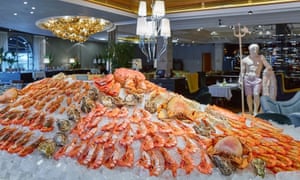
| Russian seafood at Erwin |
A ban on imported ingredients from the EU has led restaurants to source local produce – sparking fresh interest in Russian food
Not so long ago, the idea of naming an upmarket Moscow restaurant after an unfashionable provincial Russian town would have been met with confusion.
These days things are different. Voronezh, which opened a few months ago in a restored central Moscow mansion, is often booked out a week in advance. Its success, and that of dozens of other restaurants, reflects trends which have, in a short space of time, transformed Moscow from culinary wasteland into foodie paradise.
Russia’s sanctions on imported fruits, vegetables, meat and fish from the EU and a number of other countries – introduced in response to western sanctions over the annexation of Crimea and war in east Ukraine – prompted anger but also provided extra stimulus to a focus on locally sourced ingredients that was already under way, and created new interest in Russian ingredients.
On top of attempts at sanctions busting, which have involved imitating European cheeses and meats, with mixed results, there has also been a drive to rediscover Russian cuisine and use Russian ingredients. Voronezh uses only Russian meat, while across town at Erwin, diners can feast on Kamchatka crab, Murmansk scallops and dozens of unusual fish from Russia’s many seas and rivers.
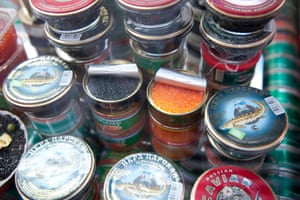
Thanks to the climate and decades of shortages, traditional Russian food can be a gruelling experience for the uninitiated, such as “salads” swimming in factory-made mayonnaise, and bland root vegetables. But at Zhivago, the focus is on doing the classics well, with mouth-watering pies with various fillings, many kinds of pelmeni dumplings, and seven types of caviar to dollop on to pancakes.
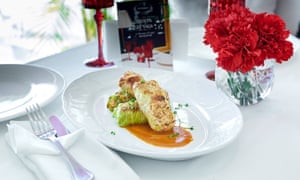
Russian food’s new fashionable status is one of the more benign consequences of the increased nationalism of the past two years. Even the doyen of the Moscow restaurant scene, Arkady Novikov, famous for opening dozens of upmarket restaurants in the capital over the past two decades, has gone local. His recent restaurants include Cheese Factory, where analogues to sanctioned cheeses are made on the premises, and Valenok, where Soviet cafe food is given an upmarket twist in glamorous surroundings. A valenok is a traditional Russian fur boot, and a model boot the size of a house announces the restaurant from the street.
Alongside the return to well-made comfort food, something new is also happening. In much the same way as British or Scandinavian restaurants discovered their own vernacular, a whole set of Moscow eateries featuring dishes that are both traditionally Russian and completely new has sprung up.
At Kutuzovsky 5, Russian recipes from two centuries ago are given a fresh twist with fine ingredients and cutting-edge cooking techniques. At Northerners, Murmansk scallops are served with carrot hummus and beetroot slices in a Russo-Nordic mashup. Almost every week a new restaurant opens with a “new Russian” theme in the kitchen.
Ivan and Sergey Berezutskiy, chefs who opened the restaurant Twins in central Moscow in late 2014, were pioneers in the focus on Russian ingredients.
“We had both worked in various Italian and French restaurants over the years and we thought it was weird that we know so much about Parma ham and other foreign products but nothing about our own interesting ingredients,” said Sergey.
One item they are particularly proud of is cured goose from Bashkortostan. “We’ve found a granny who cures it for us specially. It’s impossible to buy it anywhere in Moscow, and previously nobody outside the region knew about it, but it’s as good as any jamon,” said Sergey. They serve flakes of the cured meat with pumpkin ravioli.
The sanctions have sparked a drive to improve local agriculture, but also played into a natural process of eating locally sourced products that was already getting under way.
“People have begun to realise that the most important thing is to eat fresh food,” said Sergey. “Even with the sanctions, there are plenty of other countries we can import fish from, but why should we when we live in a country with more seas, rivers and lakes than any other?”
In a country that spans one-sixth of the world, “locally sourced” can be a relative term. Crabs from Magadan and Kamchatka have twice as far to travel to Moscow as fish from Europe, and internal Russian logistics are poor, which accounts for why so much good regional produce goes undiscovered. Restaurateurs say it is easier to bring ingredients to Moscow from Paris than it is from Murmansk.
Sanctions and the determination of Russian chefs are slowly changing that. In times of economic difficulty and a weak rouble, using local products also helps keep the bill down, and explains why so many Moscow restaurants are packed despite the troubled times. The transformation of restaurants from places for special occasions to everyday eating venues continues apace and is rearing a whole new generation of Muscovite foodies.
“Moscow is becoming one of the best places to eat in the world,” said local food critic and restaurant consultant Sasha Sutormina. “Two years ago you certainly couldn’t say that, but now when I have friends here from London, Hong Kong or Paris, they can’t believe how good it is.”
By Shaun Walker in Moscow
Sunday, January 24, 2016
Carnivals 101: A Guide To Some Of The Greatest Shows On Earth
·
Swept away in a sea of feather headdresses as sequins ping from overtight costumes, few travellers stop to wonder why carnivals exist. These riots of pre-Lenten revelry demand to be experienced rather than understood. Their common element is a gleeful up-ending of social norms, making them among the world’s most memorable travel experiences.
Many began as pagan gatherings that welcomed spring; under Christian influence, they morphed into a last hurrah before Lent, the six weeks of abstinence and reflection before Easter. For many of the most colourful customs, the original meaning has been lost in time – but logic should never get in the way of a good party. Here are some unforgettable locations to embrace carnival spirit.
Rio de Janeiro, Brazil: the record-breaking ‘greatest show on Earth’
During each day of Rio’s carnival, the biggest on Earth, more than two million people samba through the streets. Many visitors simply hurl themselves into epic street parties that flow around the Brazilian capital. But the most dazzling events are the phenomenally choreographed Samba Parade and the nightly balls (all ticketed), part of a vast programme of events. The revelry is overseen by ‘King Momo’, a personification of wit and mischief who incites the crowds to dance to the rhythms of batucada, Brazil’s hypnotic samba style. Don’t forget to catch your breath with a few caipirinhas.
Make it happen: carnival fever grips Rio for five days leading up to Ash Wednesday. Rio Carnival Services (rio-carnival.net) help arrange tickets, hotels and costumes.
This year: 5-10 February 2016
Pin this image
A Mardi Gras parade on Bourbon Street in New Orleans' French Quarter © Chuck Wagner / Shutterstock
Related articles:
New Orleans, USA: bead-throwing bacchanalia in the French Quarter
Bourbon Street, in the charismatic French Quarter, anchors some of the most risque fun in the Big Easy’s notorious carnival. Expect costume competitions honouring bold feats in leatherwear, and revellers swapping strings of beads for an eyeful of bare skin (not mandatory, we hasten to add). You won’t (always) need to cover the kids’ eyes: the parade ‘krewes’ Uptown tend to lead colourful, family-friendly fun. Get an energy boost from ‘king cake’, a psychedelic cinnamon-dusted confection; if your slice contains a plastic baby, the next cake is on you.
Make it happen: weeks of January parades reach a climax on Mardi Gras (‘Fat Tuesday’, the day before Ash Wednesday). Plan with a little help from mardigrasneworleans.com.
This year: 9 February 2016
Pin this image
A procession of masked revellers making their way down a canal in Venice © Sorin Vidis / Shutterstock
A procession of masked revellers making their way down a canal in Venice © Sorin Vidis / ShutterstockVenice, Italy: masked decadence and ballroom elegance
No carnival subverts the everyday quite like Italy’s canal city. Venice’s iconic carnevale masks have a long history: for centuries they afforded citizens a guise under which to anonymously indulge their vices. Grab a mask and sashay over to headline events like the Doge’s Ball and the Grand Masquerade Ball (extravagant enough to warrant the steep ticket prices). Otherworldly highlights include the Volo dell’Angelo (Angel’s Flight), in which a beauty contest winner soars by zipwire, and costume contests, all taking place in St Mark’s Square. Energise with somefrittelle di carnevale, fried pastry balls, just don’t get crumbs on that lavish ball gown.
Make it happen: carnival season tends to run from two Saturdays before Ash Wednesday, culminating on Fat (Shrove) Tuesday. See more on carnevale.venezia.it.
This year: 23 January to 9 February 2016
Pin this image
Masqueraders taking part in Trinidad & Tobago's carnival in Port of Spain © John de la Bastide / Shutterstock
Masqueraders taking part in Trinidad & Tobago's carnival in Port of Spain © John de la Bastide / ShutterstockTrinidad & Tobago: calypso and carousing on a Caribbean isle
Carnival on the island duo Trinidad & Tobago has a subversive history. Festivities originated with slaves creating a parody of white settlers’ masked balls, mocking colonial authority. After slavery’s abolishment in 1834, carnivals grew ever more lively: today you can expect limbo competitions and a cast of carnival characters including verbose Pierrot Grenade, beret-wearing Sailor Mas, bats, dragons, clowns galore and ‘jab jab’, the Devil himself. Listen out for thrilling lyrical improvisation of T&T’s extempo calypso style, with the best competing to be ‘Extempo Monarch’.
Make it happen: parades strut around the island in the two days before Ash Wednesday; learn more on ncctt.org.
This year: 8-9 February 2016
Pin this image
Revellers in the traditional Gilles costume at the Carnaval de Binche © Weskerbe / Shutterstock
Revellers in the traditional Gilles costume at the Carnaval de Binche © Weskerbe / ShutterstockBinche, Belgium: surreal costumes and citrus-throwing
Identical, pin-eyed figures flood the streets of Binche during carnival. It’s not as nightmarish as it sounds: this Belgian town has one of Europe’s most unmistakeable carnival figureheads, the ‘Gille’. His ginger facial hair, green glasses and straw-padded suits have murky origins, but the costume is revered, protected and off limits unless you’re a local. Festivities reach fever pitch on Shrove Tuesday’s morning procession: twigs are brandished to ward off evil, oranges thrown (catch them for luck), and torches held aloft. By nightfall, masked participants with ostrich feathers head to Binche’s Grand Place for a big bonfire.
Make it happen: the weird and wonderful display takes place over three days before Ash Wednesday; find more info on carnavaldebinche.be.
This year: 7-9 February 2016
Pin this image
Carnival goers burn dolls to celebrate the arrival of spring as part of Maslenitsa in Russia © Oleg Proskurin / Shutterstock
Carnival goers burn dolls to celebrate the arrival of spring as part of Maslenitsa in Russia © Oleg Proskurin / ShutterstockRussia: usher in spring with pyrotechnics and pancakes
Numerous European countries enjoy a pancake blowout on Fat Tuesday. But no culture fries up a storm quite like the Russians, whose ‘butter week’ before Lent involves bumper quantities of bliny. Maslenitsa has its origin in a Slavic pagan festival of the sun; circular pancakes are thought to be a nod to this. Sledding and snowball fights pass time between bliny binges, while an effigy of ‘Lady Maslenitsa’ is paraded through the streets and eventually set aflame. Moscow’s Red Square is a focal point for live music, dance and plenty of pancakes. Forgiveness and family ties are core themes, so you’ll see locals happily strolling in the snow or ice skating in Gorky Park.
Make it happen: a week of gaiety precedes the effigy-burning, which takes place eight weeks before Pascha (Orthodox Easter Sunday).
This year: 6-12 March 2016
Pin this image
Locals wearing masks and sheepskins to honour Kurent, an ancient god of hedonism, as part of Ptuj's carnival © Ivan Smuk / Shutterstock
Locals wearing masks and sheepskins to honour Kurent, an ancient god of hedonism, as part of Ptuj's carnival © Ivan Smuk / ShutterstockPtuj, Slovenia: pagan revival of the hairiest kind
Pagan elements are also strong in northeast Slovenia. Locals wear masks and sheepskin – a nod to Kurent, an ancient hedonism god – forming the hairiest procession around. This shaggy troop treads the streets of Ptuj, ringing cowbells to scare away spirits and wagging long leather tongues. More than 100,000 people turn out to watch the bell-ringing, hair-tossing display. Meanwhile children dive out of the way of a demonic figure who wields a net for seizing young souls.
Make it happen: Kurentovanje is a week-long event ending with Shrove Tuesday. Learn more on kurentovanje.net.
This year: 2-9 February 2016
Pin this image
Revellers head for Carrer del Pecat (‘Sin Street’) in Sitges, the location of one of the many distinctive carnivals of Catalonia © Oscar Garriga Estrada / Shutterstock
Revellers head for Carrer del Pecat (‘Sin Street’) in Sitges, the location of one of the many distinctive carnivals of Catalonia © Oscar Garriga Estrada / ShutterstockSitges, Catalonia: decadent disguises in Spain’s ‘Sin Street’
Catalan carnaval traditions are among Europe’s most distinctive. In Solsona, a history of animal-dangling has left locals nicknamed ‘donkey-killers’. Vilanova i la Geltrú celebrates with bone-chilling costumes and meringue fights. But free-spirited Sitges, adored across Europe for its beaches and gay clubs, draws the merriest crowds. Don’t miss Noche de las Mantillas, an excuse to dress up in traditional Spanish costume (drag encouraged), the Rua de la Disbauxa (‘Debauchery Parade’, as messy as it sounds), and the symbolic burial of a sardine. Keep the party going in clubs along Carrer del Pecat (‘Sin Street’).
Make it happen: a week of parties leads up to Ash Wednesday; learn more on carnavaldesitges.com.
This year: 4-10 February 2016
Pin this image
Goa’s carnival mixes Christian and Hindu elements into a colourful whole © Murgermari / Shutterstock
Goa’s carnival mixes Christian and Hindu elements into a colourful whole © Murgermari / ShutterstockGoa: Portuguese flair transplanted to the Indian coast
Even after the crumbling of the Portuguese Empire, European flavours remain strong in its former outposts. The Portuguese brought Christianity to Goa in 1510, and their culture continues to tint carnival celebrations here. Under colonial rule, slave labourers and their masters swapped roles. These days Goa’s carnival is a mash-up of feathered costumes, fire-breathers and acrobats, with some of the Hindu pantheon thrown in; find the best parades in state capital Panaji. Indian and Portuguese cuisines feature heavily, with street food stalls and cookery competitions; just follow the robust scent of feijoada, mingling on the breeze with Goan seafood curry.
Make it happen: this four-day fiesta ends on Shrove Tuesday but the timing of carnival festivities can vary; check ahead. It’s an open-air knees-up with no tickets required.
This year: 6-9 & 14-17 February 2016
Pin this image
A carnival procession in Valletta, Malta's tiny capital © Arseniy Krasnevsky / Shutterstock
A carnival procession in Valletta, Malta's tiny capital © Arseniy Krasnevsky / ShutterstockMalta: choose between darkness and light in the Mediterranean
Contrasting festivities unfold on Malta and Gozo. In the tiny Maltese capital Valletta, floats coast through the narrow streets and revellers keep energy levels high with copious sugary treats like prinjolata, a sponge cake slathered in cream and candied fruit. A ferry ride away on Gozo, a spookier mood takes hold: the town of Nadur plays host to a more spontaneous carnival in which gory or dark folklore costumes are essential, from black-clad witches to hooded gnomes, mermen and skeletons.
Make it happen: festivities occur in the five days before Shrove Tuesday; get details fromwww.visitmalta.com/en/carnival.
This year: 5-9 February 2016
Labels:
#Carnivals,
#MardiGras,
Belgium,
Binche,
Brazil,
Carnivals,
Catalonia,
Goa,
Italy,
Malta,
Mardi Gras,
New Orleans,
Portugal,
Ptuj,
Rio de Janeiro,
Russia,
Sitges,
Slovenia,
Trinidad & Tobago,
Venice
Subscribe to:
Posts (Atom)