Showing posts with label World news. Show all posts

Friday, January 12, 2024

Travelore News: Who Is Crown Prince Frederik, Denmark’s Soon-To-Be King?

COPENHAGEN, Denmark (AP) — As a teenager, Denmark’s Crown Prince Frederik felt uncomfortable being in the spotlight and wondered whether there was any way he could avoid becoming king.

Such doubts have been swept aside as the 55-year-old takes over the crown on Sunday from his mother, Queen Margrethe II, who is breaking with centuries of Danish royal tradition and retiring after a 52-year reign. The crown prince will become King Frederik X.

An athlete, decorated military officer and rock music fan, Frederik has a more informal style than his mother but is equally popular in the Scandinavian country.

Margrethe stunned the nation when she announced during her traditional New Year’s Eve speech that she would step down, citing health reasons. A royal palace spokeswoman told the Berlingske newspaper that the queen informed her sons about her decision only three days before the announcement.

The crown prince, whose full name is Frederik André Henrik Christian, was born on May 26, 1968, as the first child of Margrethe and her husband, Prince Henrik, who died in 2018. His younger brother, Prince Joachim, was born in 1969.

Shy and reserved as a child, Frederik felt uneasy about the idea of ascending the throne, and the intense attention and scrutiny that come with it. In a 1996 interview with Berlingske Tidende, the crown prince said that in his teens he sometimes wondered whether he could escape his fate.

“I thought it was too uncomfortable,” Frederik said. “You knew you were going to be so public, so known, so accessible to everyone and so depicted. I didn’t like that.”

As an adult he grew more comfortable with his position as heir to the throne and prepared himself for it. Frederik, who in addition to Danish speaks English, French and German, graduated from Aarhus University with a master’s degree in political science. His studies included two semesters at Harvard University.

He received military training in several branches of Denmark’s armed forces including as a frogman in an elite naval unit. Frederik got the nickname “Pingo” because of an episode when his wetsuit was filled with water and he waddled like a penguin, he said in a 2010 interview with Danish public broadcaster DR.

He learned about diplomacy during postings at the Danish Embassy in Paris and at Denmark’s United Nations mission in New York. Like Britain’s King Charles III, he has shown a special interest in climate change and other environmental issues.
Denmark’s Crown Prince Frederik and Crown Princess Mary wave from the tugboat “Svitzer Marysville” during its naming ceremony in Melbourne, Australia, Thursday, Nov 24, 2011. (Scott Barbour, Pool Photo via AP, File)

At home in Denmark, Frederik is known for being informal and down-to-earth. While he attends official functions in medal-studded uniforms, he can occasionally be spotted blending in with the crowds riding a bicycle with his bodyguards in tow or high-fiving teenagers.

A keen sportsman, Frederik has participated in six marathons, one Ironman triathlon and a dog-sled expedition in northern Greenland. For several years he was Denmark’s member of the International Olympic Committee.

Some Danes feel so comfortable around the crown prince they address him without his royal title.

Lars Hovbakke Sørensen, a historian and expert on the Danish royal house, said Frederik has a more contemporary style than his mother, effortlessly engaging in casual conversation with regular people, though he is less astute than the queen in delivering formal speeches.

While Margrethe is known for her appreciation of classical music, ballet and art, Frederik is more into rock music and sports, and younger generations find him relatable, Hovbakke Sørensen said.

“People expect the monarchs to be more informal, to be more like themselves. They don’t want this very large distance to the royal persons as we have seen before,” he said.

Laura Larsen, a 27-year-old social housing employee in Copenhagen, said she believes Danes will like the new king.

“He is going to be quite a relaxed king compared to our current monarch, compared to what we’re seeing,” she said.

Like many of his contemporaries in Europe’s royal houses, Frederik found his spouse outside the aristocracy. He met Australian-born Mary Donaldson, the daughter of Scottish immigrants, in a bar during the Sydney Olympics in 2000. They married four years later.

The couple have four children: Prince Christian, 18; Princess Isabella, 16; and 13-year-old twins Prince Vincent and Princess Josephine.

Once Margrethe has abdicated, Christian will take over the title of crown prince and become first in line to succeed his father.

Mary will become queen of Denmark. Her unlikely journey from the island of Tasmania to become the world’s first Australian-born queen on the other side of the world has captivated Danes and Australians alike.

At a Jan. 3 reception for foreign diplomats in Copenhagen, Australia’s ambassador to Denmark, Kerin Ann Burns Ayyalaraju, said Australians are “incredibly proud” of Mary, who often has been described in magazines as a fashion icon.

“It is incredible to see how she has become such a significant part of Danish society,” the ambassador said.

When Frederik turned 50, Mary praised her husband in a witty and romantic speech in fluent Danish.

“You have always pushed the boundaries, and you have insisted on shaping the world around you to fit the person and have not allowed the structures in that world to define you,” Mary said.

BY JAN M. OLSEN. Associated Press reporter Anders Garde Kongshaug contributed to this report.

Monday, September 25, 2023

Spain’s Andalusia Region Will Expand The Doñana Wetlands Park. Critics Applaud But Want More Action

The government of Spain’s southern Andalusia region plans to expand a prized national park that is home to one of Europe’s largest wetlands but is in danger of drying up.

Andalusia’s regional president Juan Moreno announced his administration’s plan to allow the Doñana park to annex some 7,500 hectares (18,500 acres) that it plans to purchase from a private owner for 70 million euros ($75 million).

Doñana currently covers 74,000 hectares (182,000 acres) on an estuary where the Guadalquivir River meets the Atlantic Ocean on Spain’s southern coast. A UNESCO World Heritage Site and Biosphere Reserve, Doñana is a wintering site for half a million waterfowl and a stopover spot for millions more birds that migrate from Africa to northern Europe.

Ecologists working in and near the park have alerted that its ecosystem made up of marshes and lagoons is at risk due to the strain on its underlying aquifer caused by agriculture and tourism. That has been made worse by climate change and a long drought, along with record-high temperatures.

However, Andalusia’s regional government also has plans in the works since last year to extend irrigation rights for farmers near the park, a move that UNESCO, Spain’s central government and ecologists have criticized for putting more pressure on the aquifer.

Spain’s Ecological Transition Minister Teresa Ribera applauded the planned expansion of the park, but she said that adding more land wouldn’t solve the problem of water scarcity in the area. She also insisted that Andalusia drop its plans to expand irrigation near Doñana.

“(The expansion) is a move in the right direction and will favor the park’s biodiversity,” Ribera said Tuesday. “(But) it will do nothing to reduce the stress on the aquifer and the water available for the park.”

BY JOSEPH WILSON, AP

Wednesday, June 14, 2023

These Are The Top 10 Bucket List Experiences Most At Risk From Climate Change

It’s not uncommon to hear talk of “bucket list” destinations: the places so spectacular that you simply must see them before you die. For most of us it might seem that there is no rush to fit in these awe-inspiring and life-affirming trips, and many will be saving them up for their later years. But is that really a safe assumption? A recent report analysed by MoneyTransfers.com identified the key cities and regions most at risk from climate change by 2050, and we were horrified to see so many of the traditional bucket list destinations appear on the list.

1. Take a River Cruise on the Yangtze River

More than half (114) of the top 200 regions most affected by climate change are situated in Asia, with China bearing the brunt, being home to over half of the top 50 most at-risk states. The majority of these are situated along the Yangtze River, a popular destination for river cruises. The world-renowned waterway has long been considered the lifeline of China, and cruises take in towering stone gorges, the mesmerising Fengdu Ghost City (a Taoist shrine to the afterlife), and the Three Gorges Dam, a feat of modern engineering. The Yangtze has already been hit hard by climate change with the Yangtze River dolphin, a freshwater dolphin native to the river, being officially declared extinct in 2007.

2. Visit the World’s Most Famous Monument to Love

Built by Emperor Shah Jahan in memory of his favourite wife, Mumtaz, The Taj Mahal is considered one of the modern wonders of the world and features on many a bucket list. Unfortunately, following in the footsteps of Princess Diana and snapping a picture on the iconic bench outside the mausoleum may not be possible come 2050. Rapid warming in the Himalaya, which melts glaciers faster, has a significant impact on the Taj Mahal’s home state of Uttar Pradesh, causing the Indus, Ganges and Brahmaputra rivers to swell, which poses a real risk to the future of the site. It is for this reason that the state features high on the XDI List.

3. Bar Hop Miami Beach

Nowhere has a bar scene quite like Miami, and very soon after landing you’ll discover that everyone has their own ideas about where the best drinks can be found. Whether you’re sipping Miami Vices in the Broken Shaker or downing rum-runners at Monty’s, there’s a reason that Will Smith sang the praises of this city’s nightlife. Unfortunately, Florida is considered to be the US state most at risk from climate change, with the sea levels projected to rise up to 31 inches by 2060. This will be absolutely devastating for Miami, with some studies predicting that the picturesque art deco hotels of Ocean Drive could all be lost entirely within the next three decades.

4. Snorkel the Great Barrier Reef

The Great Barrier Reef has already begun to see huge devastation as a result of climate change, with unprecedented coral bleaching during 2016 and 2017. Coral bleaching occurs when the algae that provide the coral with their food and give them their rich colours leave the coral due to increased ocean temperatures or pollution, leaving the coral bleached and vulnerable. A recent IPCC report reveals that we will lose up to 90% of all warm water reefs that exist today when the average surface temperature hits 1.5C above the pre industrial levels of the late 1800s, while an increase of 2C will see them wiped out entirely.

5. Be Serenaded by a Gondolier in Venice

We were shocked to see a European city on the list, especially one so far north. Climate change isn’t just a threat to warmer countries and is a great concern for Venice, a low-lying city built on marshland. 2019 saw Venice experience the worst flooding that the city had seen in 50 years and even penetrate the 1,000 year old St. Mark’s Basilica. The city has sunk at a rate of 1mm to 2mm per year and rising sea levels could see it disappear beneath the waves as early as 2100.

6. Stay at a Luxury Hotel in the Maldives

With swaying palm trees, white sand beaches and a plethora of five star resorts to choose from, nowhere does luxury quite like the Maldives. However, at the current rate of global warming it is projected that almost 80% of the archipelago could be uninhabitable by 2050. Even as of today, more than 90% of the islands have severe erosion and 97% have no groundwater. As in Australia, climate change is also impacting the country’s coral reefs with more than 60% affected by bleaching in 2016.

7. Follow in the Footsteps of Your Favourite Star in Los Angeles

Everyone from Marilyn Monroe to Donald Trump has a star on the Hollywood Walk of Fame and getting snapped in the same spot as your favourite celebrity, or taking a tour to see their home, can provide an interesting glimpse into how the other half lives. Unfortunately, in very recent times a number of celebrities, from Kim Kardashian to Miley Cyrus and Orlando Bloom, saw their homes engulfed with wildfires. With rising global temperatures, flooding and fire storms seem to be ever more common occurrences in the city, with 51% of Angelenos reporting that for at least some periods between summer 2020 and summer 2021 they did not leave their homes due to concerns about breathing wildfire smoke.

8. Read a Newspaper on the Dead Sea

We’ve all seen the pictures of tourists floating on the salty Dead Sea while reading a newspaper, but recent news shows that this unique body of water is drying up at a rate of 30% over the last two decades. While one cause of the Dead Sea depleting is said to be water from the River Jordan being siphoned off to support flourishing population growth, there is no doubt that global warming and decreased rainfall also plays a part, and the 40% decline in the sea’s phytoplankton can also be attributed to rising water temperatures.

9. Gaze in Wonder at the Giant Heads of Easter Island

Rapa Nui, also known as Easter Island, is one of the most remote destinations in the world, situated 2,300 miles away from Chile. The island is famous for its giant stone heads, which the waves have just started to reach owing to rising water levels. With the island only 15 miles long at its widest point, there are fears that the sea levels could rise up to six feet by 2100 destroying much of its heritage.

10. Count Castles on the Rhine

There are over 40 castles on the area of Rhine between Koblenz and Bingen, and this scenic stretch has rightly been declared a UNESCO World Heritage Site. However, this popular destination for river cruisers and weekend breaks is imperilled by rising temperatures and falling water levels, with bouts of low water in 2018 and 2022 estimated to have cost the German economy €12 billion and €8 billion respectively. A €180million effort is now underway to protect the Rhine from climate change, but will it be enough to save this wonderful site for visitors in years to come?

By Emily Sherlock

Saturday, March 11, 2023

Indonesia Unveils Construction Site Of New Capital City

PENAJAM PASER UTARA, Indonesia (AP) — Orange-red ground has been broken in the jungle of East Borneo, where the Indonesian government has begun construction of its new capital city.

Officials promise a “sustainable forest city” that puts the environment at the heart of development and aims to be carbon-neutral by 2045. But the project has been plagued by criticism from environmentalists and Indigenous communities, who say it degrades the environment, further shrinks the habitat of endangered animals such as orangutans and displaces Indigenous people that rely on the land for their livelihoods.

Indonesia began construction of the new capital in mid 2022, after President Joko Widodo announced that Jakarta — the congested, polluted current capital that is prone to earthquakes and rapidly sinking into the Java Sea — would be retired from capital status.

Plans for the new capital — about twice the size of New York City — are grandeur. Officials tout the creation of a futuristic green city centered on forest, parks and food production that utilizes renewable energy resources, “smart” waste management and green buildings.

“We have to think beyond what is happening today and try to tackle (things) that are futuristic,” said Bambang Susantono, chairman of Nusantara National Capital Authority, speaking about the city’s design and ability to answer future challenges.

Digital renderings shared by the government show a city surrounded by forest, with people walking on tree-lined sidewalks and buildings with plant-covered rooftops surrounded by walking paths, ponds, clean creeks and lush forest.

Building architecture is inspired by modern urban towers combined with traditional Indonesian architecture: the presidential palace in the shape of a garuda — a mythical bird and the national symbol of Indonesia — and other buildings that give a stylistic nod to traditional architecture used by Indigenous groups around the archipelago.

In its current state, the new city is far from the tidy finish presented by its planners, but there is progress. Basuki Hadimuljono, Indonesia’s minister for public works and housing, said in February that the city’s infrastructure is 14% completed.

Some 7,000 construction workers are clearing, plowing and building the first phases of the site. Worker dormitories, basic roads and a helipad are already being used. Construction of key buildings — such as the presidential palace — is expected to be completed by August 2024.

Sites visited by The Associated Press in early March showed mounds of freshly turned earth with excavators and cranes around them. At least one site has a sign with a QR code that visitors can scan to see 3D visuals of what the area will look like when finished; others have printed signboards showing what’s to come.

The government has said it’s working to be considerate of the environment. Signs of a more-conscious approach to construction are visible: patches of trees remain fenced-off to protect them from machinery, a plant nursery has already started for the replanting process officials promise and industrial forest surrounds the site.

But with construction set to ramp up this year, environmentalists warn building a metropolis will speed up deforestation in one of the world’s largest and oldest stretches of tropical rainforest. Forests, called the lungs of the world, suck in planet-warming carbon dioxide from the atmosphere and are home to numerous wildlife species. The island has already been compromised by palm oil plantations and coal mines.

Dwi Sawung, an infrastructure specialist at the Indonesian Forum for Living Environment, an environmental nongovernmental organization that has been monitoring the new capital project, said that the government’s plans lack consideration of the region’s unique wildlife like orangutans and sun bears. The new city cuts through an important animal corridor.

“The animals should be relocated first and then build the construction,” he said. “But since they need to hurry up, they just built the area without relocating the animals first.”

Experts have also expressed concerns about how the new capital will be powered. While the government vows the city will rely on a “smart energy” system, groups worry that some of the region’s coal-fired power plants could be used in the short term.

Indonesia has significant energy potential from solar, hydropower, geothermal, wind and other sources, but only some 12% of them are tapped, according to the International Renewable Energy Agency. And while user-friendly public transport might keep cars off the city’s roads, there will likely be extensive air travel between the new capital and Jakarta, about 1,300 kilometers (800 miles) away.

Indigenous groups that reside in the region and already lost parts of their land fear that urban sprawl from the new capital could make things even worse.

Officials have vowed to respect Indigenous rights and compensate those losing their homes. Local officials said they would verify all land claims and accept documents of proof of ownership, but much of the area is passed down through families without paperwork and not all tribal areas are formally recognized.

“We do not want to be relocated. We do not want they move our graves of our ancestors, or make changes or remove our historical site,” said Sibukdin, an Indigenous community leader, who like many in the country only uses one name and lives in Sepaku, a ward very close to the construction area.

Susantono said that Indigenous residents have “a couple of options for them to be included in the process” including compensation, relocation or share ownership of stores that will open.

“We are going to always persuade them and tell them about the future of the city,” he said. “Hopefully they will understand that this is for the sake of everybody.”

But as Indonesia continues to court investors, construction is moving forward, with the government planning to inaugurate the city on Aug. 17 next year to coincide with Indonesia’s Independence Day.
“Nusantara is the city for tomorrow,” said Susantono. “It will become a vibrant city, not just a government city.”

Sunday, October 9, 2022

China’s Vast Xinjiang Hit With COVID-19 Travel Restrictions

BEIJING (AP) — The sprawling Xinjiang region in western China has been hit with sweeping COVID-19 travel restrictions as the government ratchets up control measures across the country ahead of a key Communist Party congress later this month.

Trains and buses in and out of the region of 22 million people have been suspended, and passenger numbers on flights have been reduced to 75% of capacity in recent days, according to Chinese media reports.

A notice from the regional government on Tuesday said the measures were enacted to “strictly prevent the risk of spillover” of the virus. A Xinjiang official apologized for the spread of the epidemic to other regions and provinces in China, particularly in recent days.

As is often the case with China’s draconian “zero-COVID” policy, the measures seemed out of proportion to the number of cases detected. The National Health Commission announced Thursday that 97 cases had been recorded in Xinjiang in the latest 24-hour period, after 91 cases were reported the previous day. All of them were asymptomatic.

Officials are desperate not to be called out for new outbreaks in their regions and Xinjiang has been under special scrutiny over the government’s establishment of a series of prison-like re-education centers in which Muslim minorities have been taught to renounce their religion and allegedly subjected to a range of human rights abuses.

Xinjiang’s vast surveillance system, relying on ubiquitous checkpoints, facial and even voice recognition software, and universal cell phone monitoring has made controlling travel among the population especially easy.

An earlier 40-day lockdown in Xinjiang left many residents complaining about inadequate food supplies.

“Zero-COVID” has been closely identified with Communist Party leader Xi Jinping, who is expected to receive a third five-year term in office at the congress beginning Oct. 16. That’s despite criticisms from the World Health Organization and massive disruptions to the economy, education and normal life in China.

Last month, a nighttime bus crash that killed 27 people who were being forcefully moved to a mass quarantine location in southwestern China set off a storm of anger online over the harshness of the policy. Survivors said they had been compelled to leave their apartments even when not a single case had been discovered.

“Zero-COVID” has been celebrated by the country’s leaders as evidence of the superiority of their system over the U.S., which has had more than a million COVID-19 deaths.

Xi has cited China’s approach as a “major strategic success” and evidence of the “significant advantages” of its political system over Western liberal democracies.

Yet even as other countries open up, the humanitarian costs to China’s pandemic approach have grown. With national and some provincial borders closed, tourism has all but dried up and the economy is forecast by the World Bank to grow by an anemic 2.8% this year. Xinjiang has been hit especially hard because of sanctions brought against some of its officials and products over human rights concerns.

Even without nationally identified criteria, testing and lockdowns have become the norm for tens of millions of people in China from the North Korean border to the South China Sea, as local officials desperately seek to avoid punishment and criticism.

Earlier this year in Shanghai, desperate residents complained of being unable to get medicines or even groceries during a two-month lockdown, while some died in hospitals from lack of medical care as the city restricted movement. All 26 million city residents in China’s largest city and financial hub have been ordered to undergo two additional days of testing this week, despite the announcement of just 11 new cases Thursday, none of which showed symptoms.

Saturday, October 8, 2022

Liverpool To Host 2023 Eurovision Song Contest For Ukraine

The 2023 Eurovision Song Contest will be staged in the English city of Liverpool, the BBC said Friday, after Britain was asked to hold the event on behalf of designated host country Ukraine.

The birthplace of The Beatles beat Glasgow, Scotland, the other U.K. finalist. In all, seven British cities had applied to hold the pan-continental music competition. The 2023 Eurovision final will be held on May 13.

Ukraine won the right to host the pop extravaganza when its entry, folk-rap ensemble Kalush Orchestra, won this year’s contest. Britain’s Sam Ryder came second.

Organizers concluded it was too risky to stage the event in Ukraine, so the 2023 contest went to Britain, which says the event will be a celebration of Ukrainian culture and creativity.

BBC Director-General Tim Davie said Liverpool, “the undisputed capital of pop music,” would be “an amazing host.” British Prime Minister Liz Truss said on Twitter that “Liverpool will put on an unforgettable show which celebrates the rich culture and creativity of Ukraine.”

Kalush Orchestra said it was pleased with the choice.

“Playing in the same place that The Beatles started out will be a moment we’ll never forget!” the band said. “Although we are sad that next year’s competition cannot take place in our homeland, we know that the people of Liverpool will be warm hosts and the organizers will be able to add a real Ukrainian flavor to Eurovision 2023 in this city.”

Founded in 1956 to help unite a continent scarred by World War II, Eurovision has grown to include more than 40 countries, including non-European nations such as Israel and Australia.

Organizers strive to keep pop and politics apart — banning overtly political symbols and lyrics — but global tensions have often imposed themselves on the contest. Russia was kicked out of this year’s competition because of its invasion of Ukraine.

Saturday, September 17, 2022

Royal Fans Give London Tourism A Bump Amid UK Economic Woes

LONDON (AP) — Royal fans have poured into the heart of London to experience the flag-lined roads, pomp-filled processions and, above all, brave a mileslong line for the once-in-a-lifetime chance to bid adieu to Queen Elizabeth II, who died after an unprecedented seven decades on the throne. And while they’re here, they’re packing hotels, restaurants and shops.

Visitors crowding into central London from as far away as the U.S. and India for the historic moment are giving a boost to businesses at a time when the British economy is facing a cost-of-living crisis fueled by the highest inflation in four decades and predictions of a looming recession.

“This is the history, you know, this happens once in the lifetime,” said Kanakkantt Benedict, who was visiting from India with his wife and filed past the queen’s flag-draped coffin this week. “So we became a part of it.”

The pomp and pageantry leading up to the funeral for Britain’s longest-reigning monarch underscored the royal family’s power as a global attraction, from an elaborate military procession for her crown-topped coffin drawing live viewers around the world to piles of flowers filling up Green Park near Buckingham Palace and gift shops hastily churning out souvenirs commemorating the queen’s life as people clamor for mementos.

Hundreds of thousands are expected to pay tribute to the queen in the four days that her body lies in state ahead of her state funeral Monday, pushing up demand for hotel rooms in central London that in some cases have doubled in price.

Hundreds of world leaders, from U.S. President Joe Biden to Japan’s emperor and empress, plus their entourages need places to stay as they arrive for the queen’s funeral. So do police officers coming from around Britain to help with security.

Occupancy levels could reach an all-time high of 95%, according to London-based group-booking platform Hotelplanner.com.

“That’s not surprising when you consider that the eyes of the world really are on the capital and the media, dignitaries and members of the public, just like myself, who just want to be part of such a historic occasion,” said Thomas Emanuel, senior director of hotel analytics firm STR.

All 35 rooms at the two-star Corbigoe Hotel in London’s Victoria neighborhood, near Buckingham Palace, were booked, duty manager Riaz Badar said.

“Nowadays, rooms are full in this area, not only in our hotel but around all the hotels in this area,” Badar said.

On the Thames, the Riverside Cafe that’s next to the mileslong, round-the-clock line for people to get a glimpse of the queen’s coffin, has been “extremely busy,” manager Zab Istanik said. He’s been opening two hours earlier than normal, at 7 a.m.

“We were busy like this when the Queen Mum passed away in 2002. But it wasn’t as busy as it is ... this week,” Istanik said.

Also on the route, Jason Rich’s food stall, Fed By Plants, was doing brisk business selling lentil burgers.

“It’s a long queue,” Rich said. “So definitely it had a good boost on the business.”

The U.K. was already an attractive place to visit as demand rebounds for international travel since the COVID-19 pandemic and the weakened pound, especially for American visitors, makes transatlantic travel more affordable.

University professor Chad Broughton, 51, who was visiting London from Chicago with two friends after a long pandemic delay, said their hotel room in the tourist-heavy Covent Garden neighborhood was pricey at 400 pounds ($456) a night.

But the trip to London was unique. “Seeing all these people queued up, seeing the reaction on BBC and just feeling this, you get a sense of how important it is to the people here,” he said.

Plus, costs were offset by the currency’s fall, friend Josh Walsman said.

“We’ve found everything to be a pretty surprising value,” Walsman, 51-year-old musician, said as they walked by Westminster Hall, where mourners inside paid homage to the queen and tourists outside snapped photos on streets closed to traffic.

Walsman said they went to a Champions League soccer match, had tickets for a play and a dinner reservation at the upscale Cinnamon Club Indian restaurant.

“We’ve been mostly spending our money at pubs,” he said. “The conversion rate has meant that each time a bill comes, it’s like, ‘Oh, I thought it was about 30% more.’”

The pound briefly slumped to a 37-year low against the dollar on Friday after U.K. retail sales volumes slid more than expected in August — a fresh sign of economic weakness.

The British economy is reeling from rising energy prices spurred by Russia’s war in Ukraine, driving the worst cost-of-living crisis in a generation. The government said it will cap energy bills for households and businesses, but prices are still painfully high. Inflation is the highest in the Group of Seven economies, at 9.9%.

With that backdrop, the money being spent by visitors offered a glimmer of hope.

“Speaking to our hospitality sector, not just our hotels, but restaurants, bars and pubs, they’ve had an awful three years because of this pandemic,” London Mayor Sadiq Khan said.

Budget hotel operator Travelodge said it’s ordered extra breakfast supplies for its 78 London hotels for Monday, saying it expects many mourners to start their day with a “traditional full English” breakfast. Pub chain JD Wetherspoon says it will keep its pubs in central London open Monday during the queen’s funeral.

Some analysts predicted the overall economic boost for the U.K. from the royal mourning period would be limited. That’s because it would be offset by supermarkets, retailers, hardware stores and other businesses closing for the funeral Monday, which has been made a public holiday.

However, renewed interest in the royal family could give an extended boost to the travel and tourism industry, said Tim Hentschel, co-founder and CEO of Hotelplanner.com.

“Yes, short term, the bank holiday will probably cut down productivity a little bit,” Hentschel said. But “the overall momentum that the U.K. is going to gain from all the tourism that’s going to flock here over the next few days and then over the next few months will far outweigh” the short-term loss.

Friday, July 15, 2022

US Has Clinched Deal With Saudis For Normalization With Israel, Will Allow Israeli Airlines To Fly Over Arab Kingdom As Well As Direct Flights For Muslim Pilgrims

US President Joe Biden, during his visit to Jeddah this weekend, will announce the successful brokering of an agreement between Saudi Arabia and Egypt that will see Riyadh take steps toward normalization with Israel, a Middle East diplomat confirmed to The Times of Israel Thursday.

The normalization measures will include Saudi Arabia opening its airspace to Israeli flights to the Far East in addition to rolling out direct flights between Israel and Saudi Arabia for Muslim pilgrims, the Middle East diplomat said, confirming reporting in the Axios news site.

The US has been seeking to finalize the transfer of the Tiran and Sanafir Red Sea islands from Cairo to Riyadh in time for Biden’s visit to Jeddah, where he will participate in the GCC+3 summit and hold a bilateral meeting with Saudi officials.

Israel handed over control of the two islands to Egypt as part of their 1979 peace agreement, but the sides agreed to demilitarize the islands and to allow the presence of a multinational observer force to remain. Israel had been seeking similar assurances from Saudi Arabia in order to sign off on the deal, but Riyadh has been hesitant to put the commitment in writing, the diplomat said last week.

Axios reported Thursday that Israel had now given its official agreement to the transfer of the islands.

The deal is legally complex because the countries do not maintain official ties and therefore are working through conduits. Riyadh has also been hesitant to put details of the agreement in writing, much to Israel’s discomfort, a diplomat previously said.

While the observer force will be transferred to another location, Saudi Arabia has committed to ensuring Israel’s freedom of transport around the islands, the diplomat said.

At a press conference with Prime Minister Yair Lapid earlier Thursday, Biden said he was “optimistic” about the prospects of being able to announce Saudi overflights when he arrives in Jeddah Friday.

In an opinion article ahead of the trip, Biden said the direct travel was a “small symbol” of the warming ties between Israel and the Arab world and “steps toward normalization.”
This photo taken on January 14, 2014, through the window of an airplane, shows the Red Sea’s Tiran (foreground) and the Sanafir (background) islands in the Strait of Tiran between Egypt’s Sinai Peninsula and Saudi Arabia. (Stringer/AFP)

Israel and Saudi Arabia do not have official diplomatic relations, but covert ties have warmed in recent years as Riyadh and its de facto ruler, Saudi Crown Prince Mohammed bin Salman, have reportedly come to see Israel as a strategic partner in the battle against Iranian influence in the region.

The kingdom declined to sign onto the Washington-brokered Abraham Accords in 2020 as the US and Israel had hoped, but Riyadh is believed to have given the go-ahead to Bahrain, where it retains decisive influence, to join the normalization agreement with Israel alongside the United Arab Emirates and Morocco.

Saudi Arabia did begin allowing Israeli airlines to fly over its territory in a special air corridor for flights to and from the UAE and Bahrain, after the accords were signed. But Israel has yet to receive such access for flights to and from India, Thailand and China, for example.

Should Riyadh announce its approval for use of its airspace, travel to and from those countries will take significantly less time.

Source: https://www.timesofisrael.com/

Tuesday, July 12, 2022

The Euro And The US Dollar Are At Parity For The First Time In 20 Years

New York (CNN Business)For the first time in 20 years, the exchange rate between the euro (EUU) and the US dollar has reached parity -- meaning the two currencies are worth the same.

The euro hit $1 on Tuesday, down about 12% since the start of the year. Fears of recession on the continent abound, stoked by high inflation and energy supply uncertainty caused by Russia's invasion of Ukraine.

The European Union, which received roughly 40% of its gas through Russian pipelines before the war, is attempting to reduce its dependence on Russian oil and gas. At the same, Russia has throttled back gas supplies to some EU countries and recently cut the flow in the Nord Stream pipeline to Germany by 60%.

Now that critical piece of gas import infrastructure in Europe, has been shut down for scheduled maintenance due to last 10 days. German officials fear that it may not be turned on again.

The energy crisis comes alongside an economic slowdown, which has cast doubts over whether the European Central Bank can adequately tighten policy to bring down inflation. The ECB announced that it will hike interest rates this month for the first time since 2011, as the eurozone inflation rate sits at 8.6%.

But some say the ECB is far behind the curve, and that a hard landing is all but inevitable. Germany recorded its first trade deficit in goods since 1991 last week as fuel prices and general supply chain chaos significantly increased the price of imports.

"Given the nature of Germany's exports which are commodity-price sensitive, it remains hard to imagine that the trade balance could improve significantly from here in the next few months given the expected slowdown in the eurozone economy," Saxo Bank foreign exchange strategists wrote in a recent note.

A series of aggressive interest rate hikes by central banks, including the Fed, coupled with slowing economic growth will keep pressure on the euro while sending investors toward the US dollar as a safe haven, say analysts.
The US Federal Reserve is well ahead of Europe on tightening, having hiked interest rates by 75 basis points while indicating that more rate increases will come this month.

This safe haven retreat into the US dollar could become even more extreme if Europe and the US enters a recession, warned Deutsche Global Head of FX Research George Saravelos in a note last week. A situation where the euro is trading below the US dollar at a range of $0.95 to $0.97 could "well be reached," wrote Saravelos, "if both Europe and the US find themselves slip-sliding in to a (deeper) recession in Q3 while the Fed is still hiking rates."

That's good news for Americans with plans to visit Europe this summer but could spell bad news for economic global stability.

Source: https://www.cnn.com/

Monday, May 16, 2022

Senate’s McConnell: US Backs Sweden On NATO

WASHINGTON -- Senate Republican leader Mitch McConnell says the U.S. would move quickly to approve Sweden’s application to join the NATO military alliance.

McConnell said during a press conference in Stockholm that while other countries in the Western alliance may be able to approve Sweden’s application sooner, he had no doubt it will be approved in the U.S. Congress, likely by August.

“We anticipate moving this rapid -- in a more rapid fashion than past applications for NATO,” McConnell said

“We hope to approve it before August,” he said. “We are confident it will be approved.”

The minority leader was visiting the region with a delegation of Republican senators in a show of support as the region confronts Russian aggression with its invasion of Ukraine.

Wednesday, July 7, 2021

Travelore News: Haiti President Jovenel Moïse Assassinated At Home

PORT-AU-PRINCE, Haiti (AP) — Gunmen assassinated Haitian President Jovenel Moïse and wounded his wife in their home early Wednesday, inflicting more chaos on the unstable Caribbean country that was already enduring an escalation of gang violence, anti-government protests and a recent surge in coronavirus infections.

Claude Joseph, the interim prime minister, confirmed the killing and said the police and military were in control of security in Haiti, where a history of dictatorship and political upheaval have long stymied the consolidation of democratic rule.

While the streets of the Haitian capital, Port-au-Prince, were quiet Wednesday morning, some people ransacked businesses in one area. The country appeared to be heading for fresh uncertainty ahead of planned general elections later this year. Moïse, 53, had been ruling by decree for more than a year after the country failed to hold elections and the opposition demanded he step down in recent months.

Former President Michel Martelly, whom Moïse succeeded, said he was praying for first lady Martine Moïse, calling the assassination “a hard blow for our country and for Haitian democracy, which is struggling to find its way.”

Joseph said Martine Moïse, 47, was shot and in a hospital. He condemned the president’s killing as a “hateful, inhumane and barbaric act.”

“The country’s security situation is under the control of the National Police of Haiti and the Armed Forces of Haiti,” Joseph said in a statement from his office. “Democracy and the republic will win.”

In the statement, Joseph said some of the attackers spoke in Spanish but offered no further explanation. He later said in a radio address that they spoke Spanish or English.

A resident who lives near the president’s home said she heard the attack.

“I thought there was an earthquake, there was so much shooting,” said the woman who spoke on condition of anonymity because she fears for her life. “The president had problems with many people, but this is not how we expected him to die. This is something I wouldn’t wish on any Haitian.”

The U.S. Embassy in Haiti said it was restricting U.S. staff to its compounds and that the embassy would be closed Wednesday because of ’’an ongoing security situation.″

The White House described the attack as “horrific” and “tragic” and said it was still gathering information on what happened. U.S. President Joe Biden will be briefed later Wednesday by his national security team, spokesperson Jen Psaki said during an interview on MSNBC.

“The message to the people of Haiti is this is a tragic tragedy,” she during a previously scheduled interview on CNN. “And we stand ready and stand by them to provide any assistance that’s needed.”

Haiti’s economic, political and social woes have deepened recently, with gang violence spiking heavily in Port-au-Prince, inflation spiraling and food and fuel becoming scarcer at times in a country where 60% of the population makes less than $2 a day. These troubles come as Haiti still tries to recover from the devastating 2010 earthquake and Hurricane Matthew that struck in 2016.

Opposition leaders accused Moïse of seeking to increase his power, including by approving a decree that limited the powers of a court that audits government contracts and another that created an intelligence agency that answers only to the president.

In recent months, opposition leaders demanded the he step down, arguing that his term legally ended in February 2021. Moïse and supporters maintained that his term began when he took office in early 2017, following a chaotic election that forced the appointment of a provisional president to serve during a year-long gap.

Friday, May 14, 2021

Travelore Update: Britain Lockdown Restrictions Easing Next Week

LONDON — Britain is saying goodbye to months of tough lockdown restrictions, thanks to an effective vaccine rollout program.

Starting Monday, all restaurants, bars and museums can largely reopen, and people can socialize indoors. It’s the biggest step yet to reopen the country following a sharp drop in new infections and deaths.

Many credit Britain’s universal public health system for getting hundreds of thousands vaccinated every day. Experts say that infrastructure was key, helped by the government’s early start in securing vaccine doses and its decision to delay the second dose.

Almost 38 million people, approximately 68% of the adult population, have received their first dose. Almost 19 million have had both doses. Experts say the National Health Service can target the population and easily identify those most at risk because almost everyone is registered with a local general practitioner.

Deaths in Britain have come down to single digits in recent days. In January, there were up to 1,477 deaths a day amid a second wave driven by a more infectious variant first found in Kent, in southeastern England.

New cases have plummeted to an average of 2,000 a day, compared with nearly 70,000 a day during the winter.

However, Prime Minister Boris Johnson expressed concerned this week about a resurgence because of variants of the virus, including one from India. Britain has totaled nearly 128,000 confirmed deaths, the highest toll in Europe.

Wednesday, April 14, 2021

France Suspends All Brazil Flights Due To Virus Variants

PARIS (AP) — France suspended all flights from Brazil on Tuesday amid mounting fears over the particularly contagious coronavirus variant that has been sweeping the South American country.

Prime Minister Jean Castex announced the suspension to parliament.

“We note that the situation is getting worse and so we have decided to suspend all flights between Brazil and France until further notice,” Castex said, drawing scattered applause from lawmakers.

Although France has seen comparatively few known cases of the P.1 variant striking Brazil, the ravages it is causing in Latin America’s largest nation are increasingly raising alarm bells in France.

Castex noted that travelers from Brazil already needed to test negative for the virus before their departure and upon arrival in France, and also quarantine for 10 days. But the government was also facing mounting calls from health experts for a flight suspension to further limit potential spread.

Boris Vallaud, a lawmaker for the opposition Socialists, called the flight suspension “necessary and a very good decision.”

The prime minister’s office said the suspension would start Wednesday, and concerns flights from Brazil to France. National carrier Air France cancelled all its flights both to and from Brazil on Wednesday and said its flight schedule beyond that would depend on government instructions.

France has had 5.1 million coronavirus cases since the pandemic began, the highest number in Europe, and has seen over 99,000 people die. The country is struggling with another wave of coronavirus infections and hospitalizations that is straining hospitals in Paris and elsewhere.

To curb France’s surge in cases, restrictions on travel and movement are enforced nationwide, on top of an overnight curfew. Schools are in the midst of a shutdown scheduled to last for at least three weeks.

French Health Minister Olivier Veran told parliament that a variant which first swept through Britain before spreading to continental Europe is now responsible for about 80% of infections in France and that the variants first seen in Brazil and South Africa make up less than 4% of French infections.

“Proportionally, we are seeing a retreat of these variants because they are less contagious than the English one,” Veran said.

Even before the flight suspension, passenger traffic from Brazil had already been drastically curtailed by pandemic travel limits. The transport minister said this week that as few as 50 people per day were flying into Paris’ main airport from Brazil, down from 50,000 per week before the health crisis.

Friday, April 2, 2021

UK Bans Travel From 4 More Nations Over Virus; 39 In All

LONDON (AP) — The British government is gearing up to ban international arrivals from four more countries — Bangladesh, Kenya, Pakistan and the Philippines — amid concerns over new virus variants but opted against including European nations that are facing a resurgence of the virus.

The Department for Transport said Friday that the number of countries on its “red list” will reach 39 when the latest restrictions take effect in England beginning April 9. The other nations of the U.K. — Scotland, Wales and Northern Ireland — have similar lists.

Under the terms of the travel bans, international visitors who have departed from or traveled through red-list countries in the preceding 10 days are refused entry into England. Countries on the list include Brazil and South Africa, where two of the most concerning virus variants have been identified.

British and Irish citizens and people who have residence rights in the U.K. can enter, as commercial flights are not banned. However, they must quarantine in a government-approved hotel for 10 days at their own expense and must take a COVID-19 test on days two and eight of their self-isolation.

No European nations are on the British red list, even though much of Europe is witnessing a resurgence of the virus that has prompted many countries to reimpose lockdown restrictions. Health experts say the surge is being driven by virus variants, including the one first identified in Britain, that are sweeping the continent. The World Health Organization on Thursday bemoaned the slow pace of vaccinations in European nations other than Britain, saying they were losing the race to protect their people.

Prime Minister Boris Johnson’s Conservative government has faced questions in recent days as to why France, which is suffering one of the worst outbreaks in Europe, is not on the list. Yet putting France on the red list could have serious implications for trade flows in and out of the U.K., given its reliance on traffic from cross-Channel ports.

U.K. transport department said the majority of cases of the South African variant detected in England so far were linked to international travel and that very few are thought to have come from Europe.

The measures are aimed at reducing the risk posed by new virus variants into the U.K., which has recorded Europe’s highest COVID-related death toll, with over 126,500 deaths.

The U.K. has seen new coronavirus infections and deaths fall sharply since the winter amid a strict 3-month lockdown and a rapid rollout of coronavirus vaccines. The U.K. has now given a first vaccine shot to over 31 million people — 46% of its population — much more than the European Union average of 5.6% of the population.

Earlier this week, restrictions on gatherings in England were relaxed following the big fall in cases — the U.K. is recording around 4,500 new infections every day compared with around 70,000 a day earlier this year. Groups of up to six people, or two households, are allowed to meet outdoors.

Johnson on Friday urged people to follow the rules and to not mix indoors during this Easter weekend even if people have received a vaccine shot.

“Even though your friends and family members may be vaccinated, the vaccines are not giving 100% protection, and that’s why we just need to be cautious,” he said during a question and answer session on Twitter. “We don’t think that they entirely reduce or remove the risk of transmission.”

Wednesday, March 3, 2021

Travelore News: Thousands In Greece Spend Night Outdoors After Powerful Quake

ATHENS, Greece (AP) — Fearful of returning to their homes, thousands of people in central Greece were spending the night outdoors late Wednesday after a powerful earthquake, felt across the region, damaged homes and public buildings.

The shallow, magnitude-6.0 quake struck near the central city of Larissa. One man was hurt by falling debris but no serious injuries were reported.

Officials reported structural damage, mainly to old houses and buildings that saw walls collapse or crack. One of them was a primary school, stone-built in 1938, in the quake-hit village of Damasi where 63 students were attending classes.

“The teachers kept their cool and the pupils stuck to the emergency drill, and everyone got out okay,” headmaster Grigoris Letsios said while on a video call with Greek Prime Minister Kyriakos Mitsotakis. “The building will be condemned now...We’ll need a new school.”

The army set up tents and meal counters at a nearby soccer field as local officials urged people to remain outside their homes until they could be inspected. A series of powerful aftershocks of up to 5.2 magnitude kept many residents on edge.

“Have you seen how trees move when the wind blows? That’s how the houses moved,” Damasi resident Vangelis Mouseris said.

“I stood still like a statue. I wondered whose house would fall? The neighbor’s house? My house? I’ve never felt something like this before.”

The quake struck at 12:16 p.m. (1015 GMT), according to the Athens Geodynamic Institute, and was also felt in neighboring Albania and North Macedonia, and as far north as Kosovo and Montenegro.

Turkish Foreign Minister Mevlut Cavusoglu phoned his Greek counterpart, Nikos Dendias, to convey solidarity and offer assistance if needed, according to officials from the two neighboring countries — which are longtime regional rivals.

The foreign minister of Albania, Olta Xhacka, also called Dendias to express support.

In Athens, seismologist Vassilis Karastathis told reporters that the quake originated in a fault line in the area that has historically not produced temblors of much larger magnitude than Wednesday’s. He said the post-quake activity appeared normal so far but experts were monitoring the situation.

“The earthquake had an estimated depth of just 8 kilometers (5 miles) and that was one of the reasons why it was felt so strongly in the region,” said Karastathis, who is the deputy director of the Athens Geodynamic Institute.

The head of Greece’s armed forces was in the quake-hit area to assist emergency service, and Fire Service helicopters were used before nightfall to assess building damage around the central Greek towns of Tyrnavos, Elasona, and elsewhere near the epicenter.

The fire department said it had received multiple calls Wednesday to deal with medical emergencies, helping patients with various chronic conditions get hospital access, already affected by the pandemic.

Greece lies in a highly seismically active region. The vast majority of earthquakes cause no damage or injuries, many occurring under the sea.

Last October, an earthquake that struck the eastern Greek Aegean island of Samos and the nearby Turkish coast killed two high school students on Samos and at least 75 people in Turkey. In 1999, an earthquake near Athens killed 143 people.

___ Elena Becatoros and Theodora Tongas in Athens, Llazar Semini in Tirana, Albania, and Suzan Fraser in Ankara, Turkey contributed. ___

Wednesday, January 27, 2021

Auschwitz Survivors Mark Anniversary Online Amid Pandemic

By VANESSA GERA,

WARSAW, Poland (AP) — A Jewish prayer for the souls of people murdered in the Holocaust echoed Wednesday over where the Warsaw ghetto stood during World War II as a world paused by the coronavirus pandemic observed the 76th anniversary of the liberation of Auschwitz.

Most International Holocaust Remembrance Day commemorations were being held online this year due to the virus, including the annual ceremony at the site of the former Auschwitz death camp, where Nazi German forces killed 1.1 million people in occupied Poland. The memorial site is closed to visitors because of the pandemic.

In one of the few live events, mourners gathered in Poland’s capital to pay their respects at a memorial in the former Warsaw ghetto, the largest of all the ghettos where European Jews were held in cruel and deadly conditions before being sent to die in mass extermination camps.

From the Vatican, Pope Francis spoke of the need to remember the genocide carried out in World War II, saying it was a sign of humanity and a condition for a peaceful future.

Francis also warned that distorted ideologies could lead to a repeat of mass murder on a horrific scale. Remembering the Holocaust, he said, “also means to be aware that these things can happen again, starting with ideological proposals that claim to save a people and end up destroying a people and humanity.”

Among those commemorating from home Wednesday will be Polish-born Auschwitz survivor Tova Friedman, who arrived at the camp when she was 5 years old and was 6 when she found herself among thousands of survivors liberated by Soviet troops on Jan. 27, 2020.

Friedman, who is now 82, attended last year’s event at Auschwitz and had hoped to take her her eight grandchildren there this year to help them better understand her experiences. But the pandemic prevented that.

From her home in Highland Park, New Jersey, she recorded a message of warning about the rise of hatred which will be part of a virtual observance organized by the World Jewish Congress.

Across Europe, the victims were remembered and honored in various ways.

In Austria and Slovakia, hundreds of survivors were offered their first doses of a vaccine against the coronavirus in a gesture both symbolic and truly lifesaving given the threat of the virus to older adults. In Israel, some 900 Holocaust survivors died from COVID-19 out of the 5,300 who were infected last year.

Israel, which counts 197,000 Holocaust survivors, officially marks its Holocaust remembrance day in the spring. But events were also being held by remembrance and survivors’ groups across the country, mostly virtually or without members of the public in attendance.

Meanwhile, Luxembourg signed a deal Wednesday agreeing to pay reparations and to restitute dormant bank accounts, insurance policies and looted art to Holocaust survivors.

Politicians and regular people alike were joining a World Jewish Congress campaign which involved people posting photos of themselves and #WeRemember. Those will be shown later Wednesday on a screen at Auschwitz next to the gate and a cattle car, the way victims were transported there.

The online nature of this year’s commemorations is a sharp contrast to events marking the 75th anniversary of Auschwitz’s liberation last year, when some 200 survivors and dozens of European leaders and royalty gathered at the site of the former camp. It was one of the last large international gatherings before the pandemic forced the cancellation of most large gatherings.

More than 1.1 million people were murdered by the German Nazis and their henchmen at Auschwitz, the most notorious in a network of killing sites set up across occupied Europe. The vast majority of those killed at Auschwitz were Jews, but others, including Poles, Roma, homosexuals and Soviet prisoners of war, were also murdered.

In all, about 6 million European Jews and millions of other people were killed by the Germans and their collaborators. In 2005, the United Nations designated Jan. 27 as International Holocaust Remembrance Day.

While commemorations have moved online for the first time, one constant is the drive of survivors to tell their stories as words of caution.

Rose Schindler, a 91-year-old survivor of Auschwitz who was originally from Czechoslovakia but now lives in San Diego, California, has been speaking to school groups about her experience for 50 years. Her story, and that of her late husband, Max, also a survivor, is also told in a book, “Two Who Survived: Keeping Hope Alive While Surviving the Holocaust.”

After Schindler was transported to Auschwitz in 1944, she was selected more than once for immediate death in the gas chambers. She survived by escaping each time and joining work details.

The horrors she experienced — the mass murder of her parents and four of her seven siblings, the hunger, being shaven, lice infestations — are difficult to convey, but she keeps speaking to groups, over past months only by Zoom.

“We have to tell our stories so it doesn’t happen again,” Schindler said in a Zoom call from her home this week. “It is unbelievable what we went through, and the whole world was silent as this was going on.”

Friedman says she believes it is her role to “sound the alarm” about rising anti-Semitism and other hatred in the world, otherwise “another tragedy may happen.”

That hatred, she said, was on clear view when a mob inspired by former President Donald Trump attacked the U.S. Capitol on Jan. 6. Some insurrectionists wore clothes with anti-Semitic messages like “Camp Auschwitz.”

“It was utterly shocking and I couldn’t believe it. And I don’t know what part of America feels like that. I hope it’s a very small and isolated group and not a pervasive feeling,” Friedman said Monday.

In her recorded message that will be broadcast Wednesday, Friedman said she compares the virus of hatred in the world to COVID-19. She said the world today is witnessing “a virus of anti-Semitism, of racism, and if you don’t stop the virus, it’s going to kill humanity.”
___
Nicole Winfield in Rome contributed to this report.

Wednesday, October 26, 2016

Travelore Update: Second Stronger Earthquake Strikes Italy

An earthquake has struck near the Italian city of Perugia.
An earthquake has struck near the Italian city of Perugia. Credit: Reuters


After a 5.4 earthquake struck Italy today at 1710 GMT, 2 hours later an even stronger quake struck with a 6.2 magnitude.
The earlier quake was shallow and located in the province of Macerata, and the second earthquake shook buildings in the country’s capital, Rome, rattling doors and windows.
A spokeswoman for Italy’s civil protection agency, Ornella De Luca, said a portion of highway north of Rome had to be closed due to a landslide.
In one town, the mayor reported that residents were now without power and some buildings had been damaged.
Italy Prime Minister Matteo Renzi is on his way to Rome to review the damage.

Thursday, January 7, 2016

An Insider's Cultural Guide To Beirut: 'A Beautiful, Rowdy, Intoxicated Mess'

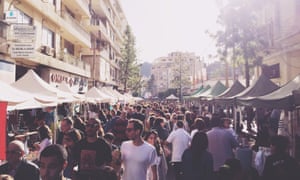
A street market in Mar Mikhael, Beirut …
A street market in Mar Mikhael, Beirut … Photograph: Nasri Atallah

Instagram stories of Syrian refugees, Arabic rap and Armenian food – Nasri Atallah shows us there’s more to the capital of Lebanon than its glamorous clubs, or its troubled politics


In five words
A beautiful, rowdy, intoxicated mess.

Sound of the city

The car horn. Everyone in the city has their hand poised just above it ready to communicate all sorts of emotions. We’ve actually developed an entire non-verbal lexicon. A long beep expresses anger, two short ones are a hello to the local greengrocer, and so on. You can even express political allegiances by playing a tune. I wish they’d have every car horn removed when cars are imported. I think it would make the place friendlier and save everyone a lot of money on whisky and Xanax.

Everyone’s tuning into …

Lebanon’s mainstream TV landscape looks alarming similar to that of most countries around the world at this point, ie some combination of X Factor and Dancing With The Stars. The latest show to capture the imagination is Celebrity Duets, the local variant of a very short lived American franchise – it lasted all of one short season – which pairs celebrities with pop singers for duets. It’s pretty self-explanatory. I think the show is working really well in Lebanon because everyone loves a good singalong, and the celebrity element makes it feel like you’re hanging out with friends.
In this clip, a TV chef who has been on screen for about as long as I can remember performs a culinary-themed duet with pop star Fares Karam.

Best venue

Badguer
Pinterest
 A corner in the lovely Armenian area of Beirut, Bourj Hammoud. Photograph: Badguer
I recently discovered Badguer, an Armenian cultural centre in the area of Bourj Hammoud. They host workshops promoting traditional trades, showrooms for budding artisans, galleries for Armenian artists. Armenians are traditionally recognised as artisans in Lebanon, and many live in Bourj Hammoud. It’s odd, this Central Asian community is very well integrated into national life, but we don’t actually know much about their culture beyond cliches. So this centre is a great place for the transmission of that culture. Oh, and there’s a restaurant with delicious food, which always helps. 

Who’s top of the playlist?

I recently saw a great set – Love and Revenge by Rayess Bek and Randa Mirza. I’ve been aware of Bek for a while as a pioneer of Lebanese rap, but here he’s doing something completely different and utterly compelling. It’s a great mashup of electro, traditional Arabic music and images from Egyptian cinema. And they’ve both spent time living in France, so it’s a way of processing their identity as well, I guess.
The independent music scene in Lebanon has gone through a real renaissance over the last few years, with great promoters like Beirut Jam Sessions and festivals like Wickerpark.

What’s the look on the street?

I’m not a reference on style whatsoever, but my wife – Nour Hage – is a fashion designer, so I guess that gives me legitimacy by association to have some sort of opinion. I honestly don’t think there’s an inherently Lebanese street style. Like much else in Beirut it’s a mashup of things people pick up along the way. It can be preppy, normcore or hipster. Depends what street you’re on. However, I’d say the overwhelming aesthetic is glam. People even dress up to go to the grocery store.

Best local artist

My favourite artist – and incidentally one of my favourite people – is Hamed Sinno, lead singer of Mashrou Leila. Even though he’s primarily a musician, and his band have had massive success touring in Europe and North America, I think his artistry goes far beyond the fresh voice he’s bringing to Arabic pop and folk music.
First of all, he’s openly gay. A lot has been already made of that in the international press because it’s a neat headline – and it is undoubtedly brave to live in Lebanon and go on the cover of one of the leading gay magazine in Europe – but he’s about far more than that. He’s very active and vocal about social issues, and incorporates his thinking about the world into meta-narratives that feed back into his music.
There’s something almost academic to his art, an intense desire to understand the root causes of injustice and intolerance, coupled with a drive to do something about it through art.

Best cultural Instagram account

Natalie Naccache is a British-Lebanese photojournalist. She’s represented by Getty, and her work is really impactful. She has documented people in limbo, like Syrian refugees trying to build a life in Lebanon and migrant workers from Africa and south-east Asia.

What does Beirut do better than anywhere else?

Design seems to be the artform we export most successfully, primarily fashion design. The top couture designers – Elie SaabRabih Keyrouz – from Lebanon are pretty much household names internationally for anyone who follows red carpet pre-award show banter. I also think it’s not accidental that a lot of visual art, graphic design, filmmaking and advertising comes from Lebanon (or at least from Lebanese people). There’s something about the aesthetic of the place that pushes you to add your touch to it.

Comedy gold

There are a bunch of long-running political satires on television, some old school and some ripping off formats like The Daily Show. But they tend to be on the racist, misogynistic side. Even though they’re pretty popular, I’d rather not mention them. Something much more fun is what’s going on on Facebook. Besides Lebanese takes on various international internet memes, and some hilarious Viners (like Hass Julien), a few guys have gone viral just posting videos of themselves bitching about the situation in the country. I like this one guy Farid Hobeiche. He’s got this massively deadpan delivery, and he’s completely absurd. But then you think about what he’s saying; it’s just a reflection of how absurd everything is here. And he’s getting hundreds of thousands of views, so he’s clearly hitting a chord.

Moment in history

Fairuz at the Baalbeck Festival in 1957. She needs no introduction. But what people might not know about her is that she sang the story of a Lebanon that never really existed. A figment of all of our collective imaginations. Of village life and innocence. She essentially helped build the identity of Lebanon, just 14 years after it became an independent country. She infused a voice and stories into the place.
There’s no YouTube footage of it (that I can find) but here’s an extract from a musical film she made that has the same theme of village life.

What’s the big talking point?

It’s not exactly pleasant, but it would be disingenuous to not mention it: the trash crisis. The country’s rubbish has been piling up untreated since 21 July. Even by the government’s own dismal standards, this was a pretty bad thing to mess up. There were widespread protests all summer, accompanied by police violence and inertia on the government side.
It’s really a symbol of everything that’s wrong here. The system is broken, and even our trash is polarised and politicised. Now everyone is terrified about disease. In a kind of perverse way we were secretly relieved that our biggest problem was now trash (something solvable through protest and better governance) rather than car bombs. That’s until we had the worst terrorist attack since the end of the civil war on 12 November. Then the conversation shifted to why we’re not worthy of the same attention Paris was the following day.

Best street art

Sabah street art
Pinterest
 Looming large over the neighbourhood of Hamra … Photograph: Yazan Halwani
Yazan Halwani. He’s already had a tonne of attention for it, but I think it merits mentioning again. He created a mural of Sabah along the side of a building in Hamra. The legendary singer and actor passed away last year – she was equally legendary for her personal life (she did pretty much anything she wanted) in a place with a very codified moral order.

From me

Nasri Atallah
Pinterest
 This is me … Photograph: Yann Traboulsi
By Nasri Atallah; a British-Lebanese author, publisher and media entrepreneur. You can follow him on Twitter here, Instagram here and Facebook here.

Five to follow


#Mid