Showing posts with label Pandemic travel. Show all posts

Friday, May 28, 2021

Summer Travel Forecast Calls For Longer Waits, Fewer Choices

After a year of coronavirus lockdowns, the start of summer beckons with vacation plans made possible by relaxed COVID-19 restrictions. But a severe worker shortage brings a warning for travelers: Expect delays and pack a little patience.

Lifeguards and hotel housekeepers are in short supply. So are rental cars. And don’t count on having a fruity cocktail at the hotel Tiki bar.

The labor shortage is hitting the nation’s tourist destinations just as they try to rebound from a year lost to the pandemic, where periodic surges in cases and lockdowns had Americans sticking close to home. Now, with more than half of adults vaccinated, Americans are ready to venture out with the traditional start of summer travel.

But the staffing issues threaten to derail the travel industry’s recovery. Travelers can expect fewer menu choices at restaurants, lengthy check-in lines at hotels and airports, and fewer rides and food stands at theme parks.

Some hotels aren’t filling all of their rooms or changing the sheets as often because they don’t have enough housekeepers. Six of the most popular national parks — including Yosemite, Rocky Mountain, Acadia and Zion — will require advance reservations for many visitors to allow for social distancing.

“This is nothing like we’ve ever seen before,” said Michelle Woodhull, president of Charming Inns, which includes four small hotels and a fine dining restaurant in Charleston, South Carolina.

The company has limited room reservations by 20 percent during some weeks and reduced seating at the restaurant, said Woodhull, who recently fielded a complaint from a customer who couldn’t get a table for four weeks.

“Unfortunately, that is a reality,” she said, adding that it’s better than delivering poor service. “What business wants to turn away business, especially after the year we’ve had?”

Still, the tourism industry is showing signs of coming back. Airline executives say domestic leisure travel is at pre-pandemic levels, and the number of people passing through U.S. airports daily is likely to top 2 million before the week is over — the first time that has happened since early March 2020.

Air travelers planning to rent a car during the Memorial Day weekend might be out of luck. Rental cars are scarce, and they are pricey — the average cost has roughly doubled from a year ago, according to government figures.

The AAA auto club forecasts that 37 million Americans will travel at least 50 miles from home over the upcoming holiday, a 60% increase over last year. But if AAA is right about this weekend, that will mean 6 million fewer people traveling than over the same holiday in 2019.

The reasons behind the worker shortage are hotly debated. Many employers blame the federal government’s extra $300-per-week in unemployment aid. But plenty of hospitality workers who abruptly lost their jobs a year ago have moved on to new careers and aren’t coming back.

Some employers in the hospitality industry want to hire new workers at lower wages instead of recalling laid-off employees, said D. Taylor, president of the hotel, gaming and airport workers union Unite Here.

Big hotel chains are considering eliminating housekeeping and guest-services jobs, and casinos are moving to cut jobs in food and beverage, he told a congressional subcommittee this week.

“That’s bad for customers, but it’s also bad for workers and communities because housekeepers, cooks, servers — that’s the backbone of the service economy,” Taylor said.

A survey of 4,000 travel and tourism workers earlier this year showed that many found jobs with higher pay and predictable schedules and more plan on leaving the industry soon, said Peter Ricci, director of Florida Atlantic University’s hospitality and tourism management program.

The travel sector as a whole, he said, faces a moment of change and will need to offer better wages and benefits and rethink how it treats employees.

“It’s time for our industry to wake up and see that’s an important thing. We have a shortage for a reason,” said Cathy Balestriere, general manager of Crane’s Beach House, a boutique hotel in Delray Beach, Florida.

She has managed to keep most of her staff and brought in outside workers to provide massages and yoga, but the hotel is not offering breakfast, and the poolside Tiki bar is closed because there’s no one to serve drinks. Managers and maintenance staff have pitched in with housekeeping duties.

Maine’s biggest amusement park, Funtown Splashtown USA, which opens Memorial Day weekend, is scaling back hours and operating only five days a week because it cannot find enough workers.

The park in Saco, Maine, still needs lifeguards, ride operators and cleanup crews despite offering wage increases and four season passes for summer hires. The reduced number of international students is another problem for the largest seasonal employer in the state.

Raj Kapoor, who manages a popular food court on the Belmar, New Jersey, oceanfront, has hired 14 people for the summer, but he could still use eight to 10 more to scoop ice cream, roll burritos and sell sodas, milkshakes and candy.

The labor shortage has affected his business in other, less obvious ways. A shipment of soda that was promised the next day took a week and a half to arrive because the distributor did not have enough delivery drivers.

Diners in tourist hot spots shouldn’t be surprised when they find restaurants with limited hours, streamlined menus and some seating sections closed, even when there’s a wait for tables, said Barry Gutin, co-owner of the Cuba Libre restaurant chain on the East Coast.

To attract workers and help them get ahead, they’ve raised wages and gone as far as offering English and Spanish language courses and personal finance training. But hiring has still been a challenge. Their location in Fort Lauderdale, Florida, is only open for dinner right now — not even for takeout or delivery.

“We’re protecting the guest experience by not over-seating,” he said. “We’re hoping they understand things are a little different than pre-pandemic.”

Regardless of destination, travelers should make sure to call ahead and be ready to change plans at a moment’s notice.

Jamie Goble had been set to fly to Ohio from her home in Waco, Texas, to join her family for three days next week at Cedar Point amusement park, where they planned to celebrate her nephew’s high school graduation.

But nine days before her flight, the park announced last week that it would be closed two days a week for most of the month because of staffing shortages.

“Not just the park, the hotel too,” she said. “So we were out of a place to stay. It’s all understandable, but we thought they had things figured out.”

Instead, they quickly shifted plans to ride roller coasters at Dollywood in Tennessee and go hiking at Great Smoky Mountains National Park.
___
By JOHN SEEWER

Associated Press writers David Koenig in Dallas, Wayne Parry in Belmar, New Jersey, and David Sharp in Portland, Maine, contributed to this report.

Friday, December 25, 2020

Travelore News: US To Require Negative COVID-19 Test From UK Travelers

ATLANTA (AP) — The United States will require airline passengers from Britain to get a negative COVID-19 test before their flight, the Centers for Disease Control and Prevention announced late Thursday. The U.S. is the latest country to announce new travel restrictions because of a new variant of the coronavirus that is spreading in Britain and elsewhere. Airline passengers from the United Kingdom will need to get negative COVID-19 tests within three days of their trip and provide the results to the airline, the CDC said in a statement. The agency said the order will be signed Friday and go into effect on Monday. “If a passenger chooses not to take a test, the airline must deny boarding to the passenger,” the CDC said in its statement. The agency said because of travel restrictions in place since March, air travel to the U.S. from the U.K. is already down by 90%.
Last weekend, Britain’s Prime Minister Boris Johnson said the new variant of the coronavirus seemed to spread more easily than earlier ones and was moving rapidly through England. But Johnson stressed “there’s no evidence to suggest it is more lethal or causes more severe illness,” or that vaccines will be less effective against it. This week, New York Gov. Andrew Cuomo said three airlines with flights from London to New York — British Airways, Delta and Virgin Atlantic — had agreed to require passengers to take a COVID-19 test before getting on the plane. United Airlines on Thursday agreed to do the same for its flights to Newark, New Jersey. Britain has been under considerable pressure since the word of the new variant of the virus was made public. Some 40 countries imposed travel bans on Britain, leaving the island nation increasingly isolated. France relaxed its coronavirus-related ban on trucks from Britain on Tuesday after a two-day standoff that had stranded thousands of drivers and raised fears of Christmastime food shortages in the U.K. French authorities said delivery drivers could enter by ferry or tunnel provided they showed proof of a negative test for the virus. But the French restrictions were particularly worrisome, given that Britain relies heavily on its cross-Channel commercial links to the continent for food this time of year.

Tuesday, December 1, 2020

UN: Skiing May Not Spread Coronavirus But Slopes Still Risky

GENEVA (AP) — As several European countries have suspended access to the ski slopes to stop the spread of the coronavirus pandemic, the World Health Organization’s emergencies chief said the risk of catching COVID-19 while skiing is likely minimal. “I suspect many people won’t be infected barreling down the slopes on their skis,” said Dr. Michael Ryan said at a WHO news briefing on Monday. The U.N. health agency has previously said the coronavirus transmits much less easily outside because it is dispersed in the fresh air. Restrictions to slow the spread of COVID-19 have kept ski lifts closed in Italy, France, Germany, Austria and elsewhere. Ryan said the danger of coronavirus spread from skiing is from many of the other activities linked to the sport.
“The real issues are going to come at airports, tour buses taking people to and from ski resorts, ski lifts ... and places where people come together,” Ryan said. “We would advise that all countries look at the their ski season and other reasons for mass gathering,” he said, warning that indoor socializing after skiing might be particularly risky. Earlier this year, ski resorts in France, Italy and Austria were the sites of several superspreading events that helped seed COVID-19 outbreaks across the continent. Ryan said that rather than targeting any specific sport like skiing or hiking, governments should consider how best to reduce contact between people to prevent the spread of COVID-19. “The issue is any activity that involves large numbers of people moving into a concentrated space and then using public and other transport to get there and back needs to be managed carefully,” Ryan said. WHO noted that last week marked the first time global cases of COVID-19 have dropped since September, citing the effectiveness of recent lockdown measures across Europe. WHO’s director-general, Tedros Adhanom Ghebreyesus, called it “welcome news,” but said the decrease should be “interpreted with extreme caution.” Tedros said that the upcoming holiday season should prompt people to think twice about how they might celebrate during the pandemic. “Being with family and friends is not worth putting them all (and) yourself at risk,” he said. “We all need to consider whose life we might be gambling with in the decisions we make.”

Friday, November 13, 2020

South Africa Reopens To Foreign Travelers Amid Virus Creep

JOHANNESBURG (AP) — In an effort to revive its tourism industry, South Africa has opened up international travel to visitors from all countries, President Cyril Ramaphosa has announced. South Africa will now admit foreign visitors providing they produce negative COVID-19 test results, Ramaphosa said in a broadcast address Wednesday night. This step, making South Africa one of the world’s countries most open to international travel, comes as cases of the disease are slowly increasing in the country. Ramaphosa said his government will closely monitor any signs that international visitors increase transmission rates.
“By using rapid tests and strict monitoring we intend to limit the spread of the infection through importation,” said Ramaphosa. “We expect that these measures will greatly assist businesses in the tourism and hospitality sectors.” After closing its borders as part of one of the world’s strictest lockdowns imposed at the end of March, South Africa has gradually reopened, resuming international flights on Oct. 1 but not admitting travelers from countries with high infection levels. Now that restriction has been removed, Ramaphosa said. With a cumulative total of more than 740,000 confirmed cases of COVID-19, including just over 20,000 deaths, South Africa has nearly 40% of Africa’s total number of more than 1.9 million reported cases, including 46,272 deaths, according to the Africa Centers for Disease Control and Prevention. South Africa, with a population of 60 million people, has reported a disproportionately high level of cases for the continent of 1.3 billion in 54 countries. At its first peak of COVID-19 in late July, most of South Africa’s hospitals succeeded in coping with patients. Hospitalizations and deaths dropped in August and September but in recent weeks, cases have begun to climb. The 7-day rolling average of daily new cases in South Africa has risen over the past two weeks from 2.74 new cases per 100,000 people on Oct. 28 to 2.85 new cases per 100,000 people on Nov. 11. The 7-day rolling average of daily deaths in South Africa has risen over the past two weeks from 0.09 deaths per 100,000 people on Oct. 28 to 0.10 deaths per 100,000 people on Nov. 11. South Africa’s upward creep is part of an increase across the continent. Africa’s top public health official said the continent has seen an average 8% rise in new coronavirus cases over the past month.
“We expected it to happen,” John Nkengasong, director of the Africa CDC said Thursday, warning that when the virus comes back for a second wave, “it seems to come back with a lot of full force.” The African continent is “at a critical point in the response,” he said, again urging governments and citizens to follow public health measures. Testing across Africa remains a challenge, with 19 million tests conducted so far. Countries with the highest increase of cases in the past week include Congo at 37%, Kenya at 34% and Nigeria at 17%. In South Africa, Ramaphosa warned that citizens must remain vigilant to try to prevent a fresh resurgence of the disease, warning that the Eastern Cape province is experiencing a worrying increase. The number of new cases in the province has risen 50% in the past week and the total number of new cases in the last 14 days is around 145% higher than the previous 14 days, said Ramaphosa.
The president announced that South Africa has extended the country’s current COVID-19 restrictions, requiring people to wear masks in all public places, businesses and stores to keep people distanced and a nighttime curfew from midnight to 4 a.m. In one relaxation, liquor sales can now resume to ordinary trading hours. Ramaphosa said that the country was looking to secure a significant supply of COVID-19 vaccines when tests show they are effective and safe. “South Africa is collaborating with several multinational pharmaceutical companies to obtain a safe and effective vaccine for our people and is contributing towards the availability of the vaccine in the rest of the continent,” said Ramaphosa. “We are working through the African Centres for Disease Control and Prevention to acquire and fund a vaccine for the African continent. It is estimated that Africa will need around $12 billion and 750 million doses of an effective vaccine.” Last week, South African pharmaceutical firm Aspen Pharmacare announced a deal with the U.S. firm Johnson & Johnson to manufacture its COVID-19 vaccine candidate, if it is approved in South Africa and internationally. Aspen said that it would have a capacity to produce 300 million doses of the vaccine. The COVID-19 outbreak has taken a toll on South Africa’s economy since the lockdown was imposed in March. South Africa lost up to 2.2 million jobs in the second quarter of the year, taking the unemployment rate to a record high of 42%, according to official statistics. Africa’s most developed country slipped further into recession in the second quarter of the year, contracting by 51%. Its economy is expected to shrink by up to 8.2% in 2020, its central bank announced last month.

Monday, October 19, 2020

Coronavirus: Empty Streets In France As Curfew Enforced

The streets of Paris and eight other French cities were deserted on Saturday night as a new curfew was enforced. The controversial overnight curfew is aimed at curbing the soaring Covid infection rate in France, which is one of Europe's coronavirus hotspots. There have been complaints from restaurant owners, whose businesses are already suffering after the two-month lockdown in the spring. New measures are also to be announced in Italy due to a rise in cases. Italy, which was the first European country to be hit significantly by Covid in the first wave, registered a record number of new daily cases on Saturday. Italian Prime Minister Giuseppe Conte will announce fresh restrictions on Sunday. Local media said the new rules could target non-essential activities including gyms, pools and amateur sporting events. In France, about 20 million French people are covered by the month-long curfew in cities including Marseille, Lyon, Lille and Toulouse, as well as the capital. The curfew runs from 21:00 to 06:00 every night. President Emmanuel Macron said the curfews were necessary to avoid the risk of hospitals being overrun. But many are concerned about the effect it could have on businesses. "There will surely be employees who will lose their jobs," Stefano Anselmo, manager of Italian restaurant Bianco in Paris told the Reuters news agency. "It's a disaster."
France reported a record number of new cases of the virus on Saturday - a rise of 32,427, the health ministry said. A day earlier the country recorded 25,086 new infections. Source: https://www.bbc.com/news/world-europe-54585828

Wednesday, October 14, 2020

With Americans Anxious To Go Out, Walking Tours Pick Up Pace

In this Sept. 20, 2020, photo, tour guide John Erardi, right, talks with a tour group on the sidewalk outside the Cincinnati Reds Great American Ball Park in Cincinnati. The walking tour was one of the few groups of people on the street as the Reds and White Sox were inside just an hour before the game without fans because of the pandemic. (AP Photo/Dan Sewell)
 

CINCINNATI (AP) — With an eerily quiet and empty stadium plaza behind him, the tour guide tried to help people picture what they would have seen there more than 160 years earlier.

His audience of eight, all on foot, peered over masks at maps as he described hundreds of groceries, saloons, blacksmiths and 100,000 people living across two square miles — one of the pre-Civil War United States’ most congested areas. The area had an open secret then: It was filled with stations on the Underground Railroad for slaves trying to reach freedom. Today, they were walking those paths.

For so many Americans, this is a time of being cooped up, of being unable to interact with fellow humans and, in many cases, with the landscape itself. COVID-19 and its impact — more than 200,000 Americans dead — have kept many away from air travel, cruise ships and crowded beaches.

Enter a decidedly unplugged alternative, a very concrete antidote to a suddenly more virtual life: the walking tour. Maybe not the most exciting outlet, but far better than being surrounded by the same four walls.

“Our mental health matters also, and it’s very important for us ... when we’re really feeling extremely alienated from each other and feeling trapped in our homes, to walk our streets, in the safest way possible,” said Rebecca Manski of Social Justice Tours in New York City.

Such tours have picked up in popularity for people seeking outdoor social activity while maintaining health safety precautions and staying in small groups. The Cincinnati walking tour, for example, was among several offered in recent months by the Cincinnati Reds Hall of Fame & Museum. The goal: to offset a pandemic-abbreviated baseball season that didn’t allow fans in the ballpark.

Normally, Bob Doherty, 61, said, his family would have been inside the stadium that Sunday afternoon, rooting for the Reds in their playoff-race game against the Chicago White Sox. The tour, which combined the roots of professional baseball and the city’s abolitionist history, “is the next best thing,” he said. Others concurred.

“It’s refreshing to get outside and be with family,” said Mack Doherty, 28. They were in a group of five including his father, his sister and her boyfriend. His girlfriend, Avery Helwig, 28, concurred: “So nice to get out.”

Manski’s New York group, like many tour companies, halted in-person tours as the pandemic took hold in March. She said the jarring sound of ambulance sirens as new COVID-19 victims were rushed to hospitals added to the obstacles of education-focused tours. Hers shifted quickly to virtual offerings, and other groups have been offering small, private group tours or self-guided tours with audio and GPS information provided.

“It’s an interesting time to be in the travel industry,” said Riley Pearce, of Berkeley, California-based Backroads Tours. “Nobody knows what people are going to want, because people don’t really don’t know what they want yet.”

With pandemic worry reducing participants on Backroads’ walking, hiking and bike tours by as much as 90% this year, they are rebuilding business with family- and private-group expeditions with a variety of approaches.

The Reds Hall of Fame Museum, in the city that pioneered professional baseball in 1869, has also done walking tours about the 1919 “Black Sox” World Series betting scandal and about the former Riverfront Stadium that hosted the “Big Red Machine” teams of the 1970s. For fall, it’s launched “Brunch, Brews and Baseball” that includes a brewery tour.

But executive director Rick Walls said the nonprofit museum hasn’t been able to conduct popular ballpark tours or reap the visits and merchandise purchases by fans coming to games in the adjacent stadium.

“It’s been a pretty big hit,” Walls said. The museum couldn’t host its popular ballpark tours this summer, although they are resuming now that the Reds’ season has ended.

The museum has replaced in-person autograph sessions and discussions for its 5,000-strong membership base with Zoom calls with former Reds stars Walls said have “really stepped up” to help with free or discounted autographing of items for the museum to sell. Like other visitor-dependent businesses, the museum is hoping for a normal 2021, but making contingency plans in case the pandemic continues.

“We will be better coming out of this,” Walls said. “We’ll have created some new ways we operate internally and ultimately, we’ll have a successful season.”

Pearce said his company believes there is a lot of pent-up demand for visiting places such as Grand Teton National Park because they remind people that while “modern life seems totally overwhelmed by COVID,” there are still spectacular sites, some thousands of years old, that have been untouched by the pandemic.

So while the walking tours are in small groups for now, they could well become very big when the world comes back.

“I think that’s the same thing that a lot of people are craving right now,” Pearce said. “When everything else feels totally upside down, going into nature and going for a hike, sleeping under the stars; it’s all a reminder that there is just this incredible world out there to explore. And it’s going to be waiting for us, as soon we’re ready.”

By DAN SEWELL___


Saturday, September 19, 2020

Canada Extends U.S. Border Restrictions To Oct. 21


 TORONTO (AP) — Canada is extending the agreement to keep the U.S. border closed to non-essential travel to Oct. 21 during the coronavirus pandemic.

Public Safety Minister Bill Blair said Friday they will continue to base the decision on the best public health advice available to keep Canadians safe.

The restrictions were announced on March 18 and have been extended each month since.

Many Canadians fear a reopening. The U.S. has more confirmed cases and deaths from COVID-19 than any country in the world.

Canada is seeing an uptick in cases in recent weeks. Canada largest province, Ontario, reported 401 new cases on Friday.

Essential cross-border workers like healthcare professionals, airline crews and truck drivers are still permitted to cross. Truck drivers are critical as they move food and medical goods in both directions. Much of Canada’s food supply comes from or via the U.S.

Americans who are returning to the U.S. and Canadians who are returning to Canada are also exempted from the border closure.


Monday, September 7, 2020

Small Luxury Hotels Of The World™ Survey Shows Luxury Guests Are Travel Ready, Over 90% Saying They Would Prefer A Small Hotel.


LONDON- A survey undertaken by Small Luxury Hotels of the World™ (SLH) shows that an affluent group of Travel Ready advocates are driving pent up demand for luxury holidays this year. The survey, conducted in partnership with Liz Hall Hotel & Travel Consulting, looked at the current sentiment towards travel of over 6,000 members of the luxury brand's INVITED programme. The results show a desire to travel this year now that travel restrictions have been slightly relaxed, a willingness to travel internationally by plane and a preference for smaller hotels where their experience can be managed and customised.
The survey results split the recipients into 3 groups – the Travel Ready, those who have already booked and maybe even travelled taking increased safety precautions in their stride; the Travel Reserved, those who are keen to get away but still cautious about potential risk; and the Travel Reluctant who are unlikely to travel until things have returned to 'normal'.
With over 46% of recipients expecting that they will be in the same position financially next year, it comes as no surprise that over 30% fall into the Travel Reserved group and are currently planning a holiday in 2021. In North America, 29% are Travel Ready and are planning a holiday before October this year, with an additional 24% looking at getting away in Q4. In total, 74% of respondents said that they were willing to fly agreeing almost unanimously (93%) to additional health checks at the airport to ensure the safety of all travellers.
Of North Americans surveyed, 43% are initially planning to travel domestically and 38% were prepared for international travel. SLH reservations data for bookings originating from North America since August 1st reflects these numbers, with 42% of reservations for US hotels, primarily in New York State and California. International bookings made in August were mainly for Q4 visits, with top destinations being Sweden and Finland.
In terms of selecting accommodation, over 90% of recipients stated that they would feel most comfortable in a small hotel, while private residences were also popular. SLH's Exclusive Use reservations option allows guests to turn over 250 SLH hotels, ranging from 5 to 200 rooms into a fully-serviced private residence. With more than 36 intimate hotels offering fewer than 12 rooms, this becomes a viable option for guests wanting to travel with a small group of family and friends.
As expected, location, flexible booking and cleanliness were the most important considerations. SLH has recently launched a Stay Small, Stay Safe programme ensuring third party accreditation for all member hotels with the Global Biorisk Advisory Council (GBAC). Hotels offering discounts and offers were of least importance to SLH guests.
Richard Hyde, Managing Director of Small Luxury Hotels of the World says: "Our members have always shown great resilience and an enduring appetite for travel so it's encouraging to see that they are Travel Ready, looking at options both close to home and abroad for 2020. Our small hotels are able to offer so many solutions from their location in low-key destinations and neighbourhoods, to their versatility to become essentially a private residence. We have established Stay Small, Stay Safe to ensure that our guests can travel with peace of mind, both for themselves and the destinations they are visiting, and to encourage those who are reserved or reluctant to travel that is it safe when the time is right for them."
For more information visit http://www.SLH.com
About Small Luxury Hotels of the World: Small Luxury Hotels of the World™ (SLH) is the most desirable community of independently minded travellers and independently spirited hotels in the world. We turned the luxury boutique hotel into a phenomenon and selected the distinctive, the diverse and the downright delightful. People, places and experiences with individual character, intimate charm and inherent class. We've personally visited, vetted and verified over 520 hotels in more than 90 countries. We are envisioning a future where people experience the world with intention, experience its intensity and protect its integrity. Be part of the community - join us at INVITED, visit us at http://www.SLH.com, contact a travel agent or call the Small Luxury Hotels of the World VIP Desk. Click here to view a full contact listing by country.
I: @smallluxuryhotels / F: @smallluxuryhotelsoftheworld / T: @SLHLuxuryHotels

Sunday, September 6, 2020

Madrid Struggles As Center Of Pandemic’s 2nd Wave In Europe

A group of young students wearing face mask protection to prevent the spread of the coronavirus wait outside to enter in a state school in Pamplona, northern Spain, Friday, Sept. 4, 2020. After six months with all Spanish schools closed by crisis of COVID-19, today is opening a new school year with new rules to prevent the pandemic coronavirus. (AP Photo/Alvaro Barrientos)

MADRID (AP) — A mix of worry and resignation is discernible behind the masks of parents picking up school textbooks in a working class Spanish neighborhood with a steady rise in new coronavirus infections.
Authorities in Madrid, the European capital experiencing the worst second-wave outbreak, are introducing new curbs on social gatherings starting Monday. The restrictions coincide with the opening of most schools, which is perceived as a potential tipping point in the battle against the virus.
The focus is especially on areas like San Diego, a culturally diverse neighborhood of narrow streets and small apartments where many residents continued commuting to work over the summer, often to do manual labor and unstable jobs.
“The south of Madrid is where the north’s cheap labor crams into small apartments,” said Simona Filip, 44, a migrant from Romania whose 6-year-old son is set to go back to school on Tuesday.
Her son struggled with online learning ever since Spain went into lockdown in mid-March and a non-profit organization gave the family an electronic tablet for the boy to use.
“The kid needs proper studies because I can’t help him and my husband needs to work,” Filip told The Associated Press this week. “We have no other choice but to hope that the school will keep him safe.”
In the past two weeks, Spain has had a cumulative incidence of nearly 217 confirmed virus cases for every 100,000 residents, four times the European average. But in the southern Vallecas district with San Diego at its center, that index closely watched by pandemic experts rose to 1,300 last week and remained on Friday above 1,000 cases.
Jorge Nacarino, president of the local neighbors’ association, said that poverty and years of inadequate investments for the area are behind the spike. Tiny, cheap apartments built five to eight decades ago have not been replaced and now house extended families or groups of migrants who can’t afford real estate price hikes in other neighborhoods.
As happened during the first wave, social distancing is again difficult in the apartments, and many of those who had contact with people already infected with the coronavirus can’t afford to quarantine and miss work, Nacarino said.
“We need a serious plan of public investment in the area, from health centers and sports facilities to social programs,” he said. “It’s been through decades of neglect that San Diego has fallen behind the development seen in surrounding areas.”
With Spanish unemployment on the rise in the wake of virus-induced lockdowns, “narcoflats,” or vacant apartments taken over by gangs as drug distribution and consumption dens, are likely to spread, Nacarino said. So are gambling parlors, which are seen as a source of social problems in the area, with at least seven establishments operating along a short stretch of one of San Diego’s main streets.
Since most of new recent infections have been tied to gatherings in private homes, the regional government on Friday extended to indoor meetings a ban on outdoor gatherings of more than 10 people. Attendance to funerals, burials, weddings or religious celebrations, as well as group visits to museums or guided tourism will also be restricted starting on Monday, authorities said.
That comes on the heels of a crackdown on nightlife entertainment, early closure for the city’s parks to prevent youth from drinking alcohol and partying in large groups, and a ban on outdoor smoking, all of them measures announced in response to Madrid’s spiral of new cases since mid-July.
The Spanish capital, home to 6.6 million and a magnet for workers from around the country, accounted last week for one-third of Spain’s new virus infections. At least 16% of beds in Madrid’s hospitals are currently occupied by patients with COVID-19, the highest rate of all Spanish regions.
The situation “has nothing to do with what we went through a couple of months ago,” on Friday said the region’s health chief, Enrique Ruíz Escudero, referring to the peak of the pandemic in April, when makeshift hospitals had to be built and intensive-care-units expanded to cope with the influx of COVID-19 patients.
“The pandemic in the Madrid community is stable and is controlled,” the official said at a press briefing, arguing that some of the effects of recent measures are starting to have an effect. “We are worried ... but we are not alarmed.”
Madrid is also expanding the number of contact tracers, one of the weakest links in dealing with the new wave of outbreaks, and purchasing two million kits of rapid coronavirus tests.
Spain, which is edging to a half-million confirmed cases since February, is leading the pandemic’s second wave in Europe. At least 29,418 people have died in Spain during the pandemic, including 184 reported on Friday. But the real death toll is believed to be higher because many who died during the March and April peak of the outbreak were never tested.
The northern region of Navarra was Spain’s first to launch a new school year on Friday, with masks mandatory for all students aged 6 or above and social distancing measures in schools.
___

Saturday, August 29, 2020

Delta Has Banned Nearly 250 Passengers For Refusing To Wear Masks


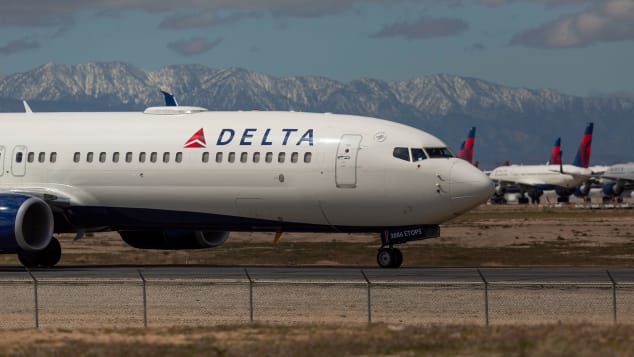
(CNN) — Delta Airlines' mask policy is not a suggestion, it's mandatory. Passengers refusing to abide by the rule to keep masks on at all times (save eating or drinking) don't get to fly with Delta. It's just that simple.
As of August 27, Delta said it has banned roughly 240 people from flying with the carrier.
"Although rare, we continue to put passengers who refuse to follow the required face-covering rules on our no-fly list," says Delta CEO Ed Bastian in an internal memo to employees shared with CNN.
The memo celebrates the opening of Delta's new Salt Lake City hub and included references to the airline's current state of affairs, its continued growth and the considerable impact that Covid-19 has had on managing the health and safety of staff and passengers.
"Systemwide, we continue to identify opportunities to speed up our airport projects and position Delta to lead in the recovery with world-class facilities that will help us transform the customer experience," writes Bastian.

Masked skies

From compulsory mask rules to keeping middle seats empty and the reduction or elimination of food and drink service, struggling airlines are doing what they can to reduce the spread of coronavirus while trying to stay in business.
And make no mistake: Many, like Delta, couldn't be more serious about following through with their pledges in the time of Covid-19.
Delta Airlines continues to provide service for passengers, provided they wear a mask on board the aircraft.
David McNew/Getty Images
Since the advent of the policy, which Delta began implementing in June, the number of passengers on the no-fly list has more than doubled in less than a month. Bastian told CNN on August 7, "We've had well over 100 people that have refused to keep their mask on during the flight."
The federal government has not implemented mask-wearing regulations, unlike the enforceable requirements around wearing seatbelts and not smoking on planes. This leaves it up to airlines to police passenger behavior, which has resulted in stringent new policies.
Passengers who decide to break the mask-wearing rules face consequences -- like banning those passengers from future flights.
In the employee memo, Bastian said: "As we all work toward the recovery, it's vital that we continue to stay focused on the drive to provide the safest, cleanest airports, aircraft and workspaces possible."

Thursday, July 30, 2020

National Constitution Center Announces Plans To Reopen To The Public August 5, 2020, With Free Admission Through September 5, 2020


Center announces new 19th Amendment exhibit will open on August 26, 2020, the 100th anniversary of the certification of the amendment, which granted women the right to vote.


Philadelphia, PA– Today, the National Constitution Center announced it will reopen to the public on August 5, 2020, with free admission for all visitors through September 5, 2020, made possible in part thanks to support from PECO. The Center has developed a multi-phased approach that prioritizes the health and safety of staff and visitors and takes into account state and city guidelines, close coordination with city officials and partners in Historic Philadelphia, and ongoing discussions with its own staff and museum peers around the country.


“We are thrilled to welcome back visitors to the National Constitution Center where learners of all ages can learn about the text, history, and meaning of the Constitution just steps from where it was drafted and signed,” said National Constitution Center President and CEO Jeffrey Rosen. “Since we closed the building temporarily on March 14, the enthusiasm for our online classes, town halls, and podcasts has been overwhelming, and the Constitution Center is now the fourth most visited museum website in America. While carefully complying with public health guidelines, it’s wonderful to be able to reopen our doors and welcome visitors back to the Center free of charge.”


The Center’s plans emphasize the safety of museum guests and staff in compliance with local and state health agencies as well as the Centers for Disease Control and Prevention. These protocols include increased sanitation, required mask wearing by staff and visitors, contactless ticketing, limited gallery capacities, one-way visitor flow, as well as modifications to encourage social distancing and use of hand sanitizer throughout the building. Visitors will be required to reserve timed tickets in advance, available online at  constitutioncenter.org/tickets. A full list of protocols and a guide for what visitors can expect can be found at constitutioncenter.org/safely-reopening.


The National Constitution Center will begin operations on a modified schedule. During this phase, the Center will be open Wednesday through Saturday from 10 a.m. to 3 p.m. The museum experience will include the Center’s newest exhibit, Civil War and Reconstruction: The Battle for Freedom and Equality; the multimedia theatrical production of Freedom Rising, streamed live on the Grand Hall Overlook; and the iconic Signers’ Hall.


The National Constitution Center’s exhibit commemorating the centennial anniversary of voting rights for women, The 19th Amendment: How Women Won the Vote, will open on August 26, the 100th anniversary of the amendment’s certification. The exhibit will trace the triumphs and struggles that led to the ratification of the 19th Amendment, and will feature some of the many women who transformed constitutional history—including Elizabeth Cady Stanton, Alice Paul, and Ida B. Wells—and will allow visitors to better understand the long fight for women’s suffrage.


The exhibit is part of the Center’s  Women and the Constitution initiative. Support for the exhibit and the initiative come from the Horace W. Goldsmith Foundation, Mauree Jane and Mark W. Perry, John P. & Anne Welsh McNulty Foundation, The Snider Foundation, The McLean Contributionship, Glenmede, SteegeThomson Communications, and Sarah and David Andrews.


The National Constitution Center will continue to offer a robust schedule of live online classes throughout the upcoming school year, as well as online America’s Town Hall programs on timely topics. Information about upcoming programs is available at constitutioncenter.org/calendar. 


About the National Constitution Center

The National Constitution Center in Philadelphia brings together people of all ages and perspectives, across America and around the world, to learn about, debate, and celebrate the greatest vision of human freedom in history, the U.S. Constitution. A private, nonprofit organization, the Center serves as America’s leading platform for constitutional education and debate, fulfilling its congressional charter “to disseminate information about the U.S. Constitution on a nonpartisan basis.” As the Museum of We the People, the Center brings the Constitution to life for visitors of all ages through interactive programs and exhibits. As America’s Town Hall, the Center brings the leading conservative and liberal thought leaders together to debate the Constitution on all media platforms. As a Headquarters for Civic Education, the Center delivers the best educational programs and online resources that inspire citizens and engage all Americans in learning about the U.S. Constitution. For more information, call 215-409-6700 or visit constitutioncenter.org.

Monday, July 27, 2020

Travelore News: European Tourism Faces Problems Only Weeks After Restart

People, wearing masks to protect against the spread of coronavirus, walk along Neuve commercial street at downtown Brussels, Monday, July 27, 2020. Belgian Prime Minister Sophie Wilmes unveiled Monday a new set of drastic social distancing measures aimed at avoiding a new general lockdown amid a surge of COVID-19 infections. (AP Photo/Francisco Seco)
BERLIN (AP) — Europe’s tourism revival is running into turbulence only weeks after countries reopened their borders, with rising infections in Spain and other nations causing increasing concern among health authorities over people bringing the coronavirus home from their summer vacations.
European countries started opening up to each other’s tourists in mid-June, but recent events have shown that the new freedom to travel is subject to setbacks. Over the weekend, Britain imposed a 14-day quarantine on travelers arriving from Spain, Norway ordered a 10-day quarantine for people returning from the entire Iberian peninsula, and France urged its citizens not to visit Spain’s Catalonia region.
In Austria, the lakeside resort town of St. Wolfgang shortened bar opening hours after an outbreak was detected on Friday. By Monday, 53 people had tested positive, including many people working in the tourism industry.
In Germany, officials decided last week to set up testing stations at airports to encourage people arriving from a long list of countries deemed high-risk — including popular destinations such as Turkey — to get tested. They will also allow people to get tested elsewhere for free within three days of arrival.
Bavaria’s governor, Markus Soeder, said he is worried about travelers returning from vacation. Referring to the Austrian ski resort that was an early European hot spot in March, he said: “My worry is not that there will be one big Ischgl, but that there will be many mini-Ischgls.”
Later Monday, Health Minister Jens Spahn said he had decided to make obligatory the testing of returning vacationers from risky areas, and that the new regulations should come into effect within the next week, the dpa news agency reported.
“We need to prevent travelers from infecting others without it being detected and starting new infection chains,” he said.
New infections in Germany have been creeping higher from a low level.
The tourism industry employs 2.6 million people in Spain and generates 12% of the country’s economic activity.
Juan Molas, the head of a national association of tourism companies, Mesa del Turismo, said Spain’s tourism sector has on average lost 5 billion euros ($5.8 billion) a week since March.
Tourism Minister Reyes Maroto said the Spanish government is trying to persuade Britain to exempt the Balearic Islands, which have a low infection rate, from the quarantine rule.
“We’re living alongside the virus. That doesn’t mean we can’t travel. We can, if we are careful,” Maroto said.
The Catalonia and Aragón regions have Spain’s most worrying virus clusters, prompting authorities to tighten restrictions in Barcelona, in a rural area around Lleida and in Zaragoza that were relaxed only a month ago.
Catalonia is facing “the 10 most decisive days of this summer,” regional leader Quim Torra said, warning that it is in everyone’s hands to prevent a “critical situation” from worsening.
Elsewhere in Europe, authorities in Belgium said COVID-19 cases are growing at an alarming rate amid a surge of infections in Antwerp. Greek authorities said they are likely to extend the mandatory use of masks at churches and shopping malls.
And in North Africa, Morocco banned most travel to and from some major cities — including Tangier, Casablanca and Marrakech, usually a popular tourist destination — to stem a small spike in cases.
In the Asia-Pacific region, many countries are still essentially banning foreign travelers or, if they do allow them to enter, requiring them to submit to tests and strict quarantine. That includes Australia, where the premier of Victoria state, Daniel Andrews, said the biggest driver in the region’s outbreak is people continuing to go to work after showing symptoms.
The crossing of borders was linked to other outbreaks in Asia. South Korea said 16 of the 25 new cases it confirmed Monday were tied to people arriving from abroad. Over the past few days, the country reported dozens of cases among crew members of a Russia-flagged cargo ship and hundreds of South Korean construction workers airlifted from Iraq.
A tally by Johns Hopkins University shows about 16.3 million confirmed cases of COVID-19 worldwide and around 650,000 deaths. The actual numbers are thought to be much higher because of limits on testing and the many minor cases that have gone unreported.
The World Health Organization said the pandemic continues to accelerate, with a doubling of cases over the past six weeks.
The U.N. health agency’s emergencies chief, Dr. Michael Ryan, stressed the need to “keep pressure on the virus.”
“Every single country where pressure has been lifted on the virus, where virus is still at community level, there’s been a jump back in cases,” he said.
___
Kurtenbach reported from Mito, Japan. Barry Hatton in Lisbon and Associated Press reporters from around the world contributed to this report.
___
Follow AP coverage of the virus outbreak at https://apnews.com/VirusOutbreak and https://apnews.com/UnderstandingtheOutbreak