Spain took another step Wednesday toward a sense of normality amid the pandemic by partially ending the near two-year-long obligatory use of masks indoors.
The government decree, passed Tuesday, keeps masks mandatory for visitors and staff in medical centers and nursing homes, although patients won’t always be obliged to wear them.
Masks will also be mandatory on all forms of public transportation, but not in stations or airports.
It remains unclear what impact the decree will have on workplaces such as public and private company offices, banks, factories and stores as the government is letting employers decide to keep them in use if they deem there is a health risk.
In turn, they are recommended, but not obligatory, in multitudinous gatherings, in packed areas or in the presence of vulnerable people. Schools are also exempted from having to use them.
Masks became obligatory indoors and outdoors shortly after the beginning of the COVID-19 pandemic in Spain early 2020. The restriction for outdoor use was lifted in mid-2021, but reimposed between December and February amid a major surge of infections of the highly contagious omicron variant.
“The mask without doubt has been one of the most identifiable measures over the past two years and it will no longer be obligatory,” Health Minister Carolina Darias said Tuesday. “They will continue to be with us as an element of protection, particularly for the most vulnerable.”
With more than 92% of Spaniards over 12 years old having received at least two vaccine doses and the number of coronavirus infections and deaths dropping sharply in recent months, Spain has also eliminated mandatory home isolation for people infected with the virus who experience no symptoms or mild ones.
The ebbing of the pandemic comes as Spanish prosecutors turn their attention to possible illegalities in the purchasing of masks and other medical products by authorities in the critical first few months of the outbreak.
Two of the most prominent cases involve the Madrid region and the capital city’s town hall.
State prosecutors are investigating two men who they say pocketed more than 6 million euros ($6.5 million) in commission by selling masks and other products to Madrid city hall at exorbitantly inflated prices. Prosecutors say the two bought luxury cars, watches and even a yacht with the money.
Meanwhile, Spanish and European prosecutors have also been looking into the purchase of masks by the the Madrid regional government in a deal brokered by the brother of regional president Isabel Díaz Ayuso for a substantial commission.
In both cases, authorities say they acted in good faith during a national emergency and that it was extremely difficult to obtain these products at the beginning of the pandemic.
Meanwhile, analyzing the books of Spain’s major cities and some major institutions during the first three months of the pandemic, Spain’s Court of Auditors has found that there were often major exorbitant differences in the prices paid for masks and other products.
Showing posts with label Madrid. Show all posts
Wednesday, April 20, 2022
Friday, May 21, 2021
Spain Gears Up For Summer, Lifts Restrictions On UK Tourists
MADRID (AP) — Spain is revving up for a return of summer tourists, with Prime Minister Pedro Sánchez on Friday offering an upbeat outlook after his government lifted travel restrictions on British visitors and the European Union moved a step closer to allowing cross-border travel.
Sánchez said those two developments will bring “a very much better summer” than last year, when the tourist industry in one of the world’s most popular vacation destinations was crushed by limits on travel and gatherings due to the COVID-19 pandemic.
“We are hugely thrilled at the prospect of our tourism industry recovering, of the streets of our towns and cities filling up once more,” he told an annual tourism congress in Madrid.
Spain, Sánchez said, will be “delighted, extremely delighted” to receive British tourists again.
Spain is lifting its restrictions on travelers from the United Kingdom beginning Monday. In 2019, Britain sent 18 million people to Spain, the most of any country.
However, Sánchez didn’t mention that Spain is on the U.K. government’s amber list, meaning people traveling back to the U.K. from Spain still need to go into quarantine for 10 days and get multiple COVID-19 tests — a consideration that is likely to dampen enthusiasm for a Spanish holiday. Britons who can’t work from home likely will not be going to Spain until the rules change.
Sánchez said it was “extraordinary news” that the EU is poised to introduce by July 1 a system of COVID-19 travel certificates for EU citizens, allowing them to travel freely across the bloc.
Tourism is a mainstay of the Spanish economy and Sánchez expressed hope that it can be “the engine that hauls the economy forward” after the economic devastation of the pandemic.
The tourism sector accounted for 12% of Spanish GDP in 2019, but that plummeted to just under 6% in 2020.
Sunday, November 22, 2020
Ancient Madrid Market Reopens Amid Debate Over Virus Rules
MADRID (AP) — Madrid’s ancient and emblematic Rastro flea market reopened Sunday after a contentious eight-month closure because of the COVID-19 pandemic that has walloped the Spanish capital.
With many major European flea markets still shut down, the Rastro’s return seems to be another example of Madrid’s bid to show that heavy coronavirus restrictions may not be necessary even among the latest surge of the virus and some sort of normality can resume with precautions.
That stance has been both criticized and lauded.
After lengthy negotiations, city authorities agreed the Rastro could open at 50% capacity, with half its 1,000 stalls alternating each Sunday for a maximum crowd of 2,700 people.
Police with backup drones monitored the market to avoid overcrowding.
Dating back to the 1700s, the Rastro sells the usual flea market mix of antiques, clothes, furniture, bric-a-brac and curios in stalls that snake down through a warren-like district next to Madrid’s majestic Plaza Mayor square.
Long a traditional meeting and drinking place, the bustling Sunday morning market used to attract thousands of tourists and residents alike. If you arrived after 11 a.m., it was almost impossible to move.
Even though not packed — with one-way pedestrian flows to prevent grouping — the Rastro’s reappearance is likely to be welcomed, another example of Madrid’s bid to keep things going.
“Here we are, we are in an open space,” said Sara García, a 44-year-old owner of a jewelry stall. “We fully comply with all the rules they told us to follow. We have more security than indoor places, so it is the best place, so I say to everyone to come to the Rastro because it is a safe place.”
Back at the start of the pandemic, Madrid’s hospitals and morgues were saturated. That eased in May, but a second wave this summer put the region back in the spotlight as infections soared.
Nevertheless, conservative regional President Isabel Díaz Ayuso has consistently criticized the leftist national government’s attempts to curb the virus, constantly objecting to preventative measures being applied in the rest of Spain.
Díaz Ayuso insists draconian measures aren’t the answer and instead opts for lighter, more localized limitations, leaving bars and restaurants open for most of the day and cinemas and theaters too, albeit with reduced capacity, compulsory masks and social distancing.
Although no one knows for sure why some regions’ figures go up or down, health data these days appear to back Díaz Ayuso, leading some German newspapers last week to talk of the “Madrid miracle.”
The region’s 14-day infection rate is below 300 per 100,000 inhabitants — high still but below national and European averages and way down from the 500-plus figures Madrid was posting just weeks ago.
Some experts explain the drop by the fear factor that has made Madrid residents more cautious amid increasing media scrutiny, but also because regional authorities have been favoring rapid antigen tests that are cheaper but mostly detect symptomatic cases while conducting less of the pricier, time-consuming but more accurate lab tests.
Even if that would slightly skew the infection data, the straight-forward rates of hospitalization have also been unquestionably downward.
COVID-19 patients occupy around 14% and 32% of hospital and intensive care unit beds, respectively, better than many Spanish regions.
Díaz Ayuso says she is “proud to be improving the rates without decreeing the closure of dozens of companies,” adding that Madrid was currently producing one in three new jobs.
But some health workers are unconvinced.
“Speaking like that is not appropriate when we have between 20 and 30 COVID deaths a day in Madrid,” said Jesús García Ramos, spokesman for the Satse nurses’ union in Madrid.
García says that while numbers are down, Madrid’s 15,000 public health workers “are saturated.” About 1,500 are on COVID-19 sick leave and normality in hospitals “is a long way away,” he says.
Many health workers are particularly furious over Díaz Ayuso’s decision to pour an estimated 50 million euros ($59 million) into a 1,000-bed hospital to help deal with coronavirus, instead of shoring up a system run down by spending cuts.
The Nurse Isabel Zendal emergency hospital, built in less than six months, is supposed to open shortly, but it’s still not clear who will staff it.
Díaz Ayuso hopes personnel from other hospitals will come voluntarily, but hasn’t explained what the already strained centers they come from will do with fewer staff.
“I think we are the only ones in the world to have done such a thing, and that says it all,” García Ramos said, pointing out that there are whole wings in Madrid hospitals that aren’t in use due to a lack of resources.
“It would have been more useful to fit out those areas, improve the infrastructures we already have and reinforce them with nurses and other health workers,” he said.
__
AP writer Aritz Parra and Alicia León in Madrid contributed to this report.
__
Follow AP’s coverage at https://apnews.com/hub/coronavirus-pandemic and https://apnews.com/UnderstandingtheOutbreak
Sunday, September 6, 2020
Madrid Struggles As Center Of Pandemic’s 2nd Wave In Europe
MADRID (AP) — A mix of worry and resignation is discernible behind the masks of parents picking up school textbooks in a working class Spanish neighborhood with a steady rise in new coronavirus infections.
Authorities in Madrid, the European capital experiencing the worst second-wave outbreak, are introducing new curbs on social gatherings starting Monday. The restrictions coincide with the opening of most schools, which is perceived as a potential tipping point in the battle against the virus.
The focus is especially on areas like San Diego, a culturally diverse neighborhood of narrow streets and small apartments where many residents continued commuting to work over the summer, often to do manual labor and unstable jobs.
“The south of Madrid is where the north’s cheap labor crams into small apartments,” said Simona Filip, 44, a migrant from Romania whose 6-year-old son is set to go back to school on Tuesday.
Her son struggled with online learning ever since Spain went into lockdown in mid-March and a non-profit organization gave the family an electronic tablet for the boy to use.
“The kid needs proper studies because I can’t help him and my husband needs to work,” Filip told The Associated Press this week. “We have no other choice but to hope that the school will keep him safe.”
In the past two weeks, Spain has had a cumulative incidence of nearly 217 confirmed virus cases for every 100,000 residents, four times the European average. But in the southern Vallecas district with San Diego at its center, that index closely watched by pandemic experts rose to 1,300 last week and remained on Friday above 1,000 cases.
Jorge Nacarino, president of the local neighbors’ association, said that poverty and years of inadequate investments for the area are behind the spike. Tiny, cheap apartments built five to eight decades ago have not been replaced and now house extended families or groups of migrants who can’t afford real estate price hikes in other neighborhoods.
As happened during the first wave, social distancing is again difficult in the apartments, and many of those who had contact with people already infected with the coronavirus can’t afford to quarantine and miss work, Nacarino said.
“We need a serious plan of public investment in the area, from health centers and sports facilities to social programs,” he said. “It’s been through decades of neglect that San Diego has fallen behind the development seen in surrounding areas.”
With Spanish unemployment on the rise in the wake of virus-induced lockdowns, “narcoflats,” or vacant apartments taken over by gangs as drug distribution and consumption dens, are likely to spread, Nacarino said. So are gambling parlors, which are seen as a source of social problems in the area, with at least seven establishments operating along a short stretch of one of San Diego’s main streets.
Since most of new recent infections have been tied to gatherings in private homes, the regional government on Friday extended to indoor meetings a ban on outdoor gatherings of more than 10 people. Attendance to funerals, burials, weddings or religious celebrations, as well as group visits to museums or guided tourism will also be restricted starting on Monday, authorities said.
That comes on the heels of a crackdown on nightlife entertainment, early closure for the city’s parks to prevent youth from drinking alcohol and partying in large groups, and a ban on outdoor smoking, all of them measures announced in response to Madrid’s spiral of new cases since mid-July.
The Spanish capital, home to 6.6 million and a magnet for workers from around the country, accounted last week for one-third of Spain’s new virus infections. At least 16% of beds in Madrid’s hospitals are currently occupied by patients with COVID-19, the highest rate of all Spanish regions.
The situation “has nothing to do with what we went through a couple of months ago,” on Friday said the region’s health chief, Enrique Ruíz Escudero, referring to the peak of the pandemic in April, when makeshift hospitals had to be built and intensive-care-units expanded to cope with the influx of COVID-19 patients.
“The pandemic in the Madrid community is stable and is controlled,” the official said at a press briefing, arguing that some of the effects of recent measures are starting to have an effect. “We are worried ... but we are not alarmed.”
Madrid is also expanding the number of contact tracers, one of the weakest links in dealing with the new wave of outbreaks, and purchasing two million kits of rapid coronavirus tests.
Spain, which is edging to a half-million confirmed cases since February, is leading the pandemic’s second wave in Europe. At least 29,418 people have died in Spain during the pandemic, including 184 reported on Friday. But the real death toll is believed to be higher because many who died during the March and April peak of the outbreak were never tested.
The northern region of Navarra was Spain’s first to launch a new school year on Friday, with masks mandatory for all students aged 6 or above and social distancing measures in schools.
___
Follow AP pandemic coverage at http://apnews.com/VirusOutbreak and https://apnews.com/UnderstandingtheOutbreak
Wednesday, August 29, 2018
TIME Reveals List Of The 100 World's Greatest Places
- August 27, 2018
TIME reveals its first annual list of the World’s Greatest Places, which highlights 100 destinations that are breaking new ground, leading industry trends and offering visitors an extraordinary experience.
To create the list, TIME solicited nominations across a variety of categories—including museums, parks, restaurants and hotels—from TIME editors and correspondents around the world, as well as dozens of industry experts. TIME evaluated each one based on several key factors, including quality, originality, innovation, sustainability and influence. The result is a list as diverse as the world it reflects, with entries spanning six continents and 48 countries.
World’s Greatest Places is the latest addition to TIME’s robust lineup of editorial franchises, which also includes the TIME 100 Most Influential People, Best Inventions, Person of the Year, Next Generation Leaders, and more.
Highlights from the 2018 World’s Greatest Places:
Morgan's Inspiration Island, San Antonio — the world's first water park built for people with disabilities: "The words ultra-accessible guided the park’s design, from wheelchairs that are waterproof and powered by compressed air to water areas that are set to different temperatures, for those who can’t handle the cold.”
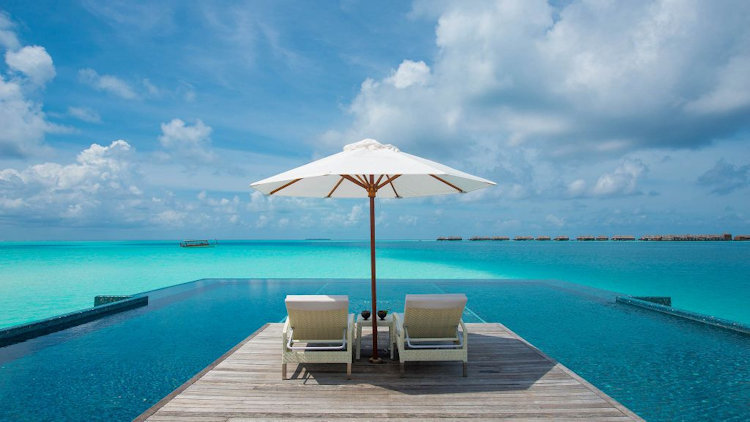
Conrad Maldives Rangali Island, Maldives (pictured) — featuring the world’s firs transparent-walled, underwater restaurant and soon, an underwater residence: "Following its opening of the first transparent-walled, underwater restaurant in 2005, the Conrad is now on track to unveil an underwater residence in November.… the $15 million, two-story hotel villa will be partially submerged more than 16 ft. below the surface of the Indian Ocean.”
Generator Madrid, Madrid — reinventing the hostel: "Generator Madrid, which opened in June, sits on the edge of the trendy Malasaña district and boasts a bar, a rooftop lounge with whirlpool baths and even a quirky origin story: the building itself, which was built in the 1930s, has also been a parking garage and a gas station…. beds in shared rooms at Generator Madrid start at $11."
Sunder Nursery, New Delhi — the city’s first arboretum: "Between the pollution and the crowds, it’s hard to get away in Delhi. But now the Indian capital offers a respite: the city’s first arboretum… The eventual goal is to link up with a neighboring zoo and fort to create a 900-acre sanctum of greenery.”
Icehotel 365, Jukkasjärv, Sweden — the first year-round ice hotel: "There’s no hotel quite like Sweden’s new Icehotel 365, whose suites—featuring ice sculptures of animals, staircases and more—remain open all year. To prevent melting, the structure relies on solar-powered controls, which keep temperatures at 23°F.”
Giraffe Manor, Nairobi – a hotel that also serves as a sanctuary for endangered giraffes: "At this Kenyan retreat, guests can get up close and personal with a local herd of Rothschild’s giraffes who roam the grounds—140 acres of indigenous forest—and even pop their heads into the main dining room during meals.”
Central Idaho Dark Sky Reserve, Idaho — America’s best place for stargazing: "Last year, a 1,400-sq.-mi. region in the central part of [Idaho] became the first site in the U.S.—and only the 12th in the world—to be named a Dark Sky Reserve by the International Dark-Sky Association, meaning that its traits (clear air, 10,000-ft. elevation) are ideal for stargazing."
Oriental Science Fiction Valley, Guizhou, China — China’s first virtual-reality theme park: “The park will eventually feature 35 virtual- and augmented-reality attractions, enabling guests to battle aliens on distant planets, fly through Guizhou and more.”
Elbphilharmonie, Hamburg – a concert hall with next generation acoustics: "As visually striking as the Herzog and de Meuron–designed concert hall is… it’s the acoustics that steal the show… The central auditorium is covered in 10,000 gypsum-fiber white acoustic panels, each with a unique series of divots that scatter or absorb sound. No two panels are alike, but together the undulating, interlocking panels create an optimal sound map across the entire auditorium.”
Binhai Library, Tianjin, China — the library of the future: “The nearly 363,000-sq.-ft. facility… looks like something out of a sci-fi movie, replete with stark white interiors and terraced shelves that cascade from floor to ceiling… Binhai Library remains one of China’s buzziest new attractions, which could help reduce the country’s already low adult literacy rate.”
Wilderness Safaris Bisate Lodge, Volcanoes National Park, Rwanda — a luxury lodge that brings guests to gorillas: “The lodge invites guests on daily treks where a face-to-face encounter with families of ambling primates is all but guaranteed—baby gorillas are known to reach out to touch visiting humans… Part of the rate goes to reforestation and conservation efforts…”
Norwegian Bliss – the cruise with the longest go-kart track at sea: "If this ship’s 984-ft. go-kart track—the longest at sea—sounds like something a kid might concoct, that’s because it is: the idea originally came via the grandchildren of Frank del Rio, president of Norwegian Cruise Line Holdings. But this $1 billion, 4,000-guest ship… offers attractions that cater to adults too, including an onboard casino and a 20,000-sq.-ft. observation lounge.”
Pandora: The World of Avatar, Bay Lake, Florida — a next-gen theme park that brings Avatar to life: "The World of Avatar is reinventing the modern theme park… The park’s flagship is Flight of Passage, a ride that combines 3-D projections and virtual reality to create the illusion that guests are flying atop a living, breathing mountain banshee... The park says it’s the highest-rated attraction at Walt Disney World, per guest surveys.”
Snow Bear Chalets, Whitefish, Montana – the world’s first ski-in, ski-out treehouses: "At these chalets… the ski-in, ski-out convenience is only half the draw. The rest is the whimsical design aesthetic, which owner Gail Goodwin describes as Harry Potter meets Hansel and Gretel—think wood paneling, turrets and murals of constellations on the ceiling.”
COO Boutique Hostel & Sociatel, Singapore — a hostel that helps guests connect in real life: "Once travelers book stays at this hostel… they can access COO Connect, an online platform that enables them to meet other guests based on mutual interests, such as food, photography and music.”
Cycling Through Water, Genk, Belgium — a bike path that leads cyclists through a pond: "The 212-m track… slices through a large pond in the De Wijers nature reserve; in the middle, it dips low enough to put riders at eye level with the water. The project, which was completed in 2016, is part of the Limburg province’s efforts to bolster its 1,240 miles of biking trails.”
See the full list of the World’s Greatest Places here: http://time.com/collection/worlds-greatest-places-2018
Source: https://www.luxurytravelmagazine.com/news-articles/time-reveals-list-of-the-100-worlds-greatest-places
Tuesday, June 7, 2016
New Hotels Join Small Luxury Hotels Of The World
June 2016. Adding to our ever growing collection, Small Luxury Hotels of the World welcomes four new independently spirited hotels to the brand. Our travelers will be spoilt for choice between a luxury spa hotel on the Île De Ré, a wellness resort in Okinawa and a modern city-center gem in Barcelona, all of which now bare the coveted SLH seal of approval.
Rooms from 485.00 USD per room per night
This Oceanside resort is located in a peaceful corner of the subtropical Okinawa Islands. Centred on health and wellness, the resort offers an extensive array of innovative spa treatments such as beachside climatotherapy, ‘aerosol napping’ and personalised treatment plans based on thalassotherapy. For the more active guests, the hotel offers private yoga classes and invigorating Nordic Walking sessions along the sand. The resort has 68 rooms and suites all decorated in fresh neutral tones and flooded with natural light. Designed so that guests can take advantage of the stunning scenery surrounding the resort, all the rooms feature a private terrace offering views of the East China Sea. There are four restaurants and cafes in the resort – offering everything from light refreshments at the poolside bar to fresh seafood and Japanese/European fusion cuisine in the Fine Dining Restaurant.
Insider Tip: Book an Ayurvedic treatment at the spa – the Kati Vasti involves warm oil poured onto the lower back in a chickpea poultice and is an effective treatment for back pack and improves circulation and stiffness.
Le Clos Saint Martin Hotel and Spa: Île De Ré, France
Rooms from 215 USD per room per night
Quieter than the Cote D’azur but with just as much charm, Île De Ré on the west coast of France is where Parisians go when they need a break from the city. Le Clos Saint Martin, a classic elegant French villa with a modern twist, is the perfect place to stay while enjoying the food, wine and picturesque views of this traditional French fishing village. Set in an 18thcentury house, this boutique hotel has 33 rooms and suites, two outdoor pools, beautiful manicured gardens dotted with eye catching sculptures and an exclusive Clarins Spa. The rooms and suites pair modern luxury with authenticity through natural oak flooring, large windows with traditional pretty blue shutters and white walls. The Lounge Bar, ‘Le Petit Bec’ serves light meals and afternoon teas in the sunshine by the pool or guests can order to enjoy in the comfort of their room.
Insider tip; Hire a bike and take the cycle path from Saint Martin through La Flotte to the Cistercian Abbaye des Châteliers, with cornfields to one side and the blue sea dotted with yachts on the other you’ll feel like you’ve been transported into a French impressionist painting.
The Grand Hotel Centrale: Barcelona, Spain
Rooms from 309 USD per room per night
In the beating heart of Barcelona, between El Born and the Gothic quarter, this boutique luxury hotel is one of the largest of SLH’s collection with 146 rooms and suites across seven floors. Contemporary urban cool is intermixed with 1920’s heritage design to create a modern yet classic interior – with views of the historic city from almost every window of the hotel. The real showstopper however is the rooftop SkyBar, where guests can enjoy a jaw-dropping panoramic view of the city while sipping cocktails or taking a dip in the infinity pool. The City Restaurant offers an inventive take on classic Mediterranean cuisine all created from market-fresh ingredients. The hotel also has its own wellness suite where expert massage therapists can tailor a treatment to your needs, or enjoy a steam in the thermal suite.
Insider Tip: Visit Gocce di Latte, for some of the best gelato in Barcelona – the unassuming shop is just 5 minutes from the hotel and serves up classics like pistachio and chocolate as well as flavours for the more adventurous such as lemon and chilli or banana and peanut.
The Principal Madrid: Madrid, Spain
Rooms from 237 USD per room per night
This contemporary boutique hotel in the centre of Madrid exudes the cosmopolitan style and sophistication the cultural city is famed for. Located on the edge of the fashionable Gran Vía, the hotel is the perfect spot from which to enjoy this buzzing neighbourhood. Inside the 76 rooms and suites feature high ceilings and huge windows, a nod to the hotels turn-of-the century heritage. On the sixth floor sits the hotel’s restaurant Ático, which offers classic Spanish flavours with a contemporary twist in an ultra-modern setting overseen by double Michelin-starred chef Ramón Freixa. After their meal guests can head to the Terazza – a lush urban garden and rooftop bar which boasts views of Madrid like no other, standing taller than any other hotel bar in Madrid.
SLH Insider Tip: Stop by Del Diego, one of the best bars in Madrid just a few moments from the hotel on Calle de la Reina. This lively bar is a popular spot with locals and a great place to enjoy delicious cocktails and a variety of tapas dishes.
Labels:
#AtoutFrance,
#Japan,
#Luxury,
#LuxuryHotels,
#SLH,
#Spain,
Atout France,
Barcelona,
France,
Japan,
Luxury hotels,
Luxury hotels insider tips,
Madrid,
SLH,
Small Luxury Hotels of the World,
Spain
Thursday, September 17, 2015
Air France Launches 2 Day Flash Fare To Dublin & Madrid From NY, LA, ATL, Boston & Orlando
For today, Sept. 17th and tomorrow, Sept. 18th only, Air France is having flash fares to Dublin and Madrid.
Fly to Dublin from New York, Los Angeles, Orlando or Atlanta with fares starting from $729 or travel to Madrid from New York, Los Angeles, Boston or Atlanta with fares starting from $749. Terms and conditions apply.
Travelers can go to Air France’s website to book tickets: http://www.airfrance.us/US/en/local/resainfovol/meilleuresoffres/wow-rendezvous.htm
Sunday, March 29, 2015
Travelore News: Norwegian Celebrates Inaugural Flights From Birmingham Airport To Madrid
Today, Norwegian celebrated its inaugural flight from Birmingham Airport to Madrid; the first of three new Spanish destinations set to launch this summer from the airport. “Today is a double celebration – we’re celebrating the launch of direct flights to Madrid and welcoming Norwegian to Birmingham Airport,” said David Winstanley, Chief Operating Officer at Birmingham Airport.
The first scheduled service from the Spanish capital, which will operate on Tuesdays, Thursdays and Sundays, was greeted in Birmingham today with a water-arch salute upon arrival, quickly followed by the launch of flights to Malaga on Monday 30th March.
The new service to Malaga will operate three times a week on Mondays, Fridays and Saturdays and represents the second of three new Spanish routes from Birmingham to be served by Norwegian. The third and final service to Barcelona is set to commence on the 1st of June, departing on Mondays and Fridays.
“We´re very happy to celebrate the new routes from Birmingham to several destinations in Spain. Now travelers in the greater Birmingham area can take advantage of Norwegian's low fares and award-winning service. Our crew is looking forward to welcoming new customers on board our brand new and more environmentally friendly fleet of Boeing 737-800 aircraft with free WiFi,” said Norwegian’s Chief Commercial Officer Thomas Ramdahl.
“A double celebration”
David Winstanley, Chief Operating Officer at Birmingham Airport, said:
“Today is a double celebration – we’re celebrating the launch of direct flights to Madrid and welcoming Norwegian to Birmingham Airport."
“A double celebration”
David Winstanley, Chief Operating Officer at Birmingham Airport, said:
“Today is a double celebration – we’re celebrating the launch of direct flights to Madrid and welcoming Norwegian to Birmingham Airport."
"Madrid marks the first of three new Spanish routes set to be served by Norwegian from Birmingham, a clear indication of the enormous demand that exists for these popular destinations, which also includes Malaga and Barcelona."
David added: “We’re confident that our business and leisure passengers will be impressed with Norwegian’s low fares and efficient service.”
Norwegian Air Shuttle ASA, commercially branded “Norwegian”, is a low-cost airline listed on the Oslo Stock Exchange. Norwegian is the second largest airline in Scandinavia and third largest low cost carrier in Europe. The company reported its highest ever passenger figures in a single year with almost 24 million passengers in 2014. Norwegian has a route portfolio that stretches across Europe into North Africa and the Middle East, as well as long-haul flights to the US and Southeast Asia. The company has a total of 424 routes to 130 destinations and employs approximately 4,500 people in Norway, Sweden, Denmark, Finland, Estonia, UK, Spain and Thailand. The company has 258 undelivered aircraft on firm order. Norwegian was founded in 1993 and its headquarter is in Fornebu, Norway. Norwegian offers better leg room than most competitors, in-flight WiFi on short haul, world-class punctuality and a fleet of 96 aircraft with an average age of only four years. In 2013 and 2014, Norwegian was voted Europe’s best low-cost carrier of the year by the renowned SkyTrax World Airline Awards. In 2014, Norwegian also won three prizes at the prestigious Passenger Choice Awards for Best Airline in Europe, Best Inflight Connectivity & Communications and Best Single Achievement in Passenger Experience for its moving map on the 787 Dreamliners. In addition, Norwegian was awarded Europe's best low-cost airline by AirlineRatings.com for the second year running.
Thursday, January 9, 2014
Travelore Tips: Where To Eat In Madrid
The dining scene in Madrid is often overshadowed by those found in the Catalonia and Basque regions, with their smattering of Michelin-starred restaurants. But the country's capital is finally starting to rack up its own culinary accolades. In addition to the ubiquitous tapas joints that we know and love, chefs in Madrid are busily crafting world-class dining experiences (including the city's only three-Michelin-starred restaurant), while food markets are emerging as the new late-night hot spots. Here are five foodie pilgrimage points to sniff out on your next Madrid vacation.
1. EL TIGRE
For the quintessential Madrid tapas experience, head straight for El Tigre, in the heart of the Chueca district. Beloved by both locals and tourist alike, the eatery combines super-cheap prices with abundant free tapas served alongside each beverage. Whether you order up a Coke, wine, or beer, you're ensured that a busy waiter will come bounding toward you, precariously balancing a tray of tapas on his shoulders, with treats like patatas bravas, croquetas, and Jamón ibérico.
2. LATERAL
When it comes to restaurants, sometimes it's simply location, location, location—and when the food also happens to be excellent, that's just a bonus! While the Lateral portfolio of restaurants includes six locations, the Santa Ana Lateral hovers above the rest thanks to its prime positioning on Plaza Santa Ana. In the summertime, the restaurant's terrace opens, and tables spill onto the plaza so that diners can enjoy the lively sights and sounds of downtown Madrid. Tapas at Lateral are refined yet approachable, and easy on the wallet, too. Try the pinchos degustación, a six-piece platter featuring some of the most requested tapas on the menu, like smoked salmon covered in melted brie, and chicken breast topped with sweet onion marmalade.
3. DIVERXO
No true foodie can leave Madrid without indulging at the city's only three-Michelin-starred restaurant, DiverXo. After receiving the coveted honor on November 20, the waiting list for this unconventional fine-dining experience has jumped to a staggering six months—but we think it's worth the wait. Once a table is secured, diners can choose between a short (7 courses) and long (11 dishes) menu of Spanish-and-Asian fusion creations. Meals at DiverXo are an attack on the senses, where presentation, taste, and smell are literally changed mid-bite, as cooks run to and fro the kitchen to add ingredients to a diners' plates throughout their meal. Make your reservation now!
4. MERCADO SAN MIGUEL
Set just steps from Plaza Mayor and Restaurante Botín (the oldest restaurant in the world) is the city's culinary nerve center, Mercado San Miguel. Dating to 1916, the market was purchased by investors in 2003 and reopened in 2009 after a multiyear restoration. More than 30 specialty food and beverage vendors are set up under its vaulted roof, and during the day, the market is bustling with locals picking up salted cod from Casa del Bacalao or fresh pasta from Il Pastaio. In the evening, the mood shifts to reflect the storied nightlife of Madrid—impeccably dressed Spaniards enjoying smoked salmon tapas, oysters and champagne from Daniel Sorlut, and chocolate churros from Horno de San Onofre.
5. TABERNA TXAKOLINA
Calle Cava Baja in Madrid's La Latina neighborhood has become theplace for tapas among the young and fashionable crowd. For a taste of Basque country, try Taberna Txakolina, which specializes in the region's traditional pintxos, or, small, skewered snacks. You'll feel like you've just been dropped into Bilbao, as Taberna Txakolina features the typical quirks of a Basque bar—a walk-up-and-order counter, walls decorated with oars and pieces of wine crates, a large cowbell to signify when your order is up, and a menu of some 30 pintxos taunting you from behind glass shelves. We love the calabacin relleno de merluza, baked cod wrapped in thin, fried pieces of zucchini, skewered to sliced baguette.
Contributed by Shayla Martin
Monday, May 6, 2013
10 Best European Cities For Layovers
Long flights with even longer layovers may seem less than ideal when you are eager to kick-start your vacation, but your stopover doesn't have to be boring. Whether your layover is a quick break or an entire 24 hours, venturing outside the airport in one of these ten European multi-faceted cities will make your layover just as memorable as your final destination.
Here are our picks for the best European cities for layovers.
Reykjavík, Iceland
Heading into Iceland's capital in the dead of winter might seem counterintuitive (though the average temperatures aren't much colder than New York) but the city has much to offer travelers in terms of history, culture and leisure excursions any time of year. And if you fly IcelandAir between the US and Europe, you can stopover in Iceland for up to a week at no extra cost.
From Kjavík International Airport, board the FlyBus for a 45 minute ride, hopping off at the very first stop in the city, called BSÍ, which is an easy walk to the city center. Those pressed for time can take a city tour highlighting the major landmarks and touristic attractions or you can explore on your own on foot. Use Tjörnin, a centrally located lake as your reference point, as many of the city's museums and landmarks are within walking distance from here. For travelers with a bit more flexibility in their schedule, highlights include Perlan, the National Museum and Church of Hallgrímur not to mention the colorful nightlife scene. If you have an early flight the next morning and want to party, don't plan on sleeping. Most locals arrive to the clubs after midnight on weekends.
You can even book a Blue Lagoon Spa Transfer from Keflavik Airport.
Zurich, Switzerland
Switzerland has a reputation for being on the expensive side, and compared to how the U.S. Dollar and the European Euro fare against the Swiss Franc, that's a fair statement. Zurich is Switzerland's largest city in terms of both geographic size and population so while there is no way to do everything in a few hours, it also means that you have endless possibilities based on your interests. Getting into the city center won't be difficult. While trams and buses are available, trains from the airport to the central train station only takes 10-15 minutes and purchasing a ZurichCARD will save you money.
For a picturesque and affordable view of the city, climb to the top of Grossmünste that once served as a Roman cathedral. Head to Bahnhofstrasse for some serious shopping or visit Kunsthaus to view Swiss art.
The small size of Switzerland and efficient train system also means that if you have more time and want to venture farther away from the city, you can. Interlaken and Lucerne are each about an hour away from the city by train; you can even get to Geneva on the other side of the country in less than three hours.
Prague, Czech Republic
One of the perks of having a layover in Prague is that the airport has a facility in Terminal 1 where you can leave your luggage for up to 24 hours. There's a fee of 120 CZK per item but it beats lugging your bags around with you all day. On the flip side, a thirty-minute taxi ride or airport transfer into Prague is the only realistic means of transportation and can be costly, but once you are in the city, costs are generally low compared to most destinations in Western Europe.
For a scenic tour, take either a one-hour cruise tide on the Vlatva River or opt for a bike tour if the weather is nice. If walking by foot, make sure to watch the Astronomical Clock chime every hour by Old Town Square and visit Prague Castle for a crash course in Czech history.
London, England
There's hardly anything that can put a damper on a layover in London except maybe the frequent rain clouds. The city has a few different airports and all are accessible (via the Underground for Heathrow or via express trains and buses for both Gatwick and Stansted). The Underground (the Tube) is the cheapest method at £5 but takes more than an hour to reach the city so plan accordingly. An airport transfer in London can help save some time. If your next connection leaves in a few hours, it's best to stick around in the airport, as London airports are notoriously crowded.
If time permits, take the Piccadilly Line from Heathrow to the Green Park stop. Exit here and proceed through the park until you reach Buckingham Palace. From here, head north to Mayfair for shopping or west to South Kensington for museums.
Brussels, Belgium
A jaunt through Brussels may feel strangely reminiscent to another romantic European capital. The Belgium city was actually modeled after Paris and the similarities and differences are apparent. Conveniently located a mere seven miles from the airport, a quick trip to Brussels can and should be done. For an interactive and speedy tour of the city, join a bike or Segway tour or just explore on foot.
Start at Grand-Place, considered the heart of Brussels and featuring impressive architecture from the Baroque era. Make your way to the EU Headquarters for an audio tour of Parliament or simply stuff your face with sweets in one of the many local chocolate shops after a tour at the Belgium Chocolate Museum.
Lisbon, Portugal
There are certainly worse places to spend your layover than Lisbon. The city is known for its fascinating architecture and pleasant climate and is only five miles from the airport. If arriving during the day, opt for public transportation or an airport transfer to get into the city.
A trip to Lisbon would not be complete without visiting The World Heritage Belem Tower, a landmark that is said to compare to Paris' Eiffel Tower or London's Big Ben. Grab a coffee in Baixa along Rua Agusta or view vibrant flowers in Jardim da Estrela. Laid-back by day and lively by night, Bairro Alto is a charming neighborhood lined with local restaurants, cafes and bars.
Madrid, Spain
Spain's capital city has a population of more than three million, so it's no surprise that Madrid Barajas Airport is the county's busiest. Similar to Prague, the Madrid airport offers luggage storage space to travelers in terminals 1, 2 and 4 for €3.85 for the first day. If on a time crunch, take a taxi or airport transfer to reach the city in thirty minutes but if time allows, hop of the metro, which stops in terminals 2 and 4. Consider buying the Madrid Tourist Travel Pass if spending the entire day in the city.
Start your exploration in Plaza Mayor, a plaza located in the heart of Madrid. Browse through thePrado Museum for European art dating back to the 12th Century, see Picasso's famous Guernica painting at the Reina Sofia or visit the Royal Palace. For a snack, stop into the Mercado de San Miguel, a covered market where you can sample tapas, wine, oysters, pastries and much more.
Istanbul, Turkey
Truly a unique city, Istanbul is split between two continents. After a short boat ride from the European side, travelers can reach Asia to experience a different side of Istanbul. The airport is about fifteen miles from the city and various transportation options are available including taxis,pre-booked transfers, an express bus and the underground metro. Also worth noting is that most tourists from the U.S. (among other countries) are required to buy a $20 visa before leaving the airport in Istanbul, regardless of how long they are in town.
Once downtown, the famous Blue Mosque and Hagia Sophia are within close proximity of each other near Sultanahmet Square. The Museum of Turkish and Islamic Art, Basilica Cistern and the Topkapi Palace are also nearby. For a more leisurely stop, shop at the Grand Bazaar for souvenirs or relax at The Turkish Baths.
Amsterdam, Netherlands
Consider yourself lucky if your layover happens to be in Amsterdam. There is hardly a tourist that won't find this city effortlessly enchanting. Schiphol Airport is less than six miles away from the city and the commute is relatively stress-free. In twenty minutes and for under €4, you can reach Amsterdam Central Station via train (storage lockers are available at the airport for €5-10 per day so there's no need to lug your bags). Known for its scenic canal system, many tourists sign up for a canal tour to better orient themselves with the city. If navigating by foot, make sure to pick up a map, as many of the street names look similar to the English eye.
The Anne Frank Museum and the Van Gogh Museum are two popular attractions as is the notorious Red Light District just a few steps from the train station and outdoor markets.
Frankfurt, Germany
While Berlin and Munich would most likely be stops on a trip to Germany, Frankfurt sometimes gets overlooked for no good reason. Eight miles from the airport, the city is reachable via the fast and cheap S-Bahn train. Before leaving the airport, make sure you know which train station you want to get off at, as there are three main stations. Most likely, Hauptbahnhof will be the best starting point.
Ride the elevator to the top of the Main Tower for a sky-high view of the city or grab a traditional "Apfelwein" in Old Town. If the weather is bad or if you are in the mood for museums, Frankfurt makes it easy because most of them are lined next to each other along the river. Römerberg is another central square and is where the Christmas markets take place each winter.
Contributed by Megan Eileen McDonough for Viator
Subscribe to:
Posts (Atom)