Showing posts with label Europe Travel. Show all posts

Thursday, September 17, 2026

Speed, Convenience, And Comfort: Why The Heathrow Express Is Still the Best Way Into London

LONDON TRANSIT Heathrow Express 15 Minutes to Central London Direct • Non-Stop • Heathrow Terminals to Paddington Station 15 MIN Journey Time EVERY 15m Train Frequency FREE Kids 15 & Under
The direct non-stop rail link connecting Heathrow Airport and Central London.

After a long transatlantic flight into London Heathrow (LHR), navigating ground transportation into central London can be daunting. While options range from black cabs and rideshares to the Elizabeth line and the Underground, the Heathrow Express remains the gold standard for speed, efficiency, and comfort.

Whether you are traveling for business or leisure, here are the top advantages of choosing the Heathrow Express for your London arrival.

1. Unmatched Speed: 15 Minutes to Central London

The single biggest selling point of the Heathrow Express is its speed. The non-stop service connects Heathrow Terminal 2 & 3 directly to London Paddington Station in just 15 minutes (around 21 minutes from Terminal 5).

  • vs. The Elizabeth Line: Takes ~30 to 35 minutes with multiple stops along the way.
  • vs. The Underground (Piccadilly Line): Takes 50 to 60 minutes in crowded tube carriages.
  • vs. Taxis / Rideshares: Can take 60 to 90+ minutes depending on London traffic congestion.

2. Frequent, Reliable Schedule

Trains run every 15 minutes throughout the day, operating from early morning until late at night. Because it runs on dedicated tracks, you never have to worry about traffic jams, highway roadworks, or peak-hour gridlock.

3. Premium Comfort and Amenities

Unlike standard commuter trains or the London Underground, Heathrow Express trains are specifically designed for air travelers:

  • Ample Luggage Space: Dedicated, spacious luggage racks near every door eliminate the stress of dragging heavy bags through narrow aisles.
  • Onboard Connectivity: Enjoy complimentary high-speed Wi-Fi and power outlets at every seat.
  • First Class Upgrades: Business travelers can opt for Business First class, featuring wider seats, extra legroom, personal tables, and complimentary newspapers.
  • Accessibility: Level boarding from platform to train makes it step-free and easily accessible for travelers with mobility needs or bulky luggage.

4. Family-Friendly: Kids Travel Free

For families traveling together, the Heathrow Express offers exceptional value: **children aged 15 and under travel completely free** when accompanied by a paying adult.

5. Smart Savings with Early Booking

While walk-up fares can be higher than local commuter options, booking in advance yields significant discounts. Advanced single tickets purchased online or via the app can start as low as **£5.50**, making it surprisingly affordable alongside its speed benefits.

"When every minute of your trip counts, saving up to an hour on airport transit is the ultimate travel luxury."

The Bottom Line

If you value seamless comfort, dedicated luggage room, and the absolute fastest route between Heathrow Airport and Central London, the Heathrow Express remains unbeatable.

Wednesday, September 9, 2026

Paradise By Reservation: How Italy’s Iconic Beaches Are Changing Forever

The era of the spontaneous, roll-up-with-your-towel Italian beach day is officially morphing into something resembling an exclusive concert booking. If your dream summer involves lounging on the legendary white sands of Sardinia or the dramatic coves of Lampedusa, you’ll need to pack a QR code alongside your sunscreen.

Driven by skyrocketing tourism and a critical need for environmental conservation, local authorities across Italy have aggressively expanded digital reservation systems, strict visitor caps, and entry fees for the country's most famous shores.


Why the Sudden Shift?

Italy’s coastal ecosystems are facing an unprecedented double whammy: soaring visitor numbers and extreme environmental vulnerability. When millions of travelers converge on fragile, narrow coves, the physical toll is massive.

Environmental groups note that beloved stretches like La Pelosa in Sardinia risk quite literally vanishing due to the sheer volume of sand accidentally carried away on wet towels and beach blankets. Compounded by recent climate pressures, including heatwaves and intense coastal foot traffic, mayors and regional governors are stepping in with aggressive preservation laws to protect their natural heritage.


The Hotspots and the Rules

If you are planning an Italian getaway, showing up without a plan is a quick recipe for getting turned away by beach wardens. Here is how some of the most famous destinations are regulating access:

  • La Pelosa (Sardinia): Renowned for its shallow, crystalline turquoise water, this beach caps visitors tightly during peak summer months. The demand is so intense that slots routinely sell out well in advance. Entry requires a small fee, and you are strictly required to use a straw mat under your beach towel to prevent sand displacement.
  • Cala Goloritzé (Sardinia): This stunning, UNESCO-protected cove tucked beneath dramatic limestone cliffs has an even tighter cap—allowing only a few hundred visitors at a time, manageable via an entry fee and smartphone app tracking.
  • Punta Molentis (Sardinia): Following ecological strains, this southern gem restricts daily land capacity, completely banning "DIY" beach umbrellas and personal pop-up tents to keep the shoreline clear and pristine.
  • Spiaggia dei Conigli (Lampedusa): The world-famous "Rabbit Beach" has introduced highly regulated timed entry sessions to prevent prolonged overcrowding and ensure everyone gets a safe, high-quality experience.

What This Means for Your Next Trip

Navigating an Italian beach holiday now requires a distinct strategy. To make sure you actually get to step foot on the sand, keep these golden rules in mind:

1. Treat Beach Days Like Flight Bookings
Don't wait until you arrive in Italy. Utilize centralized local booking apps like Heart of Sardinia or official municipal portals weeks in advance. Know the drop times; while some beaches open booking windows months ahead, others release a fraction of their quotas exactly 48 or 72 hours beforehand.

2. Check the Fine Print on Gear
Local ordinances are getting incredibly specific. Smoking is widely banned on the sand, walking through nearby towns in just swimwear can net you a hefty fine, and taking sand, shells, or pebbles as souvenirs can cost thousands of euros in penalties.

3. The "Picnic Debate" is Real
About a third of Italy's coastline is leased to private beach clubs (lidos) that charge premium rates for sunbeds. A massive cultural debate has sparked over whether visitors have the right to bring outside food, with politicians arguing the sea is a "common commodity that shouldn't become a luxury." If you are staying on the public sections (spiaggia libera), you are generally safe to pack a panini—but double-check the specific rules of the cove you are visiting.

Ultimately, while adding digital queues and access fees to a beach holiday feels distinctly un-leisurely, it’s the price to pay to ensure these breathtaking Mediterranean paradises survive for generations to come.

Pack early, book ahead, and don't forget your QR code!

Monday, September 7, 2026

American Airlines Expands Across The Atlantic: 6 New Nonstop European Routes

American Airlines is executing a major transatlantic expansion, adding six new and returning nonstop long-haul routes connecting major U.S. hubs to popular European destinations. The strategic rollout combines brand-new city pairs, restored heritage routes, and next-generation aircraft deployments across Scotland, Italy, Greece, Hungary, Switzerland, and the Czech Republic.


The 6 New Transatlantic Routes at a Glance

Route Aircraft Service Type Key Highlights
New York (JFK) – Edinburgh (EDI) Airbus A321XLR Seasonal Debuts American’s next-generation single-aisle long-haul flagship.
Miami (MIA) – Milan (MXP) Boeing 787-8 Dreamliner Year-Round Expands year-round connectivity to Northern Italy from South Florida.
Philadelphia (PHL) – Budapest (BUD) Boeing 787-8 Dreamliner Seasonal Restores American as the only U.S. carrier offering direct flights to Budapest.
Philadelphia (PHL) – Prague (PRG) Boeing 787-8 Dreamliner Seasonal Connects the East Coast hub directly to the Czech capital.
Dallas-Fort Worth (DFW) – Athens (ATH) Boeing 777-200ER / 777-300ER Seasonal American's fifth U.S. gateway to Athens and its furthest-west nonstop link to Greece.
Dallas-Fort Worth (DFW) – Zurich (ZRH) Boeing 777-200ER Seasonal Restores nonstop service between North Texas and Switzerland.

Strategic Hub Roles

  • Philadelphia (PHL) as the Primary Transatlantic Gateway: With the additions of Budapest and Prague, Philadelphia operates 19 nonstop routes across the Atlantic, reinforcing its role as American's primary transatlantic connecting point.
  • Dallas-Fort Worth (DFW) Expansion: DFW gains substantial long-haul leisure reach with new nonstops to Athens and Zurich, offering seamless connections for travelers originating in the western and central United States.
  • Airbus A321XLR Deployment: The New York (JFK) to Edinburgh route highlights American's strategy of utilizing efficient long-range narrowbody aircraft to serve high-demand transatlantic routes.

What This Means for Travelers

The new routes provide American Airlines AAdvantage members and oneworld travelers with direct access to Central and Southern Europe without mandatory connections through London Heathrow or other congested European mega-hubs. Tickets and full seasonal schedules are available for booking directly through American Airlines and partner channels.

Friday, September 4, 2026

Travelore Tips: How To Use The 7-Day Eurail Global Pass To Hop On And Off At 33 European Countries

For generations of travelers, the dream of exploring Europe has been tied to the rhythm of the rails. Waking up to the rolling hills of Tuscany, grabbing lunch overlooking the Swiss Alps, and ending the day with a sunset stroll through Paris—all without stepping foot in an airport—is a unique kind of travel magic.

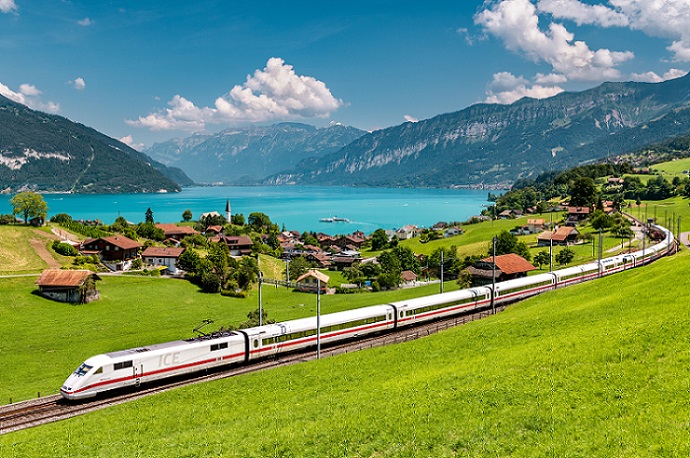
Scenic train journey in the European Alps

Exploring scenic European train routes with the Eurail Global Pass.

Enter the Eurail Global Pass. Offering access to national rail networks across 33 European countries, it remains one of the most flexible and iconic ways to see the continent. But if you have a 7-Day within 1-Month Flexi Pass, strategic planning is the key to maximizing every track-mile.

Here is everything you need to know to master the 7-Day Eurail Global Pass and turn a simple train ticket into the ultimate European adventure.


Understanding Your 7-Day Flexi Pass

The 7-Day Eurail Global Pass operates on a flexible model:

  • 1-Month Validity: From the start date you activate, you have a 30- or 31-day window.
  • 7 Travel Days: Within that month, you can choose any 7 individual calendar days to travel.
  • Unlimited Trains Per Day: On a chosen "travel day," you can board as many eligible trains as you want from midnight to 11:59 PM.

EURAIL GLOBAL PASS QUICK SUMMARY

  • Countries Covered: 33 European Nations
  • Flexibility: 7 Unlimited Train Travel Days in 1 Month
  • Included Extras: Select Ferries, Regional Buses, City Rail
Travelore Pro-Tip: A travel day runs on local time from 00:00 to 23:59. If you board an overnight train at 9:00 PM and don't change trains after midnight, it only counts as one travel day (the day you board)!

High-Speed Trains vs. Regional Routes: Navigating Seat Reservations

One common misconception is that a Eurail Pass lets you step onto any train without planning ahead. While that’s true for thousands of regional trains across Germany, Austria, and Switzerland, high-speed and international routes often require mandatory seat reservations.

Train Type / Region Reservation Needed? Extra Cost Example Routes
Regional / Local (S-Bahn, RB, RE) ❌ No $0 Munich to Salzburg, Zurich to Lucerne
High-Speed (ICE, Railjet) ⚠️ Optional ~$4–$6 Frankfurt to Berlin, Vienna to Budapest
High-Speed (TGV, Eurostar, Frecciarossa) 🛑 Mandatory $10–$35 Paris to Amsterdam, Rome to Florence
Night Trains (Nightjet) 🛑 Mandatory $15–$50+ Vienna to Venice (Sleeper/Couchette)

How to avoid reservation fees:

If you want to stretch your budget, use the Rail Planner App filter option: check "No reservations needed." You’ll travel on regional networks, which may take slightly longer, but you’ll enjoy scenic views and zero added costs.


3 Strategic Itineraries for Your 7 Travel Days

Because you have 7 travel days spread across a month, you should cluster your travel days around major transit hubs, staying 2–4 days in each base city.

1. The Classic Capitals (Western Europe)

  • Day 1: London → Paris (Eurostar)
  • Day 2: Paris → Brussels → Amsterdam
  • Day 3: Amsterdam → Berlin
  • Day 4: Berlin → Prague
  • Day 5: Prague → Vienna
  • Day 6: Vienna → Budapest
  • Day 7: Budapest → Munich

2. Alpine & Lakes Panorama (Scenic Focus)

  • Day 1: Zurich → Lucerne → Interlaken
  • Day 2: Interlaken → Glacier Express Route → St. Moritz
  • Day 3: St. Moritz → Tirano (Bernina Express) → Milan
  • Day 4: Milan → Lake Como / Venice
  • Day 5: Venice → Innsbruck
  • Day 6: Innsbruck → Salzburg
  • Day 7: Salzburg → Munich

Travelore Checklist for a Seamless Eurail Journey

  1. Download the Rail Planner App: Activate your digital pass via the app before your first journey. You will log every route on the app to generate your QR ticket code for conductors.
  2. Pack Light: European train stations feature stairs, narrow carriage aisles, and overhead racks. A single carry-on or travel backpack makes platform changes effortless.
  3. Use Station Lockers: Don't let baggage hold you back during layovers. Most major European central stations (Hauptbahnhof/Gare) offer secure luggage storage, allowing you to explore a city for 4 hours between trains without using an extra travel day.
  4. Check Partner Discounts: Your pass also unlocks discounted rates on select European ferries (like routes between Italy and Greece), scenic mountain cog railways in Switzerland, and city tours.

Is the 7-Day Global Pass Worth It?

If you plan to cover long distances across multiple countries, the pass delivers unmatched value and flexibility. Instead of booking non-refundable point-to-point tickets weeks in advance, the Eurail Global Pass keeps your travel plans agile—allowing you to stay an extra night when you fall in love with a city or hop on a train when the weather turns.

Monday, August 31, 2026

United Airlines Unleashes Record Transatlantic Network: 43 Nonstop European Routes From Newark

United Airlines is taking its transatlantic ambitions to new heights, scheduling a record 43 nonstop routes from Newark Liberty International Airport (EWR) to Europe for summer 2027. The massive schedule solidifies Newark as North America’s premier transatlantic gateway, offering travelers direct access to marquee capitals, emerging cultural hubs, and sun-soaked Mediterranean islands.


The New European Destinations from Newark

The expansion features eight brand-new European destinations departing directly from Newark, several powered by the debut of United’s long-range Airbus A321XLR aircraft:

  • Luxembourg City, Luxembourg (LUX): Daily year-round service beginning April 2, 2027.
  • Ljubljana, Slovenia (LJU): 4x weekly flights starting May 12, 2027, opening direct access to the Julian Alps and Lake Bled.
  • Olbia, Sardinia, Italy (OLB): 3x weekly service starting May 27, 2027, connecting travelers to Costa Smeralda.
  • Catania, Sicily, Italy (CTA): 4x weekly flights starting May 28, 2027, joining Palermo as United’s second Sicilian getaway.
  • Ibiza, Spain (IBZ): 4x weekly flights kicking off May 31, 2027.
  • Valencia, Spain (VLC): 3x weekly service beginning June 2, 2027.
  • Marseille, France (MRS): Daily service launching June 4, 2027, serving as the gateway to Provence and the French Riviera.
  • Terceira, Azores, Portugal (TER): 3x weekly flights beginning June 9, 2027.

Complete Breakdown of Newark’s 43 European Routes

Planned Frequency Destinations from Newark (EWR)
7x Daily London Heathrow (LHR)
2x Daily Dublin (DUB), Naples (NAP), Paris (CDG), Porto (OPO), Rome (FCO)
Daily Amsterdam (AMS), Athens (ATH), Barcelona (BCN), Berlin (BER), Brussels (BRU), Dubrovnik (DBV), Edinburgh (EDI), Frankfurt (FRA), Geneva (GVA), Glasgow (GLA), Lisbon (LIS), Luxembourg (LUX), Madrid (MAD), Marseille (MRS), Milan (MXP), Munich (MUC), Nice (NCE), Reykjavik (KEF), Shannon (SNN), Venice (VCE), Zurich (ZRH)
5x Weekly Ponta Delgada (PDL)
4x Weekly Bari (BRI), Catania (CTA), Faro (FAO), Ibiza (IBZ), Ljubljana (LJU), Palma de Mallorca (PMI)
3x Weekly Bilbao (BIO), Madeira/Funchal (FNC), Olbia (OLB), Palermo (PMO), Santiago de Compostela (SCQ), Split (SPU), Terceira (TER), Valencia (VLC)

The Strategy: Secondary Cities and Single-Aisle Long-Haul

Rather than funneling passengers solely through congested legacy hubs like Frankfurt or Heathrow, United’s point-to-point strategy pairs high-demand flagship routes with secondary and leisure-heavy leisure markets.

The introduction of the Airbus A321XLR—featuring lie-flat Polaris seats—makes thinner, specialized transatlantic routes economically viable without sacrificing passenger comfort. Combined with operational upgrades at Newark Airport, travelers in the Northeast can now skip layovers and fly nonstop to almost any corner of the European continent.

Wednesday, August 12, 2026

American Airlines Expands Global Reach With 15 New Nonstop International Routes

In one of its most aggressive global network expansions in recent years, American Airlines has officially unveiled 15 new nonstop international routes. Spanning Europe, Latin America, the Caribbean, and Asia, this major expansion promises more options, direct connections, and added convenience for transatlantic and long-haul travelers.


Expanding global footprints: Where is American flying?

The new schedule strengthens American Airlines' primary hubs—including Dallas/Fort Worth (DFW), Miami (MIA), Charlotte (CLT), Philadelphia (PHL), and Chicago O'Hare (ORD)—connecting passengers seamlessly to high-demand international destinations.

  • New Transatlantic Expansion: Enhanced connectivity to premier European destinations, making summer getaways and business travel faster and more direct.
  • Deeper Latin American Coverage: Added frequencies and brand-new routes to popular beach resorts and major South American cultural capitals.
  • Island Gateways: New seasonal and year-round direct flights to key Caribbean hotspots, tailored for vacationers.
  • Long-Haul Transpacific Additions: Strategic expansion out of major U.S. hubs to meet surging demand for travel to Asia-Pacific markets.
"We are giving our customers even more reason to fly American by expanding our international network to places they want to visit most."

New Routes & Launch Schedule Breakdown

Here is a closer look at key upcoming routes, expected launch dates, and service details:

Route Launch Date Frequency / Details
Miami (MIA) ✈️ Milan, Italy (MXP) March 29 Daily year-round service
Philadelphia (PHL) ✈️ Budapest, Hungary (BUD) May Daily summer seasonal service
Philadelphia (PHL) ✈️ Prague, Czech Republic (PRG) May 21 Daily summer seasonal service
Dallas/Fort Worth (DFW) ✈️ Athens, Greece (ATH) May 21 Daily summer seasonal service
Dallas/Fort Worth (DFW) ✈️ Zurich, Switzerland (ZRH) Late May Seasonal (May–August)
Phoenix (PHX) ✈️ Oaxaca, Mexico (OAX) October 29 Airbus A320 service
Miami (MIA) ✈️ Cap-Haïtien, Haiti (CAP) November 1 Daily service (Boeing 737-800)
Chicago O'Hare (ORD) ✈️ Tokyo Narita, Japan (NRT) March 19 Daily transpacific service (Boeing 787-9)
New York (JFK) ✈️ Tel Aviv, Israel (TLV) March 27 Daily service (Boeing 777-200ER)

What this means for frequent flyers and AAdvantage members

For loyalty members, this route expansion opens up thousands of new seat miles for reward redemptions and elite upgrade opportunities. Travelers can also take advantage of expanded partner connectivity across the oneworld alliance, making multi-leg international itineraries seamless.

Key benefits at a glance:

  1. Fewer Layovers: Direct nonstops reduce travel time and eliminate tedious domestic connections.
  2. Premium Cabin Upgrades: Newly added flagship aircraft on these long-haul legs feature Flagship Business and premium economy cabins.
  3. Lounge Access: Eligible long-haul international passengers can enjoy flagship dining and lounge access prior to departure at participating hubs.
Travelore Tip: When booking new international routes right after an announcement, keep an eye out for initial inaugural fare promotions and prime award seat availability before schedules fill up!

Final thoughts

Whether you're planning a European excursion, a tropical island escape, or a corporate trip abroad, American's expanded international schedule offers more flexibility than ever. Which of these new destinations is top on your travel wishlist?

Wednesday, June 17, 2026

Cultural, Artistic And Peaceful Escapes In Southwest Germany

Where Four Nations Share One Shore
Castle Meersburg towering over Lake Constance c. Burg Meersburg GmbH

At the point where Germany, Switzerland, Austria, and Liechtenstein converge, Lake Constance, or Bodensee in German, offers one of Europe’s richest concentrations of culture, history, and celebration. Baroque towers mirror themselves in still water, vineyards climb gentle hillsides, and on the lake’s four shores an extraordinary calendar of art, music, and heritage evolve through every season.

The Lake Constance region packs a remarkable density of cultural heritage into one stunning shoreline. Three UNESCO World Heritage Sites anchor the area’s historical credentials: the Monastic Island of Reichenau, where three early medieval churches with original thousand-year-old frescoes stand amid tranquil monastic gardens; the Abbey Library of St.Gallen in Switzerland, a baroque masterpiece housing over 170,000 priceless manuscripts; and the Prehistoric Pile Dwellings of Unteruhldingen, where reconstructed 5,000-year-old lakeside settlements bring Neolithic life vividly back to the surface. Castles and galleries add further layers: Burg Meersburg, Germany’s oldest inhabited castle, looms above the water with dungeons and armories dating to the 7th century, while the Kunstmuseum Liechtenstein in Vaduz, Kunsthaus Bregenz in Austria, and the Kunstforum Hundertwasser in Lindau, whose programme of changing exhibitions runs through 2029, give the region a contemporary art scene that rivals far larger European cities. Come summer, the festival calendar ignites: the Bregenz Festival celebrates its 80th anniversary in 2026 with opera on the world’s largest floating stage; OpenAir St.Gallen draws over 100,000 music fans to the Sitter Valley; and throughout the warm months, lakeside towns from Meersburg to Friedrichshafen stage open-air concerts, film screenings, and cultural evenings beneath the stars.

The Cultural Scene in Lake Constance
Bad Säckingen, Southern Black Forest: Wooden Bridge c. Stefan Kuhn Photography

Spread out across Baden-Württemberg, twenty towns have been recognized as “Kleinstadtperlen” – Small Village Pearls – and the designation fits: each one is a place of genuine, unhurried charm where timber-framed alleys, ornate market squares, and preserved medieval architecture form the backdrop to a very much living community. These are towns where old craft workshops sit alongside family-run restaurants, where wine festivals, Christmas markets, and open-air theatre bring neighbors together as they have for generations, and where small art galleries and summer concerts give the historic streetscapes a creative pulse.

Among the twenty, five are particularly compelling: Calw, birthplace of Nobel laureate Hermann Hesse, exudes literary atmosphere in a beautifully preserved old town; Freudenstadt is notable for Germany’s largest market square, situated amidst the scenic Black Forest; Bad Säckingen surprises with a Mediterranean warmth on the Rhine and the longest covered wooden bridge in Europe; and Donaueschingen fascinates as the celebrated source of the Danube, complete with a magnificent palace and a lively cultural program. Collectively, the "Kleinstadtperlen" make the case that the most enduring travel experiences in Baden-Württemberg are often found not in its cities, but in its small, proud, deeply characterful towns.

Small Village Pearls (Kleinstadtperlen)
Stadtpark Kleb, Nagold: A picturesque summer scene featuring the town's tranquil lake fountain c. Lightworkart Pro

Bask in the Nature, History and Warmth of Nagold

Tucked into the gentle hills of the Northern Black Forest, Nagold is a town that rewards those who slow down to match its pace. An intricate web of walking trails, from the celebrated seven-summit “7-Berge-Weg” to gentle rambles following in the footsteps of poet Eduard Mörike, fans out through silent woodland and across open panoramas, while the town itself is defined by the confluence of the Nagold and Waldach rivers, whose banks frame a historic old town overlooked by the dramatic castle ruin of Hohennagold on the Schlossberg above. A landscaped riverside promenade connects parkland areas along the water, the beloved Klebbähnle miniature railway has been delighting families in the Stadtpark Kleb since its return in 2024, and the Steinhaus, believed to be Nagold’s oldest building, houses a local history museum tracing the town’s story across 300 square metres of exhibition space. Year-round, Nagold presents an open-air civic theater through July and August, a warmly atmospheric Christmas market in Advent, and traditional seasonal festivals such as the Urschelherbst, making it a town that genuinely moves you.

The Black Forest: Art Discovered on Foot

Those wishing to view art typically visit museums. In the Black Forest, however, this is not exclusively the case—as evidenced by the numerous artworks situated in public spaces, as well as the diverse art trails and sculpture paths. These features make the symbiosis between varied natural landscapes and intricate art something that can be experienced firsthand. The collection includes works that are humorous in nature, as well as those that are contemplative. Some pieces stand entirely on their own, while others exist in a powerful dialogue with their surroundings.

Beneath the streets of Karlsruhe, the underground U-Bahn passes through Germany’s largest single ceramic artwork: fourteen monumental reliefs by Markus Lüpertz depicting the four elements and the biblical creation, accessible on a regular tram ride and explored in depth on monthly guided tours. Above ground, the three-mile Rehberger-Path connects the world-famous Vitra Campus in Weil am Rhein, with its landmark buildings by Gehry, Ando, and Hadid, to the internationally acclaimed Fondation Beyeler in Swiss Riehen, with 24 interactive artworks by Tobias Rehberger marking the way. In Grafenhausen, two 30 foot Corten steel pine cones, designed by Stefan Strumbel, establish a compelling interaction between industrial materials and the natural environment of the Black Forest Highlands. The 1.5 mile Weinsüden-Kunstweg (Southern Wine Path) in Sasbachwalden winds through sunny vineyard slopes with 32 artworks and in Freudenstadt a three mile sculpture trail climbs to a hilltop panorama past more than 40 sculptures and ornamental fountains. The Black Forest does not ask you to go indoors to find art, it asks you to walk outside in nature.

Public art in the Black Forest
Maulbronn Monastery, part of the Staatliche Schloesser und Gaerten. c. Guenther Bayerl

The Monastery Route

The Klösterroute Nordschwarzwald, the Monastery Route of the Northern Black Forest, links four extraordinary monastic sites through some of Baden-Württemberg’s most beautiful landscape. The route begins at Kloster Maulbronn, the best-preserved Cistercian monastery north of the Alps and a UNESCO World Heritage Site, where Romanesque and Gothic architecture, silent cloisters, and intact medieval rooms create an atmosphere of rare stillness. From there it moves to Kloster Hirsau, whose sweeping ruins speak to the former greatness of one of Europe’s most influential Benedictine houses; then to the picturesque Kloster Maria Reuthin in Wildberg, set beside the River Nagold in a soft and peaceful valley; and finally to Kloster Alpirsbach, whose monumental Romanesque church is one of the finest examples of medieval ecclesiastical architecture in the region. The route can be walked on well-marked trails, cycled through valleys and over ridges, or driven at leisure – and whatever the pace, the experience is the same: forests, rivers, wide views across the Northern Black Forest, and a deepening sense of connection to the cultural roots of European history.

Sunday, June 14, 2026

JetBlue Debuts Boston-To-Milan Route With $399 Introductory Fares

Good news for travelers looking for more affordable ways to get to Europe this summer! JetBlue has officially landed in Italy for the very first time, launching its highly anticipated daily nonstop seasonal service between Boston Logan International Airport (BOS) and Milan Malpensa Airport (MXP).

The inaugural flight took off on May 11, marking a massive milestone for the New York-based carrier as it aggressively expands its transatlantic footprint.

Expanding the European Footprint
While some might still think of JetBlue as a domestic budget carrier, the airline has quietly turned Boston into a powerful transatlantic gateway. Milan marks JetBlue’s ninth nonstop European destination out of Boston for the summer season, joining an impressive lineup that includes:

Year-Round Service: London (Heathrow), Paris, and Amsterdam.

Summer Seasonal Service: Barcelona, Dublin, Edinburgh, London (Gatwick), and Madrid.

According to JetBlue’s President, Marty St. George, adding Milan gives travelers across New England and the broader network a chance to experience the airline's unique transatlantic service built around "exceptional service, thoughtful design, and everyday value."

Low Fares to Celebrate the Launch

To celebrate the debut in Italy, JetBlue is dropping some seriously competitive introductory fares for summer travel. For a limited time, U.S.-originating travelers can book one-way tickets at three distinct price tiers:

Core (Economy): Starting at $399

EvenMore (Premium Economy): Starting at $649

Mint (Business Class): Starting at $2,199

While peak summer travel to Europe is notorious for sky-high pricing on legacy carriers, these introductory fares offer an excellent opportunity to book a cheaper entry point into Northern Italy.

What to Expect Onboard

The daily seasonal flight—which runs through October 5, 2026—operates on JetBlue’s sleek Airbus A321 aircraft. Passengers flying to Milan can expect the standard perks that have made JetBlue a favorite for coast-to-coast flights:

Free, high-speed Wi-Fi that keeps you connected across the ocean.Seatback entertainment screens at every single seat.

Complimentary meals and snacks, featuring restaurant-style small plates curated by acclaimed New York City restaurants.

Lie-flat Mint suites for those looking to fly in boutique business-class luxury.

Flight Schedule (Daily through Oct 5)

Boston (BOS) to Milan (MXP): Departs at 6:25 p.m. and arrives at 8:10 a.m. the following day.

Milan (MXP) to Boston (BOS): Departs at 10:00 a.m. and lands back in Boston at 12:47 p.m.

Your Gateway to La Dolce Vita

Milan is often unfairly treated as just a business hub or a connecting city, but it serves as the perfect jumping-off point for a dream Italian vacation. Beyond its own world-class fashion, jaw-dropping Duomo, and legendary culinary scene, Milan Malpensa offers incredibly easy rail and road access to iconic summer spots like Lake Como, the Italian Alps, and Switzerland.

If you've been holding out on booking your summer getaway to Europe, JetBlue's fresh route to Italy might just be the sign you were waiting for. Head over to jetblue.com to check out the lowest available fares before the limited introductory seats sell out!

Saturday, June 26, 2021

A New Tour Explores Ireland’s Ancient East In Waterford


With a brand new tour offering the ‘Freedom of Waterford’, the stunning collection of museums in Ireland’s oldest city has now reopened.

The Waterford Treasures collection of five museums tells the fascinating story of a city sitting in the heart of Ireland’s Ancient East.

Founded by the Vikings in 914, Waterford was once one of the great ports of Ireland and is famous today for the esteemed Waterford Crystal factory, the fabulous Waterford Greenway, and particularly its history and culture-laden Viking Triangle.

The Viking Triangle is crowned by Reginald’s Tower, Ireland’s oldest civic building, and the Viking feel of the city is still palpable in some of its medieval streets, which encompass practically every period of architecture to have come to Waterford since the arrival of the Vikings.

Norse invaders had a significant impact not just on Waterford, but the whole of Ireland, and the country’s rich Viking history is even being introduced to a whole new audience through a newly released video game, Assassin’s Creed Valhalla / Wrath of the Druids Ireland extension.

Opportunities to learn about Waterford’s Vikings foundations, to be inspired by medieval wonders and to experience elegant Georgian architecture are all part of the highlights of the Freedom of Waterford guided walking tour.

In the company of one of the expert guides at Waterford Treasures you will unpack the 1,000-year history of Waterford all within 1,000 paces in the city centre.

Following the walking tour, your ticket lets you go on to take a deep dive into your favourite era of Ireland’s heritage, with complete access to the Viking Triangle’s Medieval Museum and Bishop’s Palace Museum, as well as the brand new Irish Museum of Time and the Irish Silver Museum.

Step back into thirteen and fifteenth-century Waterford at the Medieval Museum where you can explore the atmospheric underground Choristers’ Hall and the fifteenth-century Mayors Wine Vault. An exhibition here highlights the medieval Cloth-of-Gold Vestments and the 1373 Great Charter Roll of Waterford – viewed by Her Majesty Queen Elizabeth II on her visit to Ireland.

The Bishop’s Palace Museum is an authentic eighteenth-century grand Georgian residence built in 1743, which is also home to the oldest surviving piece of Waterford Crystal in the world. A spectacular 4D ‘Masterpieces in Glass’, taking in the story of glassmaking, is included in the Freedom of Waterford ticket.

The Irish Silver Museum offers a journey through history using beautiful, intimate and personal objects as a guide to the fascinating story of Ireland and its ostentatious past, while the Irish Museum of Time, located in a gothic-style church, houses what is beyond doubt the finest collection of Irish timepieces in the world.

The Waterford Treasures museum collection is back as part of Ireland’s gradual re-opening. Following the lifting of restrictions, most galleries, museums, heritage sites and other cultural attractions opened their doors again on 10 May.

www.ireland.com

Wednesday, June 9, 2021

France Reopens Borders To American Tourists, Others

PARIS (AP) — After “a very bad year,” Paris tour operator Marc Vernhet sees a ray of light with the promised return of tourists from the United States and elsewhere who are welcome in France as of Wednesday if they have been vaccinated against the coronavirus.

His agency, 2CVParisTour.com, is starting to get bookings again from Americans for its sightseeing tours conducted in quirky, bug-eyed Citroen cars. June is still very lean, but July is looking better, Vernhet said as France took the first steps toward rebuilding its position as a top destination for foreign tourists.

Before the pandemic, Vernhet ran three or four tours of the capital per day. The work dried up when France locked down, and he’s only doing around three tours per week now, nearly exclusively for French visitors. Vernhet hailed the reopening of France’s borders for vaccinated tourists as “excellent news” but said it is going to take a few more weeks for business to pick up and that “I’m not expecting to work correctly before mid-July.”

“We’ve been waiting for this for months and months,” he said.

To be allowed in for tourism, Americans and other visitors from most countries outside of Europe will need to show that they have been fully inoculated against the coronavirus with vaccines approved by the European Union’s medicines agency.

France’s acceptance of only the Pfizer, Moderna, AstraZeneca and Johnson & Johnson (Janssen) vaccines means tourism isn’t immediately coming back from the lucrative markets of China and Russia, which use vaccines not approved by the European Medicines Agency.

Without one of the those four vaccines, most non-EU visitors will still need to prove that they have a compelling reason to visit France and must quarantine on arrival.

But European visitors and those from a handful of low-risk countries are being welcomed back with open arms, even if they are not vaccinated. These so-called “green” countries include Japan, South Korea and Singapore, Australia and New Zealand, Lebanon and Israel. All EU countries as well as Iceland, Norway and Switzerland are also “green.” Vaccinated tourists from these countries can waltz right in; the unvaccinated need a recent negative test.

“Treat yourself, reserve now,” France’s tourism minister, Jean-Baptiste Lemoyne, said in a video message Wednesday.

“We want to hear Dutch, German, English, Italian, Spanish being spoken everywhere in the country,” he said. “We miss it. We miss you.”

As well as reopening to tourists, France from Wednesday also allowed restaurants and cafes to resume indoor service and for people to work out in gyms, its latest reopening steps as vaccinations make headway after 110,000 COVID-related deaths.

For 16 countries deemed high-risk, because they are battling coronavirus surges and worrisome variants, France remains off-limits as a tourist destination, even for would-be travelers who are vaccinated.

These so-called “red” countries include India and some of its neighbors, Brazil and some of its neighbors, as well as Chili, Bahrain, South Africa and Turkey.

Would-be tourists from so-called “orange” countries — which includes most of the rest of the world outside Europe, including the United States and Britain — still need a recent negative PCR or antigen test as well as proof of vaccination.

If unvaccinated, or inoculated with jabs not approved in Europe, would-be visitors from orange countries are not allowed to enter France unless they have a compelling professional or other reason. Sightseeing isn’t one of them.

Fifteen months after he last took American tourists on one of his Paris walking tours, guide and blogger Richard Nahem now has two bookings for July.

“People definitely want to come back,” said the former New Yorker, who’s been living in the capital since 2005.

Friday, May 21, 2021

Spain Gears Up For Summer, Lifts Restrictions On UK Tourists

MADRID (AP) — Spain is revving up for a return of summer tourists, with Prime Minister Pedro Sánchez on Friday offering an upbeat outlook after his government lifted travel restrictions on British visitors and the European Union moved a step closer to allowing cross-border travel.

Sánchez said those two developments will bring “a very much better summer” than last year, when the tourist industry in one of the world’s most popular vacation destinations was crushed by limits on travel and gatherings due to the COVID-19 pandemic.

“We are hugely thrilled at the prospect of our tourism industry recovering, of the streets of our towns and cities filling up once more,” he told an annual tourism congress in Madrid.

Spain, Sánchez said, will be “delighted, extremely delighted” to receive British tourists again.

Spain is lifting its restrictions on travelers from the United Kingdom beginning Monday. In 2019, Britain sent 18 million people to Spain, the most of any country.

However, Sánchez didn’t mention that Spain is on the U.K. government’s amber list, meaning people traveling back to the U.K. from Spain still need to go into quarantine for 10 days and get multiple COVID-19 tests — a consideration that is likely to dampen enthusiasm for a Spanish holiday. Britons who can’t work from home likely will not be going to Spain until the rules change.

Sánchez said it was “extraordinary news” that the EU is poised to introduce by July 1 a system of COVID-19 travel certificates for EU citizens, allowing them to travel freely across the bloc.

Tourism is a mainstay of the Spanish economy and Sánchez expressed hope that it can be “the engine that hauls the economy forward” after the economic devastation of the pandemic.

The tourism sector accounted for 12% of Spanish GDP in 2019, but that plummeted to just under 6% in 2020.

Monday, June 15, 2020

Travelore News: Europe Reopens Many Borders But Not To Americans, Asians


BERLIN (AP) — Europe is taking a big step toward a new normality as many countries open borders to fellow Europeans after three months of coronavirus lock downs — but even though Europeans love their summer vacations, it’s not clear how many are ready to travel again.
Tourists from the U.S., Asia, Latin America and the Middle East will just have to wait for now. Europe is expected to start opening up to some visitors from elsewhere next month, but details remain unclear.
The European Union home affairs commissioner, Ylva Johansson, told member nations last week that they “should open up as soon as possible” and suggested Monday was a good date.
Many countries are doing just that, allowing travel from the EU, Britain and the rest of Europe’s usually passport-free Schengen travel area, which includes non-EU countries like Switzerland.
Europe’s reopening won’t be a repeat of the chaotic free-for-all in March when panicked, uncoordinated border closures caused traffic jams that stretched for miles. Still, it’s a complicated, shifting patchwork of different rules. And although tourist regions are desperately counting on them, a lot of Europeans may decide to stay close to home this summer.
That’s something tourism-dependent Mediterranean countries such as Greece are keen to avoid. Prime Minister Kyriakos Mitsotakis acknowledged Saturday that “a lot will depend on whether people feel comfortable to travel and whether we can project Greece as a safe destination.”
Greece has emphasized its handling of its outbreak, which saw only 183 deaths. Overall, Europe has seen more than 182,000 virus-linked deaths this year, according to a tally by Johns Hopkins University that also shows Europe has had 2.04 million of the world’s 7.8 million infections.
Hard-hit Spain, which on Sunday moved forward its opening to European travelers by 10 days to June 21, is allowing thousands of Germans to fly to its Balearic Islands for a trial run starting Monday — waiving its 14-day quarantine for the group.
“This pilot program will help us learn a lot for what lies ahead in the coming months,” Prime Minister Pedro Sánchez said. “We want our country, which is already known as a world-class tourist destination, to be recognized as also a secure destination.”
Border checks in some places have already wound down. Italy opened its borders on June 3 and towns on the German-Polish border celebrated early Saturday as Poland opened the gates. At midnight, the mayors of Goerlitz, Germany and Zgorzelec, Poland cut through chains on a makeshift fence that had divided the towns.
Germany, like France and others, is lifting remaining border checks on Monday and scrapping a requirement that arrivals must prove they have a good reason to enter. It also is easing a worldwide warning against nonessential travel to exempt European countries – except, probably, Finland, Norway and Spain, where travel restrictions remain, and Sweden, where the level of new coronavirus infections is deemed too high.
Many German regions have reimposed a quarantine requirement for arrivals from Sweden, whose virus strategy avoided a lockdown but produced a relatively high death rate.
Czech authorities will require arrivals from Sweden to show a negative COVID-19 test or to self-quarantine – along with travelers from Portugal and Poland’s Silesia region.
Austria is opening up Tuesday to European neighbors except Spain, Portugal, Sweden and Britain — and keeping a travel warning for Italy’s worst-hit region of Lombardy. France is asking people from Britain to self-quarantine for two weeks.
Britain recently introduced a 14-day quarantine requirement for most arrivals, to the horror of its tourism and aviation industries, which say the move will hit visits to Britain hard this summer.
Denmark is opening up only for tourists from Germany, Norway and Iceland — and only if they can prove that they’re staying for at least six nights. Norway also is keeping shut its long border with Sweden.
“I realize this is a big disappointment. But the restrictions are based on objective criteria that are the same for everyone,” Norwegian Prime Minister Erna Solberg said. “If we open too quickly, the infection can get out of control.”
With flights only gradually picking up, nervousness about new outbreaks abroad, uncertainty about social distancing at tourist venues and many people facing unemployment or pay cuts, this may be a good summer for domestic tourism.
German Chancellor Angela Merkel and Austrian Chancellor Sebastian Kurz are both planning to vacation in their homelands this year.
“The recommendation is still, if you want to be really safe, a vacation in Austria,” Austrian Foreign Minister Alexander Schallenberg told ORF television, recalling the scramble in March to bring home thousands of tourists as borders slammed shut. “In Austria, you know that you don’t have to cross a border if you want to get home, and you know the infrastructure and the health system well.”
The German government, which helped fly 240,000 people home as the pandemic grew exponentially, also has no desire to repeat that experience.
“My appeal to all those who travel: Enjoy your summer vacation — but enjoy it with caution and responsibility,” German Foreign Minister Heiko Maas said. “In the summer holidays, we want to make it as difficult as possible for the virus to spread again in Europe.”
___

Tuesday, April 14, 2015

10 Insanely Gorgeous, Under-The-Radar European Destinations

EUROPEAN VACATION


The value of the dollar against the euro is the highest it has been in years, making now the perfect time to take that trip you've been meaning to plan. But instead of the usual suspects (lookin' at you, London and Paris), why not try one of these under-the-radar spots that are far less crowded but just as beautiful?
Goreme, Turkey
The only thing better than seeing Goreme's stunning rock formations (into which enormous, beautiful churches have been built)? Experiencing them from a hot-air balloon, hundreds of feet overhead. View Panoramic.
2015-04-08-1428499755-339620-goreme_turkey.jpg
Torun, Poland
This riverfront Gothic city is way less crowded than Warsaw and Kraków, has a thriving theater scene and--fun fact--was the birthplace of Copernicus. Another must-see? The gingerbread museum. (Which, weirdly, Torun is famous for.) View Panoramic.
2015-04-08-1428499871-7516200-torun_poland1.jpg
Manarola, Italy
Go to Manarola, the oldest and second smallest of the Cinque Terre towns, for fresh ​seafood from the Ligurian Sea, sweet Sciacchetrà wine and some peace and quiet (no cars are allowed). To get there, take the Pisa Centrale train from any of the Cinque Terre towns, which costs less than $10 and runs multiple times per day. View Panoramic.
2015-04-08-1428499935-513068-manarola_italy.jpg
Ikaria, Greece
There must be something in the water on this Grecian island, where residents typically live to 100. Visit during the summer for panagiria, the huge festivals celebrating various religious holidays, which happen once or twice a week between May and October. View Panoramic.
2015-04-08-1428500016-5581447-icaria_greece.jpg
Hallstatt, Austria
Sometimes called "the pearl of Austria," this picturesque village is essentially car-free and surrounded by salt mines, which make for fascinating tours. View Panoramic.
2015-04-08-1428500073-9916189-hallstatt_austria.jpg
Alesund, Norway
While in Alesund, visit the Atlantic Sea Park at Tueneset, the biggest saltwater aquarium in northern Europe. Visit in December for next-level skiing in the Sunnmore alps. View Panoramic.
2015-04-08-1428500132-5778970-alesund_norway.jpg
Kotor, Montenegro
The coastal town of Kotor is actually a submerged river canyon. It's super-secluded, surrounded by limestone cliffs and has one of the best-preserved medieval old towns in the world. This little guidebook can help you navigate the ​local ​Austro-Hungarian fortresses.​ View Panoramic.
2015-04-08-1428500214-8622690-kotor_montenegro.jpg
Piran, Slovenia
Narrow streets and Gothic alleyways wind through this historical Slovenian town sitting at the tip of a thin peninsula. Pack your ​flats: The town is so tiny, you'll want to make the 30-minute walk from end to end. View Panoramic.
2015-04-08-1428500562-3530424-piran_slovenia.jpg
Rovinj, Croatia
Located on the Adriatic Sea, Rovinj is an active fishing port (hello, amazingly fresh meals) and boasts incredible Mediterranean weather. Also nearby is the Brijuni Island National Park, where you can see ancient Roman villas and the remains of a Byzantine Palace. View Panoramic.
2015-04-08-1428500619-6210633-rovinj_croatia.jpg
Porto, Portugal
Though it's the second largest city in Portugal, Porto is often overshadowed, tourism-wise, by Lisbon. A lively cultural scene and even livelier-colored buildings should make you reconsider. Check out the Mercado do Bolhão, a massive indoor market where you can pick up culinary delights from freshly-baked breads to fish that were probably swimming in the Atlantic hours earlier. View Panoramic.
Follow us on Twitter: @TraveloreReport