Paris is one of the best cities on the planet to visit. According to Reuters.com, in 2017, 33.8 million visitors arrived in Paris and the Ile de France. Paris is a city that should not be rushed. Like a good love affair, the relationship should not be rushed. Design your schedule so that you have at least 5 days to get a sense of the city and the “uniquely French” way of life.
So Much to Love
Infatuation with Paris
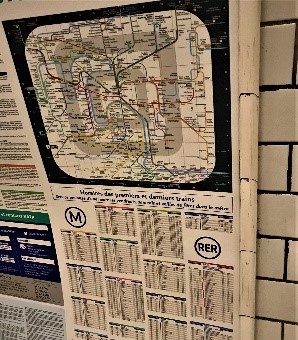
1. Subway/Metro. There is a difference between the Metro/subway, RER and SNCF. The Metro is the subway (inside the city), the RER is the suburban train system, and the SNCF is the rail system throughout France.
The excellent news is that the French rail system works (although all cars may not be air conditioned)! The Metro is the quickest and most efficient method for getting around the city while the SNCF (using Rail Europe) is the best way to travel throughout the country.
While accessing the Metro and bus systems are not easy/peasy – even for a New Yorker, there is some logic to the operation, and thanks to Google Maps, can be navigated with a significant degree of accuracy and efficiency.
Most of the time Google is spot on, however, there are parts of London that have not been fully integrated into the Google system, and the old-fashioned methods of paper maps and asking shopkeepers and people on bicycles for directions continues to be the best resources for getting to a location.
France 2016 promises to be a fun and exciting year. With a stronger dollar almost at parity with the Euro, here are major developments and events that American visitors are sure to enjoy.
Norwegian non-stop flights
To Paris From 29 July, Norwegian will begin its first operations from Paris-Charles-de-Gaulle Airport with low-cost nonstop flights to New York, Los Angeles and Fort Lauderdale/Miami.
To Martinique & the Guadeloupe Islands Starting December 3, 2015 It’s time to visit Martinique and the Guadeloupe Islands. This coming winter season, starting December 3, 2015 and through late March, the award-winning low-cost airline Norwegian is flying non-stop and very affordably to both islands from three East Coast locations: New York’s JFK, Baltimore’s BWI and Boston’s Logan airports. It is the first time in 20 years that residents of the Northeast will enjoy direct service to these French Caribbean Islands.
Re-opening of the Unterlinden in Colmar, Alsace – December 12, 2015 Even further north and just in time for the Christmas market season, Alsace will welcome back the Unterlinden Museum in Colmar – home to the remarkable Isenheim Altarpiece. The museum will reopen December 12, 2015, after a reorganization of its extensive collections and three years of major works including a new wing dedicated to contemporary art.
Normandy’s Impressionist Festival – April 16 to September 26, 2016 As the cradle of Impressionism, Normandy will shine from April 16 to September 26, 2016, during the 3rd edition of its Impressionist Festival. It is the perfect time to experience both the works and sights that inspired masters like Monet, Pissaro, Caillebotte, Millet, Boudin, Renoir, Degas, and Cassat. They painted everyday life, depicting scenes from now-famed seaside resorts like Trouville, Deauville, Dieppe, and Honfleur. Over 25 exhibitions that will showcase portraiture – Read more (Main Impressionist exhibitions)
La Cité du Vin: Inauguration June 2, 2016 The gloriously restored wine capital of Bordeaux will include a Wine Museum and Cultural center, the Cité du Vin. Minutes away from Bordeaux’s elegant city center, the Cité will offer visitors immersive and multi-sensory technologies to explore a huge permanent exhibit about great wine cultures throughout the ages. Its opening will coincide with the lively Bordeaux Wine Festival scheduled for June 23 to 26, 2016. By day, visitors will be able to sample over 80 Bordeaux and Aquitaine wines and other culinary delights delivered on a mile-long stretch of the city’s magnificent Garonne River waterfront. By night and every night, this major biennial celebration features a music festival, followed by a spectacular sound & light show and grand fireworks display. Read More
Euro 2016 – June 10 to July 10, 2016 Sports and soccer fans have plenty more to celebrate in France, which, for the third time, is hosting the great European soccer tournament, Euro 2016, from June 10 to July 10. The month-long soccer fest will feature 24 of the top European teams. The 51 matches will unfold in 10 cities throughout France: Bordeaux – Lens – Lille – Lyon – Marseille - Nice – Paris – Saint-Denis – Saint-Étienne and Toulouse -
Franco-American Museum of Blérancourt Reopening & inauguration of new wing - Fall 2016 At the other end of the country, in Picardy, the Franco-American Museum of Blérancourt, will reopen in the fall of 2016 after an ambitious expansion that includes a new wing and reorganization to showcase its comprehensive collection of art and documents dedicated to the Franco-American relationship. The museum was founded by Anne Morgan, the remarkable daughter of U.S. industrialist, philanthropist and art collector J.P. Morgan. She transformed the Château de Blérancourt, her WWI and post-war headquarters in Picardy, into the Franco-American Museum. After she donated it in 1931 to the French Government, it was declared a national museum. The reopening will most likely be late September.
Lascaux IV – inauguration in Fall 2016 In the fall of 2016, the Montignac-Lascaux International Parietal Art Center, also known as Lascaux 4, is poised to become the leading tourist attraction and cultural tool associated with Lascaux's world-famous painted and engraved cave art. A new and complete replica of the Lascaux cave will be the beating heart of the Center, a sizable complex that uses new imaging and virtual technology for comprehensive interpretation purposes. Read more
2016 MAJOR ANNIVERSARIES
100th Anniversary of WWI - 1914-1918 The story of Anne Morgan’s war, the Chateau de Blérancourt and WWI all go hand in hand. There will be events to commemorate the WWI battles of 1916, most notably the battle of the Somme in Picardy and, of course, the battle of Verdun in Lorraine. Although the United States had not yet entered the war in 1916, it's never too early to experience the moving memorials honoring the American dough boys and allied soldiers who fought or lost their lives in Picardy and Lorraine during Great War. Read more
France & Loire Valley 500th Anniversary of Leonardo da Vinci's arrival in France In 2016, France will celebrate the 500th anniversary of Leonardo da Vinci’s arrival with the Mona Lisa in tow, which could explain her cryptic smile. Invited by France’s great Renaissance King Francois 1er, da Vinci crossed the Alps to reach Amboise in the Loire Valley, where he settled and spend the last 3 years of his life at the Château du Clos Lucé, now a museum in his honor. It is the perfect opportunity to pay a visit to the Mona Lisa at the Louvre and admire Leonardo’s inventions at the Château du Clos Lucé. Read more
Normandy 2016 Stretching back even deeper into history, the 1,050-year-old Mont-St-Michel Abbey in Normandy has been restored to its island status at the highest tides. A major decade-long national ecological project tackled the problem of rising sand levels, which posed a threat to the monument. The area's new and improved water flow will safeguard Mont-Saint-Michel bay as a maritime area and protect the ecosystem of this varied and precious place. To mark the occasion, the Tour de France will begin on July 2, 2016, from the Mont-St-Michel.
It will also be the perfect year to explore Normandy’s medieval heritage. In 1066, 950 years ago, William the Conqueror became the first Norman king of England after his victory at the Battle of Hastings on October 14, 1066. In the Bayeux Museum—also a storied D-Day site, resides a masterpiece: the 11th century Tapestry of Bayeux. Also known as the Queen Mathilda Tapestry, the 229-foot long and 19 inch high linen cloth, depicts through beautifully embroidered panels the Norman conquest of England.
ALWAYS NEW ACCOMMODATIONS
High on the radar of newsworthy items are new destinations to experience and new accommodations to enjoy. In Paris, there has been an impressive wave of boutique hotel openings. To name just a few, there are The Maison Souquet, the Grand Hotel Pigalle, the Bains Douches and the Champagne-themed and aptly named Bubbles of Paris Hotel. This coming winter there will also be the long-anticipated reopening of the legendary Hotel de Crillon and the Ritz.
Paris is not the only place where things are happening, of course. This fall, the Paris Region welcomed a boutique hotel of its own, La Demeure du Parc, in royal and beautiful Fontainebleau. This summer the Rhone-Alpes' classy Royal Evian Hotel reopened after extensive and innovative renovations. And Bordeaux has embraced the Grand Hôtel de Bordeaux & Spa, brought in July into the InterContinental family of hotels. It has turned to world-renowned chef, restaurateur and television personality Gordon Ramsey to oversee its gastronomic restaurant, Le Pressoir d'Argent
The grande dame of the City of Light, Ritz Paris, a member of The Leading Hotels of the World, reopened to the public on June 6, 2016, after a four-year renovation.
The property was restored to its former Belle Époque glory after a resplendent refurbishment by distinguished interior architect Thierry W Despont. Unveiled in the reopening were three restaurants, three bars – including the famed Bar Hemingway, 15 historic, prestige suites, and the authentic Salon Proust, as well as gorgeous gardens and terraces.
Ritz Paris has been a member of the prestigious Leading Hotels of the World collection since 1969. Now Leading Hotels Leaders Club members can be among the first to experience the signature 19th-century flourishes amid opulent contemporary comforts with exclusive access throughout the property.
“The Leading Hotels of the World is pleased to have the opportunity to offer our loyal Leaders Club members an uncommon experience at Ritz Paris,” said Ted Teng, CEO of The Leading Hotels of the World. “Our extensive and valued partnership with the historic hotel will allow our members to immerse themselves in the beautifully restored property and enjoy insider experiences that highlight the grandeur and exquisite offerings of Ritz Paris.”
Leaders Club, the loyalty program of the over 375 Leading Hotels of the World, offers members personalized service and elite travel benefits, such as complimentary daily breakfast, room upgrades, and exclusive access. In celebration of the reopening, Leaders Club members who book a stay at Ritz Paris under the Leaders Club Exclusive Access will receive:
• A guaranteed upgrade upon check-in • A greeting from Ritz Paris management upon arrival and a private hotel tour detailing the immaculate • Flexible check-in and check-out times • Round-trip executive car service transfers to and from the airport or rail station • Plus all of the valuable Leaders Club benefits including: complimentary Wi-Fi and breakfast for two
Those who want to travel like the most illustrious former guests of Ritz Paris, such as Coco Chanel, F. Scott Fitzgerald and Marcel Proust, can book a stay at www.LHW.com. Rates start at approximately USD 1,200 and the Leaders Club exclusive benefits are available through December 13, 2016.
June 2016. Adding to our ever growing collection, Small Luxury Hotels of the World welcomes four new independently spirited hotels to the brand. Our travelers will be spoilt for choice between a luxury spa hotel on the Île De Ré, a wellness resort in Okinawa and a modern city-center gem in Barcelona, all of which now bare the coveted SLH seal of approval.
This Oceanside resort is located in a peaceful corner of the subtropical Okinawa Islands. Centred on health and wellness, the resort offers an extensive array of innovative spa treatments such as beachside climatotherapy, ‘aerosol napping’ and personalised treatment plans based on thalassotherapy. For the more active guests, the hotel offers private yoga classes and invigorating Nordic Walking sessions along the sand. The resort has 68 rooms and suites all decorated in fresh neutral tones and flooded with natural light. Designed so that guests can take advantage of the stunning scenery surrounding the resort, all the rooms feature a private terrace offering views of the East China Sea. There are four restaurants and cafes in the resort – offering everything from light refreshments at the poolside bar to fresh seafood and Japanese/European fusion cuisine in the Fine Dining Restaurant.
Insider Tip: Book an Ayurvedic treatment at the spa – the Kati Vasti involves warm oil poured onto the lower back in a chickpea poultice and is an effective treatment for back pack and improves circulation and stiffness.
Le Clos Saint Martin Hotel and Spa: Île De Ré, France
Quieter than the Cote D’azur but with just as much charm, Île De Ré on the west coast of France is where Parisians go when they need a break from the city. Le Clos Saint Martin, a classic elegant French villa with a modern twist, is the perfect place to stay while enjoying the food, wine and picturesque views of this traditional French fishing village. Set in an 18thcentury house, this boutique hotel has 33 rooms and suites, two outdoor pools, beautiful manicured gardens dotted with eye catching sculptures and an exclusive Clarins Spa. The rooms and suites pair modern luxury with authenticity through natural oak flooring, large windows with traditional pretty blue shutters and white walls. The Lounge Bar, ‘Le Petit Bec’ serves light meals and afternoon teas in the sunshine by the pool or guests can order to enjoy in the comfort of their room.
Insider tip; Hire a bike and take the cycle path from Saint Martin through La Flotte to the Cistercian Abbaye des Châteliers, with cornfields to one side and the blue sea dotted with yachts on the other you’ll feel like you’ve been transported into a French impressionist painting.
In the beating heart of Barcelona, between El Born and the Gothic quarter, this boutique luxury hotel is one of the largest of SLH’s collection with 146 rooms and suites across seven floors. Contemporary urban cool is intermixed with 1920’s heritage design to create a modern yet classic interior – with views of the historic city from almost every window of the hotel. The real showstopper however is the rooftop SkyBar, where guests can enjoy a jaw-dropping panoramic view of the city while sipping cocktails or taking a dip in the infinity pool. The City Restaurant offers an inventive take on classic Mediterranean cuisine all created from market-fresh ingredients. The hotel also has its own wellness suite where expert massage therapists can tailor a treatment to your needs, or enjoy a steam in the thermal suite.
Insider Tip: Visit Gocce di Latte, for some of the best gelato in Barcelona – the unassuming shop is just 5 minutes from the hotel and serves up classics like pistachio and chocolate as well as flavours for the more adventurous such as lemon and chilli or banana and peanut.
This contemporary boutique hotel in the centre of Madrid exudes the cosmopolitan style and sophistication the cultural city is famed for. Located on the edge of the fashionable Gran Vía, the hotel is the perfect spot from which to enjoy this buzzing neighbourhood. Inside the 76 rooms and suites feature high ceilings and huge windows, a nod to the hotels turn-of-the century heritage. On the sixth floor sits the hotel’s restaurant Ático, which offers classic Spanish flavours with a contemporary twist in an ultra-modern setting overseen by double Michelin-starred chef Ramón Freixa. After their meal guests can head to the Terazza – a lush urban garden and rooftop bar which boasts views of Madrid like no other, standing taller than any other hotel bar in Madrid.
SLH Insider Tip: Stop by Del Diego, one of the best bars in Madrid just a few moments from the hotel on Calle de la Reina. This lively bar is a popular spot with locals and a great place to enjoy delicious cocktails and a variety of tapas dishes.
To make a booking visit www.slh.com or call toll free 1-877-234-7033
The French government is attempting to lower smog levels in Paris,
and officials are banning cars from driving on the historic
Champs-Elysees Avenue on the first Sunday of every month.
According to CNBC.com,
Paris mayor Anne Hidalgo revealed the rule as part of the Paris Respire
campaign, which also closes other popular streets to vehicles and makes
museums in the city free of charge on the first Sunday of every month.
May
1 was originally supposed to be the first closure of Champs-Elysees
Avenue, but the date was a holiday. Officials moved the start date back
to May 8, which was a success for the city, leading other metropolitan
areas in Europe to take similar steps to stop smog.
In a report
from the World Health Organization, 42,000 premature deaths in France
occur each year due to fine-particle air pollution, but France is far
from the only country dealing with high levels of smog.
Officials in Delhi, India, have incorporated a new "odd-even" policy
that requires cars with odd-numbered and even-numbered license plates
to only drive every other day with the hope of reducing the number of
vehicles on the road.
Another city dealing with air pollution is
Beijing. The Chinese city declared a "red alert" day last December when
smog levels reached 25 times worse than the recommended safe level.
CNBC.com is reporting 1.4 million people have died in China due to air
pollution.
The Bordeaux-based wine museum and cultural center known as La Cité du Vin (www.laciteduvin.com)
will open its doors on June 1, 2016. It will draw visitors into an
unparalleled discovery of wine-growing civilizations from all over the
world.
The value of the Cité du Vin is anchored in two propositions: the
construction of a world-class museum in a building with remarkable
architecture uniquely suited to its purpose; a spectacular voyage
through time, history and the cultures of the world to learn about wine.
Located on the banks of the Garonne River, the Cité du Vin is a
monument to be marveled at before you even step inside. An original
design from Parisian agency XTU, the bold architecture was intended to
stand out in a crowd of both great international museums in other cities
and majestic facades in Bordeaux. The shape of the building is said to
symbolize the spiral flow of wine swirling in a glass. With a belvedere
rising 180 feet above the ground (and a viewing platform 115 feet up on
the 8th floor), the riverside structure will be decorated with 3,000
iridescent aluminum panels that catch and mirror the changing
reflections of the adjacent river to which Bordeaux and its wines owe
their prominence.
Inside, temporary and permanent exhibitions will lead visitors on a
journey through time (from 6,500 BC to the modern era) to gain an
understanding of the wine-growing cultures of five continents. This tour
will be divided into 23 exhibition modules, covering everything from
"The Vineyards World Tour" and "The Changes of Wine" (from grape seed to
wine) to "The Buffet of the Five Senses” (tasting), wine and art, and
even health and religion.
The latest technological innovations are being used in the
scenography, including 3D images, holograms, smell diffusors, music and
other interactive tools. The end result is an immersive, multi-sensory
experience accessible via individual handset guides issued to each
visitor. These will deliver explanations in real time in the user’s
selected language (eight are available), triggered by a device that
detects the wearer's position and sets off the appropriate multimedia
content.
The 450,000 visitors expected in the first year will also be able to
make the most of shops, restaurants and a wine tourism service for
further information about and tickets to the surrounding vineyards. A
five-star hotel with 150 rooms, a shopping centre and a boat shuttle
service will expand the site even further.
With all of this in place, the Cité du Vin hopes to become the flagship tourist attraction and cultural hub of Bordeaux.
Already done Versailles and Monet's Gardens? Then look into these five excursions about an hour from the City of Light.
Taking a day trip from Paris
is as easy as hopping a train in any direction. If you've already
visited Versailles or Monet's gardens at Giverny, consider these
less-traveled castles, medieval towns, affordable Michelin dining, and
stunning cathedrals. Here are our top five picks, just around an hour
away from Paris.
Head north of Paris, taking the train from Gare du Nord, to get to Chantilly.
The town's chateau dates to the Middle Ages, even though the present
structure was mostly the result of 19th century construction by the son
of France's last king.
The chateau houses France's largest collection of Renaissance
paintings after the Louvre, though in a much more intimate setting. The
outdoor 18th century hamlet is the spot to get a bowl of strawberries
and whipped cream—called, appropriately, Chantilly—when the weather
permits. The most striking feature of the chateau, however, is actually
the stable, which many mistake for the castle. It contains the Horse
Museum and also sports an arena for dressage demonstrations featuring
well-trained ponies, dogs, and horses.
One of the best ways to discover the area is to take a bike tour. Consider booking a personalized one with French Mystique to explore the domain more thoroughly.
Chartres
A short train ride from Gare Montparnasse leads to the tiny town of Chartres, known for its UNESCO listed cathedral.
Begun in the 12th century, the church continues to be a site for
pilgrims, with its mismatched spires and largely original stained glass
windows adding to its unique appearance. Ask about any English-speaking
tours at the gift shop inside the cathedral before wandering on your
own. And if possible, visit between April and October, when the light
show illuminates the cathedral each night.
The main focus of Chartres is the gothic cathedral, but there is also
an art museum within the former bishop's residence, as well as the
Maison Picasiette, an early 20th century house covered in glass mosaics.
The streets around the cathedral host small shops and bakeries selling
local specialties like the Cochelin, a chocolate-filled pastry in the
shape of a man.
Despite its tiny size, Chartres also can be a culinary destination.
The Grand Monarque Hotel, dating to the 17th century, is home to Chez
Georges, another Michelin-starred restaurant that's worth the trek. The
discovery menu, at just $87, is driven by seasonal market produce, while
the exhaustive wine list features more than 2,000 bottles. Your best
bet? Ask the waiter for a suggestion.
Lille
Take the train from Gare du Nord to the town of Lille,
an under-appreciated industrial part of France that contrasts nicely
from Paris—at least for a day. With its distinctive Flemish influences
in the architecture and with numerous beers on tap at each bar, Lille
feels more Belgian than French. Stroll the Grand Place before heading to
the tangle of streets north of the train station, called Vieux Lille.
The local institution is Meert, a confectionery shop that sells pricey yet delicious gauffres,
flavored cream sandwiched between paper-thin waffles. For lunch, don't
expect anything light and dainty. Head to A Taaable for a welsch, bread covered in ham and melted cheese served with a massive bowl of fries. Wash it all down with a local or seasonal beer.
Afterwards, grab a coffee at Tamper! Espresso Bar,
proof that the hipster-driven Paris coffee scene isn't alone in France.
If words on the menu like "siphon" and "Hario V60" don't mean anything
to you, then just keep it simple and order a filtered coffee. The
caffeine will fuel a few more hours of wandering the shops and boutiques
of Vieux Lille before heading back to Paris.
Orleans
Take the train from Gare d'Austerlitz and arrive in the tiny city of
Orleans in just over an hour. Just south of Paris, the city was a home
and battleground for France's most famous leading lady, Joan of Arc. She
led the French army to victory over occupying English forces in 1429.
In Orleans, visit a reconstruction of her house before strolling the
medieval streets and stunning cathedral where Joan herself would have
prayed. The stained glass windows inside retrace her life. Nearby, enter
the 16th century Hotel Groslot, which once housed royalty like
Catherine de Medici, and today hosts local weddings.
While sightseeing options and museums are limited, consider spending a few hours overlooking the Loire River while dining at Le Lièvre Gourmand.
This Michelin-starred restaurant offers a culinary adventure led by
head chef Tristan Robreau. The seven course tasting menu, with dessert
and cheese, only costs $80—a steal compared with anything similar in
Paris. It's worth the day trip just to experience whatever Chef Robreau
has to offer.
Rouen
From Gare Saint Lazare, most people will take the train and get off
to go to Monet's Gardens at the station called Vernon. Instead, stay in
your seat and continue on to Rouen. This medieval town, the capital of
Normandy, is another spot associated with Joan of Arc: it's where she
was burned to death.
Wander the streets lined with colorful half-timbered houses for a taste of medieval France, when the astrological clock, or gros horloge,
was one of the town's claims to fame. The iconic cathedral is
immortalized in a series of paintings by Claude Monet, some of which are
on display back in Paris at the Musée d'Orsay. With botanical gardens,
museums, and countless other churches to explore, be sure to plan some
time to experience local cuisine.
For dining, La Couronne
is a local institution since 1345, serving up gourmet French fare. For a
more relaxed meal, head across the Place du Vieux Marché (where Joan
was burned) and pop into the Poissonnerie des Halles for fresh seafood.
Think you know everything about the world’s most-visited museum? These fun facts may surprise you.
For many people all over the world, a visit to the Louvre is a major bucket list item during a trip to Paris.
The most-visited museum in the world is also one of the largest—the
total length of the façade measures nearly two miles—and one of the
richest in artistic treasures (the Louvre exhibits 38,000 works and has
an additional 422,000 in storage). The museum employs 2,290 staff
members, including 65 curators and 145 conservationists. (Keep in
mind: 1,200 of those staff members are security guards). The Louvre even
has its own squad of 48 firefighters on call 24 hours a day. That’s
just the tip of the iceberg. This monumental museum contains many
secrets inside its hallowed halls, just waiting to be discovered.
It was originally built as a palace by François I
The Renaissance king famed for the gorgeous castles in the Loire Valley
actually razed a 12th-century fortress on the right bank to make way
for the Louvre palace. Construction began in the mid-1500s, but only
part of the building was completed. Every subsequent French king added
onto the structure: if you pay attention, you can spot several different
architectural styles. One of the most impressive parts is the
Colonnade, which was designed by Louis Le Vau, Claude Perrault, and the
painter Charles Le Brun, whose handiwork you can admire in the Apollo
Gallery.
You can still glimpse remnants of the original moat
Though the 13th-century fortress built by King Philippe Augustus was
destroyed, archeologists excavated the original moat 23 feet below the
Cour Carré during construction of the glass pyramid. Today you can peek
at it in the medieval part of the Sully wing.
It took 200 years for the entire building to become a museum
Louis XIV was the last king to use the Louvre as a royal residence—he
moved his court to Versailles in 1682. In 1793, during the French
Revolution, the Musée Central des Arts opened to the public in the
Grande Galerie. Napoleon Bonaparte and Napoleon III both added to the
Louvre, enhancing their own prestige. It wasn’t until 1993, however,
that the whole building was used as a museum for the first time.
Many of the works in the Louvre were plundered by Napoleon as spoils of war
Many of the French kings were great art collectors and commissioned
the most talented architects of the day to contribute to the building,
but many of the museum’s greatest works were looted during Napoleon’s
campaigns in Italy, Egypt, and beyond.
I.M. Pei’s famous glass pyramid was enormously controversial
The glass pyramid by American architect I.M. Pei today is seen as a
symbol of the Louvre itself, but when it was first revealed in 1989,
some critics called it “sacrilegious” to tamper with the architectural
integrity of the historic palace. Designed to welcome 4.5 million
visitors per year, the Louvre received 8.6 million visitors in 2015. A major construction project is currently working to alleviate the long lines by reconfiguring the entrances and reception areas around the pyramid.
The museum’s largest painting is in the same room as the Mona Lisa
The Mona Lisa may be the Louvre’s most famous painting, but many
people don’t realize that the museum’s largest painting is actually in
the same room. The Wedding Feast at Cana by Venetian Renaissance master
Veronese is sometimes mistaken for the Last Supper, but actually depicts
Christ’s first miracle of transforming water to wine.
Da Vinci Codefans can embark on a themed route of the museum
The Louvre has several official routes recommended to help visitors navigate the enormous museum, and the Da Vinci Code inspires one of them. If you embark on this path,
you’ll follow in the footsteps of the protagonists Robert Langdon and
Sophie Neveu and learn to separate fact from fiction. You can also do a
themed scavenger hunt with THATLou.
You can see what the building looked like in Napoleon III’s day
Tucked away in a remote corner of the Richelieu wing, Napoleon III’s
drawing room gives visitors a glimpse at what the sumptuous palace
looked like when the emperor used it for state functions.
Skip the line and become a Louvre expert
To beat the crowds, you can purchase tickets at any FNAC bookstore
(the $1.75 surcharge is well worth it) and enter through the Passage
Richelieu. Download the museum’s official app ($1.99) for pre-planned
paths through the museum and commentary by the curators. You can even
plan your own night at the museum—it stays open until 9:45 pm on
Wednesdays and Fridays.
The Louvre is still acquiring additional works
Even though the museum's collection only includes art made until the
19th century, it's still acquiring works. In fact, the Louvre recently announced a joint acquisition with the Rijksmuseum in Amsterdam
of two portraits by Rembrandt—the master painter’s only full-length
portraits. They are on view until June 13, 2016 and then will be moved
to the Rijksmuseum.
The city has been in the news recently and unfortunately it has been for all the wrong reasons.
First and foremost, my heart goes out to all those affected by what has happened recently.
I have a handful of traders in Paris that shared their stories with me. Two of which were in the general area where the attacks occurred.
Best time to visit Paris
Thankfully, everyone is okay but the city has suffered a blow to its reputation. Temporarily at least.
This is precisely why now is one of the best times to visit Paris.
#1: Terrorism Rarely Happens Twice
Ironically,
the one of the best times to visit any place in the world would be
right after a terrorist attack. Never would I wish that on any city or
country, but when we have an attack in a specific location we never have
another attack immediately after. Security is heightened in the region
and countries (as well as cities) take extra precautions to make sure
that it doesn’t happen again. While everyone is scared about what
happened it is the safest time to visit because it becomes that much
harder for another terrorist attack to occur.
Do
keep in mind that there may be some limitations due to the increase in
security and the French surely won’t go out of their way to thank you
for visiting.
When Is The Best Time To Visit Paris and see the Arc de Triumph
#2: The Euro Has Taken A Smack Down
As I day trade for a living
I keep quite abreast of the financial situations across the globe. This
is one way to save money while traveling. We don’t have to rush to see
things in our lifetime at the end of the day we do have 80 year live
spans :D.
Right now it is one of the best times to visit Paris because the Euro has
taken quite a hit compared to the US. While the reasoning is more
complex it is also due to the US Dollar increasing in value
significantly.
During the great
recession of 2008 one dollar equaled over 1.5 Euro. That means that
everything that we bought in Europe costs us 50% more. While the
exchange has fluctuated up and down now the current exchange rate has
been hovering between roughly 1.60 (1 US dollar equals 1.60 Euros) to
1.20. As of Jan 2nd, 2015, we had a huge breakout to the downside and
now we are hovering between 1.05 (1 USD dollar equals 1.05 Euros) and
1.14.
The best part is we will most likely go to parity very soon meaning that 1 US Dollar will equal 1 Euro.
If
the current state of the economy stays the same there is actually an
opportunity that the US dollar will be worth more than Euros which could
benefit all travelers using US Dollars.
This
is one of the great things about the world economy right now, while it
isn’t great, many Americans are able to travel very cheaply. Especially
to countries that are commodity based (sell things like Oil, Silver,
Gold, etc).
The best time to visit Paris may be 6 months from now.
Shangri-La Paris
#3: Tourism Is Going To Take A Big Hit
People are scared.
Many have cancelled their plans and/or are going to travel to safer countries like…. Colombia? (GASP)
Air France has reported that it has taken a $54.5 million hit after the Paris attacks and there was a drop in hotel occupancy of 12%.
What all these fancy numbers mean is that things are going to get cheaper, a lot cheaper.
Hotel
rooms (I recommend the fancy Shangri-La with a view of the Eiffel
Tower) and airfare will drop first followed by other items. With both
the dollar getting stronger and prices getting cheaper it could be one
of the best times to visit Paris in a very long time.
Best times to visit Paris Marcello
#4: The Economy Is Going To Get Worse Before It Gets Better
The
global is not going well. One of the things something the main stream
media doesn’t want us to believe. Things haven’t really recovered since
the Great Recession of 2008.
It is of course not all bad news.
Very
similar to how the Euro is weakening the entire global economy is going
to get worse, not better. It won’t be a great thing for all of us but a
fantastic thing for traveling. Supply and demand is simple.
The more things get worse the less people will travel.
The less people will travel the more prices will come down.
Even
though things aren’t great out there I want to take this moment to say
that whenever there is a crisis there is great opportunity. There were
more millionaires created during the Great Depression in 1929 (one of
the worst moments of the global economy in history) than at any point in
the history of the United States. Since the world is so connected this
is going to be one of the best times to be able to make money.
I
wanted to send that little note to those out there that are having a
hard time because there is always an opportunity to make money out
there.
What food in Paris looks like: Breakfast
#5: Paris Is Still Amazing
I
didn’t go during the best time to visit Paris (July) last year but it
was still fantastic. I always had a habit of avoiding the iconic city
because I wanted to travel off the beaten path. The idea was to stay
away from the most visited places in the world. Including the most visited city in the world, Paris.
Paris has a way to steal your heart away.
Finding the best time to visit Paris will only enhance your experience.
The
food is rich and amazing while the portions are small to not deluge
your waistline. The sites are incredible and historic. Visiting outside
of the hot and humid months of July and August you will enjoy the city
that much more.
It goes without saying there are some downsides.
While
I didn’t have a bad experience with the people in Paris, there are
rumors that they are very short of nice to begin with (according to the
rumors). The other item I wasn’t a fan of is the fact that everyone
seems to smoke. Every outdoor cafe has a habit of shoving as many people
on their patio as possible. So we get to smell the wonderful smoke
from everyone.
Keep in mind that
overall Europe follows the general schedule where the peak in tourism
occurs in the summer. July and August are the peak months. To have the
best combination between privacy and good weather the Spring would be
the best time to visit Paris. The months of May and June would be best.
June is when the number of visitors start to increase quite a bit.
Tribute Portfolio, part of Starwood Hotels & Resorts Worldwide, today announced its indie arrival in France with the addition of two Parisian properties, Le Metropolitan and Le Dokhan’s.
Located close together in the 16th Arrondissement of Paris, the properties mark yet another entry into a coveted market for global travelers by the brand, further propelling its rapid expansion in the first year. Launched in April 2015 as Starwood’s 10th brand, Tribute Portfolio is a collection of exceptional independent hotels and resorts, promising owners, Starwood Preferred Guest® (SPG®) members and guests alike the ability to “Stay Independent.”
Le Dokhan’s, a Tribute Portfolio Hotel
Originally conceived as a private townhouse, Le Dokhan’s retains the feeling of an intimate Parisian residence. The hotel’s interior design was crafted by celebrated local designer, Frederic Mechiche, who stayed true to the property’s neo-classical style. A treasure trove of antiques, the hotel features an original Louis Vuitton lift cabin, hand painted friezes, custom made fabrics and works of art by Picasso, Klee and Matisse. Le Dokhan’s is also home to the city’s very first Champagne bar, where guests can still choose from more than 200 different varieties of premium champagne.
Le Metropolitan, a Tribute Portfolio Hotel
Designed by French architect Francois Champsaur, Le Metropolitan’s elegant and modern aesthetic brings the essence of Paris to life in a traditional 19th Century Haussmann-style building. The rooms and suites feature a soothing color palette complemented by hardwood floors, beautiful local artwork and inspiring views over the city. Guests can relax in the hotel’s pool and wellness center before sampling local and Mediterranean cuisine in the property’s glamourous restaurant.
Both hotels are located within easy reach of landmarks, such as the Trocadero Gardens, the Louvre and the Eiffel Tower.
Independent by Nature
An answer to both guests’ and owners’ desire to Stay Independent, Tribute Portfolio debuted in April 2015 with its first hotel, the Royal Palm South Beach Miami. In addition to Miami and now Paris, guests can enjoy Tribute Portfolio properties in London, UK; Las Vegas, NV; Palm Springs, CA; Jakarta, Indonesia; and Hokkaido, Japan. The brand will soon open new hotels in Ft. Lauderdale, FL; Costa Mesa, CA; Asheville, NC; Nashville, TN; Savannah, GA; and Charleston, SC. Firmly anchored in the upper upscale category, Tribute Portfolio allows owners of distinct properties to maintain their independent spirit, while benefiting from Starwood’s powerful distribution, loyalty and sales platforms.