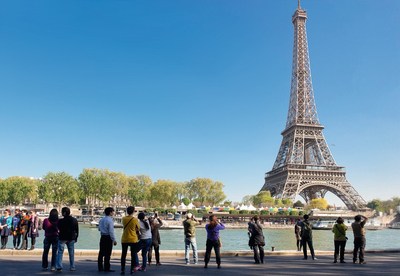
Paris is one of the best cities on the planet to visit. According to Reuters.com, in 2017, 33.8 million visitors arrived in Paris and the Ile de France. Paris is a city that should not be rushed. Like a good love affair, the relationship should not be rushed. Design your schedule so that you have at least 5 days to get a sense of the city and the “uniquely French” way of life.
So Much to Love
Infatuation with Paris
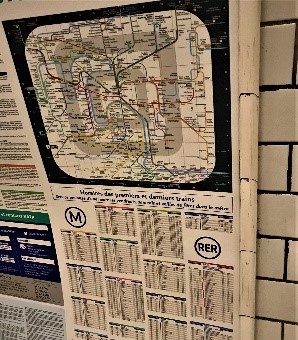
1. Subway/Metro. There is a difference between the Metro/subway, RER and SNCF. The Metro is the subway (inside the city), the RER is the suburban train system, and the SNCF is the rail system throughout France.
The excellent news is that the French rail system works (although all cars may not be air conditioned)! The Metro is the quickest and most efficient method for getting around the city while the SNCF (using Rail Europe) is the best way to travel throughout the country.
While accessing the Metro and bus systems are not easy/peasy – even for a New Yorker, there is some logic to the operation, and thanks to Google Maps, can be navigated with a significant degree of accuracy and efficiency.
Most of the time Google is spot on, however, there are parts of London that have not been fully integrated into the Google system, and the old-fashioned methods of paper maps and asking shopkeepers and people on bicycles for directions continues to be the best resources for getting to a location.
2019 will mark the 500th anniversary of the death of Leonardo da Vinci at Amboise, the start of the construction of the Château of Chambord and the birth of Catherine de’ Medici in Florence. The Loire Valley region will celebrate the artistic, scientific and intellectual effervescence of the Renaissance in France.
The Loire Valley with its kings, gardens, river and valley interspersed with châteaux is considered the birthplace of the French Renaissance. Historic figures such as Francis I, Catherine de’ Medici and Leonardo da Vinci largely contributed to the spread of the Renaissance here and greatly stimulated artistic creation, philosophy, science and literature, of which the Loire Châteaux probably bear the greatest testimony. The Loire Valley and the Cathedrals of Chartres and Bourges have received the honor of being listed by UNESCO for their heritage and nature. Celebrations will be held throughout 2019. A cultural program is currently being put together, composed of different highlights including a large travelling digital show mixing contemporary artistic and musical creation, an international architecture competition, guided tours, banquets, many exhibitions, international symposiums, etc.
ABOUT 500 YEARS OF THE RENAISSANCE In 2019, The Loire Valley will be celebrating 500 years of Renaissance(s)... a renewed and reinvented Renaissance. The region aims to adopt an innovative and creative dynamic in association with major contemporary art venues such as the FRAC (regional contemporary art collection) in Orléans, the CCCOD (Olivier Debré centre for contemporary creation) in Tours, the Transpalette in Bourges and the Regional Domain of Chaumont-sur-Loire, which is an Arts and Nature Centre. Leonardo da Vinci was a man who incarnated the possible, a symbol of art and science. The artist and scholar left Rome for Amboise in 1516 upon invitation by King Francis I, and came to live in the “Cloux” Manor, now known as Clos Lucé. This is where the story of three French masterpieces began: The Mona Lisa, The Virgin and Child with Saint Anne, and Saint John the Baptist, which are now kept at the Louvre. We have a duty to promote this magnificent heritage, but also to prolong it. Celebrations will be held throughout 2019. A cultural program is currently being put together, composed of different highlights including a large travelling digital show mixing contemporary artistic and musical creation, an international architecture competition, guided tours, banquets, many exhibitions, international symposiums, etc.
A delicious way to herald in the spring is Goût de France/Good France which will take place worldwide on Wednesday, March 21. It is a unique global event held on 5 continents in over 150 countries which, for this fourth consecutive year, will involve French embassies abroad and chefs from around the world.
This fourth year will see some 3,000 participating restaurants, including 1,500 chefs currently operating in France. And for the first time, there will be a regional focus with the Nouvelle Aquitaine region* selected as guest of honor. They will all offer “French menus” on that day and Goût de/Good France dinners will be based around French wines and spirits, the theme for this fourth edition. Participating restaurants can be found on www.goodfrance.com
The event is organized by the French Ministry of Foreign Affairs and by celebrated chef Alain Ducasse.
Alain Ducasse also wanted this year’s event to be an opportunity to pay tribute to Paul Bocuse with the participating chefs having the opportunity to include one of Paul Bocuse’s dishes or a dish inspired by him in their menus. As Paul Bocuse said, “Traditional or modern, there is only one cuisine... good cuisine.”
This taste of France is meant of course to attract people to the world’s #1 tourist destination that welcomed 89 millions foreign guests in 2017.
This is what Guy Savoy—another culinary great—had to say about France, its people and French cuisine: “Do we have the best culinary heritage? That is not the point. What is undoubtedly true is that it is unique in its diversity, the quality of its products and the expertise of its artisans on land and sea who over the generations have woven the incredible web that is French gastronomy. There is no town or village in France that does not have its own specialty, ranging from chocolate to sweet pastries and including prepared meats, wine and more – and that is unique!”
City Expects Most Successful Tourism Growth in 10 Years
PARIS- On the heels of a tourism uptick – with 23 million tourist arrivals expected in 2017 – Paris, France is forecasting more growth in 2018 and is expecting its most successful year since 2008. Atout France shares a range of highly-anticipated, momentous occasions and new experiences for visitors to enjoy in 2018, including major sporting events, cultural exhibit openings, historic anniversaries and a slew of new luxury hotels.
Making the City of Light and the larger Paris region even easier to visit, many airlines are adding faster, more direct routes to Paris, including direct flights from Seattle on Air France and the first non-stop flights from Indianapolis on Delta Airlines. The city is also utilizing new tactics to help travelers feel more comfortable, including widespread complimentary WIFI in downtown areas, an improved city app, multi-lingual signage and announcements in the subway system, and roaming tour guides to help direct city explorers.
Whether an annual visitor or a newcomer to the city, Paris maintains its top spot as a bucket list destination with new developments and happenings including:
MAJOR EVENTS
August: Held every four years, the Gay Games advocates for acceptance and celebrates diversity, respect and equality. More than 15,000 participants from 70 countries are expected to participate in the 10th edition of the games. Visitors and athletes from around the world can take part in more than 36 sports at exclusive facilities in Paris and the Ile-de-France region.
September: Le Golf National (near Versailles) will host the 2018 Ryder Cup, one of the golf world's signature events and the second time in history that the iconic golf tournament takes place in continental Europe.
October: The bi-annual Paris Motor Show, Mondial de l'Automobile, will celebrate its 120th anniversary at the Paris Expo Porte de Versailles trade fair grounds, welcoming car lovers and trade professionals from around the world.
CULTURAL OPENINGS
New York's Museum of Modern Art (MoMA) and Foundation Louis Vuitton have collaborated for the first MoMA exhibition in France. "Being Modern: MoMA in Paris" will be displayed at Foundation Louis Vuitton through March 2018 with masterworks by artists including Max Beckmann, Alexander Calder, Paul Cezanne, Marcel Duchamp, Walker Evans, and more.
Corot et la figure at Marmottan Monet Museum: Featuring sixty masterpieces from public and private collections in Europe and the U.S., this 2018 exhibition (open February through July) organized by the Marmottan Monet Museum showcases original productions by the first modern landscaper: Camille Corot.
Teatre La Scala, a French music hall and historic landmark that first opened in 1874, will reopen in March 2018 after a full renovation as a 550-seat theater with restaurant. The opening show will be entitled "Scala" by multi-disciplinary movement artist Yoann Bourgeois.
The Lafayette Anticipations – Galeries Lafayette Corporate Foundation will debut in spring 2018, as a public gathering place dedicated to displaying and creating works of art. The Foundation aims to support contemporary artists from the visual arts to fashion, design and the performing arts.
L'Atelier des Lumières is Paris's first digital museum of fine art, located in a restored iron foundry. Opening spring 2018, the museum will include two areas for visitors: La Halle, with a continuous cycle of digital exhibitions, and Le Studio, for experienced or emerging artists. The opening will include an extended program focusing on Gustav Klimt and Egon Schiele, as well as a limited-time program on Friedensreich Hundertwasser.
FlyView 360, a new concept of VR aerial simulator, will open in April 2018 at Place de l'Opéra offering dynamic flights over Paris.
Galeries Lafayette is launching a new department store on the Champs-Elysées with 7,000-square meters worth of fashion designed by Danish firm BIG. 52 Champs-Élysées marks the site of a future flagship, positioned as an upmarket department store for the 21st century.
RESTAURANT OPENINGS
Brasserie du Lutetia by three Michelin-starred chef Gérald Passedat, opens spring 2018 in a setting designed by Jean-Michel Wilmotte at the newly renovated Lutetia Hotel.
LaGirafe, from the same family as La Maison du Caviar and Rasputin, brings a new rooftop dining experience to Cité de l'architecture in November.
Eataly will continue global expansion with the opening of the first French flagship in a 43,055-square-foot building at Rue Sainte-Croix de la Bretonnerie in the Marais.
Guy Savoy is set to open his Metal Café at the brand new Musée National de la Monnaie.
ACCOMMODATION NEWS
Early 2018:
Hôtel Dress Code & Spa, located near Opera Garnier, will open with 33 rooms, indoor pool and spa, and a bar lounge.
The first Paris hotel under the Curio Collection by Hilton brand will open with a photography theme, 42 rooms and 10 suites and"La Verrière" restaurant.
Spring/Summer 2018:
After a three-year renovation, the highly anticipated Lutetia by The Set Hotels will reopen with 184 rooms (previously 231), seven signature suites, an extended brasserie with open terrace, jazz bar and cigar bar. French architect Jean-Michel Wilmotte designed a new courtyard, a 17-meter swimming pool and Akasha spa.
Brach Paris, by Evok Hotels Collection group and designed by Philippe Starck, will open as a deluxe hotel in the 16th arrondissement with 59 rooms and suites with Eiffel Tower views, restaurant, bar, pastry shop, two pools, and rooftop vegetable garden.
Hôtel de Berri by Marriott International, a 5-star hotel with 39 rooms and 37 suites, will open in a 1930s mansion off Champs-Élysées and will include a bar overlooking the garden, a restaurant, and a modern contemporary art collection.
Fall/Late 2018:
La Clef Champs-Élysées Paris, an apartment-style hotel, and the third property by The Crest Collection, opens in a quaint five-story Haussmann-style building along Rue de Bassano with 70 suites and a restaurant.
Opening of the first Autograph Collection Hotel by Marriot, a 50-room hotel with conference center in the former Pentemont Abbey in the 7th arrondissement.
The first Motel One in France, located in the 12th arrondissement.
The first HotelFauchon with 54 rooms and suites, and 150-seat Café Fauchon with terrace.
The second Okko Hotel, an innovative European hotel concept offering an all-inclusive rate (including movies, open bar, fitness, and more), opening near the Montparnasse station..
Maison Albar, a luxury boutique hotel, near the Opéra Garnier, providing an elegant and authentic French experience.
Grand Hotel de Chantilly in Avilly Saint Léonard on 10-acres of land with 210 rooms including 23 suites, seminar rooms, several restaurants and spa.
Domaine Montcel in Jouy en Josas, near Versailles on 14-hectares with 180 rooms, swimming pool, restaurant, and 3,000-square-meters of meeting rooms.
The first J.K. Place in Paris, a luxury hotel with an elegant contemporary atmosphere, will open at 82 rue de Lille.
ILE DE FRANCE REGION
Southwest of Paris, the Centre des Monuments Nationaux and the Palace of Versailles are presenting an exhibition at Château de Rambouillet through January 2018 featuring portraits of the Bourbon-Toulouse-Penthièvre family, who owned Rambouillet during the 18th century.
Creation of a river marina at l'Isle-Adam, to the north of Paris, on the edge of the largest river beach in France with 120 docks for boats, a range of shops and restaurants and a hotel.
Creation of an urban transport museum in Chelles, to the east of Paris, with 150 trams, buses, trolley buses, omnibuses as well as uniforms, signs, 10,000 films and 300,000 photos.
2018 marks the 100th anniversary of the end of WWI and the signing of the armistice in Compiègne—not far from Paris and at the edge of the Paris Region. In honor of this momentous occasion, several events will take place in Paris and the Paris region and on the Western Front in Northern France.
Ceremonies will be held at the Lafayette Squadron Memorial located in Marnes-la-Coquette, 11 miles east of Paris and on the way to Versailles, which honors the American volunteer pilots who flew in this unique squadron with the budding French air force during the Great War.
The recently reopened and redesigned Franco-American Museum at the Château de Blerancourt in Picardy, features memorabilia of the famed WWI American Squadron. Created by Anne Morgan in her former WWI headquarters and residence.
With a wide variety of activities, attractions and openings for visitors to take part in throughout Paris and Île-de-France over the coming year, the City of Lights and Paris region is a must-visit destination. For more ways to visit and experience Paris and Ile-de-France in 2018, visit en.parisinfo.comhttps://en.convention.parisinfo.com/or en.visitparisregion.com.
André Ostertag of Domaine Ostertag in the Alsace wine region of France.CreditPascal Bastien for The New York Times
EPFIG, France — The Muenchberg vineyard outside this small town is considered one of the best in Alsace. It’s among several dozen in the region that have earned the status of grand cru, vineyards from which the wines have the potential to transcend the qualities of the grapes to express the character of the place.
While the notion of grand cru in Alsace reaches back only a few decades, the individuality of Muenchberg has been recognized for centuries.
Cistercian monks first planted vines in a natural amphitheater in the foothills of the Vosges Mountains in the 12th century. Perhaps for them the potential greatness of Muenchberg was evident in its complexity: diverse exposures angled in all directions and wide-ranging soils including red sandstone with lots of iron and quartz, volcanic sediment and limestone.
From any angle, however, the vineyard is gorgeous. The light is pure, and the breeze fresh.
“Grand crus are always beautiful places where you feel the force and energy,” said André Ostertag, proprietor of Domaine Ostertag, which has holdings in Muenchberg as well as numerous other plots in the middle and northern parts of the Alsace growing region. “In any strong terroir, you have the feeling of the place.”
Olivier Humbrecht of Zind Humbrecht in his cellar.CreditPascal Bastien for The New York Times
The Alsace wine region, from Mulhouse on the south to Strasbourg on the north, is full of beautiful places and great terroirs. This long, narrow slash of rolling hills and pretty half-timbered towns between the Vosges on the west and the Rhine to the east has its share of great growers and winemakers, both older masters and young up-and-comers.
Alsace also has an image problem. Or, to be more precise, in the United States it faces the absence of one. Ask a young person about the wines of Alsace, and chances are you will be met with a blank stare. The best wine lists in New York may have only a handful of Alsatian bottles, and the hipper lists none at all.
Yet no region in France has a higher percentage of organic or biodynamic growers than Alsace, which theoretically should attract the keepers of natural wine lists.
It is time for a deeper look at Alsace, where I spent a few days this year visiting a range of producers. I tasted many wonderful wines, like Mr. Ostertag’s 2015 riesling from the Muenchberg vineyard, savory and saline, full of power and finesse. And, for a wine of less grandeur, his 2015 sylvaner, a grape practically unknown in the United States, is floral and zesty.
Bottles of Domaine Ostertag wines before labeling.CreditPascal Bastien for The New York Times
Alsace did not always draw a blank in America. In the 1980s, when I was first learning about wine, the slender bottles from Alsace were known as delicious high-quality values, dry contrasts to the generally sweet wines from Germany made from a similar set of grapes.
It helped that André Soltner, the superstar chef and owner of Lutèce, New York’s leading restaurant back then, was Alsatian. His list was full of the top names of Bordeaux and Burgundy, but the wines of Alsace were his favored selections with the cuisine.
In the ’90s, estates like Zind Humbrecht became critical darlings. But the wines also seemed to ebb from the general consciousness and slowly slip away.
The problem was that over time, too many of the historically dry wines of Alsace were sold with residual sugar in them. These wines were sweet, heavy and out of balance, with no indication of sweetness on the label. The problem is not new, and much has been done to rectify it. But the perception appears to linger.
Bottles of Domaine Ostertag wines before labeling.CreditPascal Bastien for The New York Times
Alsace did not always draw a blank in America. In the 1980s, when I was first learning about wine, the slender bottles from Alsace were known as delicious high-quality values, dry contrasts to the generally sweet wines from Germany made from a similar set of grapes.
It helped that André Soltner, the superstar chef and owner of Lutèce, New York’s leading restaurant back then, was Alsatian. His list was full of the top names of Bordeaux and Burgundy, but the wines of Alsace were his favored selections with the cuisine.
In the ’90s, estates like Zind Humbrecht became critical darlings. But the wines also seemed to ebb from the general consciousness and slowly slip away.
The problem was that over time, too many of the historically dry wines of Alsace were sold with residual sugar in them. These wines were sweet, heavy and out of balance, with no indication of sweetness on the label. The problem is not new, and much has been done to rectify it. But the perception appears to linger.
A glass of Zind Humbrecht wine in the tasting cellar.CreditPascal Bastien for The New York Times
Mr. Ostertag attributed the increasing sweetness to American critics who favorably rewarded those wines. “The sweeter the wine, the higher the score,” he said. “More and more wine appeared with sweetness and nothing more.”
Winemakers in Alsace have been working on solutions to the sweetness issue for years now. Partly, the problem was the result of idealism. Producers like Zind Humbrecht and Domaine Marcel Deiss, who work organically and biodynamically, were loath to pick grapes before they achieved absolute ripeness. They refused to add powerful store-bought yeast to complete fermentations that the indigenous yeast had not finished, which left residual sugar in the wine.
Over time, Olivier Humbrecht, whose family owns Zind Humbrecht, adjusted his viticulture so that ripeness could be achieved with less sugar in the grapes. You can taste the difference. Bottles that I used to find almost syrupy are now sharp and focused, even when they do have some residual sugar.
For years, Zind Humbrecht has put a code on its label to show the level of sweetness consumers can expect. The numbers, or indices, run from 1 (dry) to 5 (rich and sweet). I tasted a 2015 riesling from the Clos Häuserer vineyard, marked Indice 3, that was clearly sweet, yet it was vibrant and refreshing, with a balancing zing of acidity that I would not have found a decade ago.
The Zind Humbrecht estate in Turckheim, France.CreditPascal Bastien for The New York Times
Zind Humbrecht’s dry 2015s are lovely, including a fragrant gentle muscat from the grand cru Goldert vineyard and a deeply mineral, concentrated riesling from the grand cru Brand vineyard. I was especially impressed with their pinot gris, a grape that seems particularly susceptible in Alsace to cloying heaviness.
“There’s a lot of work done in the vineyard getting the precision right in pinot gris,” said Jolene Hunter, Zind Humbrecht’s export manager. “If you hesitate for a day, the acidity drops massively and alcohol shoots up.”
The 2014 pinot gris from the Rotenberg vineyard was beautifully balanced, fruity and saline, deliciously refreshing.
At Domaine Marcel Deiss, Jean-Michel Deiss and his son, Mathieu, have also been working in the vineyard to achieve riper grapes with less sugar. Mathieu Deiss’s side project, Vignoble du Rêveur, allows him to experiment with techniques popularized in natural wines: macerating white wines with their skins in the manner used for making red wines, fermenting and aging in amphoras, and working without sulfur dioxide, the stabilizer used in most wines.
Photo
From left, Jean-Michel and Mathieu Deiss of Domaine Marcel Deiss.CreditPascal Bastien for The New York Times
The 2015 Vignoble du Rêveur Singulier Sec is, like many of the Deiss wines, a blend of different grapes, in this case riesling, pinot gris, pinot blanc and pinot noir. It’s a beautiful amber, textured and tannic, bone-dry, fresh and energetic. It reminded me of the wines of Radikon, the great producer from Friuli-Venezia Giulia.
Residual sugar does have an important place in Alsace, as long as the wines are balanced and consumers know what to expect. But Deiss leaves this responsibility to the wine trade and to consumers themselves rather than indicating on its bottles the characteristics of its various bottles.
For example, the Engelgarten wines — from a gravelly terroir where muscat, pinot gris, pinot noir and riesling grow together — are generally dry, earthy and savory. But wines from the limestone Grasberg vineyard — combining riesling, pinot gris and gewürztraminer — are invariably floral, spicy and sweet, though balanced by excellent acidity.
“The nature of this vineyard is the expression of residual sugar,” said Marie-Hélène Cristofaro, commercial director and enologist for Deiss. “The wine never completes fermentation. This balance comes from nature.”
Sampling a pinot noir at Domaine Valentin Zusslin.CreditPascal Bastien for The New York Times
She said, though, that Mathieu Deiss’s experiments indicate that fermentation can go more smoothly with skin maceration, and suggested a future application in wines like the Grasberg.
“It raises new questions,” she said.
At Domaine Valentin Zusslin, where Marie Zusslin and her brother, Jean-Paul, have managed the estate since 2008, there is no question about which wines are dry and which is not.
“In Alsace, heavier, sweeter wines were understood,” she said, noting that that is not the case internationally. To eliminate confusion, the Zusslin wines are dry unless clearly indicated.
From the Clos Liebenberg, a southeast-facing vineyard outside Orschwihr in the southern part of the region, you can see the Swiss Alps on a clear day. Riesling is planted in rows and on terraces. Beehives are nearby for honey and pear trees for making eau de vie. Like all of the Zusslin estate, it has been farmed biodynamically for almost 20 years. Each element of the undulating terrain is different, with varying microclimates, exposures and soils.
Marie and Jean-Paul Zusslin of Domaine Valentin Zusslin in Orschwihr, France.CreditPascal Bastien for The New York Times
“To observe is paramount,” Ms. Zusslin said, a key tenet of biodynamic viticulture.
The Zusslin wines reflect this precision. They are characterized by acidity, energy and a savory quality that I can only describe as saltiness. I especially liked the lively 2014 sylvaner and the gentle 2014 riesling, both from the Bollenberg vineyard, along with the mineral 2013 riesling from the grand cru Pfingstberg vineyard and the linear 2013 riesling from Clos Liebenberg.
Alone among the estates that I visited, the venerable Maison Trimbach did not acknowledge any confusion in the marketplace about its wines.
The United States is its biggest market, said Pierre Trimbach, who oversees the winemaking, and Trimbach continues to do well there.
Perhaps that is because Trimbach has never deviated from its policy of clarity in its labeling. Consumers know that its wines, like the great riesling Clos Ste.-Hune and the more affordable Cuvée Frédéric Émile, are going to be dry. But when I said this to Mr. Trimbach, he grimaced.