Showing posts with label Beijing. Show all posts

Saturday, October 4, 2025

Beijing Chaoyang International Light Festival 2025 Unveils Nearly 60 Light Art Installations

Themed " Together! We Shine! ", the 2025 Beijing Chaoyang International Light Festival will run from September 26 to the end of October, seamlessly integrating modern technology, art, and culture to present a dazzling spectacle for both local residents and global visitors.

This year's festival once again welcomes internationally renowned director Richard Taylor and international light art teams, including the Singaporean team, to collaborate on creative design. Partnering with the China Urban Sculpture Artists Association and China's top eight art academies, the event will showcase nearly 60 large-scale light and sculpture installations during the festival.

The festival's main venue will transform the Liangma River, its banks, and the adjacent Chaoyang Park into a luminous wonderland. Visitors will discover interactive aquatic performances featuring technologically advanced installations like the Blue Whale and Pegasus -- mechanical creatures that "swim" across the river. Cultural highlights include the BBC Earth Live Symphony Concert, the UK animated family show Shaun the Sheep, and Yin Ge: Hong Kong Cinema Classics Symphony Concert.

The renovated Shell Theater at Chaoyang Park, Beijing's first outdoor water-based performance space, will officially open to the public during the festival. Nearby, the floating "Cube" stage on North Lake will create a dreamlike fusion with Beijing's iconic skyline, becoming a must-visit photo spot along the Liangma River. Over 100 high-quality performances will also be presented in collaboration with the 2025 Liangma River Art Season, featuring renowned domestic and international artists.

The festival further enriches its offerings by collaborating with globally popular pop culture icons: it has created a dedicated "Star Bear" stage at POP MART City, launched Wakuku's immersive urban pop-up installations along the Liangma River and at the Chaowai UIC Urban Complex, and partnered with INS New Paradise to present waterfront leisure and entertainment experiences.

Visitors to Beijing Chaoyang during this period will enjoy a multifaceted experience blending light, art, dreams, and joyful urban discovery.

Source: 2025 Beijing Chaoyang International Light Festival

Monday, August 28, 2023

Travelore News: China Won’t Require COVID-19 Tests For Incoming Travelers In A Milestone In Its Reopening

China will no longer require a negative COVID-19 test result for incoming travelers starting Wednesday, a milestone in its reopening to the rest of the world after a three-year isolation that began with the country’s borders closing in March 2020.

Foreign Ministry spokesperson Wang Wenbin announced the change at a briefing in Beijing on Monday.

China in January ended quarantine requirements for its own citizens traveling from abroad, and over the past few months has gradually expanded the list of countries that Chinese people can travel to and increased the number of international flights.

Beijing ended its tough domestic “zero COVID” policy only in December, after years of draconian curbs that at times included full-city lockdowns and lengthy quarantines for people who were infected.

BY SIMINA MISTREANU

Saturday, November 12, 2022

China Eases Some Quarantine For Travelers

Travelers arriving in China will spend less time in quarantine under changes to sweeping anti-virus controls announced Friday to reduce disruptions to the economy and society.

The announcement came as an upsurge in COVID-19 cases prompted Beijing to close parks and impose other restrictions. The country reported 10,729 new cases, and more than 5 million people were confined to their homes in the southern manufacturing hub of Guangzhou and the western megacity of Chongqing.

With the bulk of Beijing’s 21 million people undergoing near-daily testing, another 118 new cases were recorded in the sprawling city. Many city schools switched to online classes, hospitals restricted services and some shops and restaurants were shuttered with their staff taken to quarantine. Videos on social media showed people in some areas protesting or fighting with police and health workers.

“It has become normal, just like eating and sleeping,” said food service worker Yang Zheng, 39. “I think what it impacts most is kids because they need to go to school.”

Demands for testing every 24 to 48 hours are “troublesome,” said Ying Yiyang, who works in marketing.

“My life is for sure not comparable to what it was three years ago,” Ying said.

Family trips out of Beijing can be difficult if the mandatory smartphone app that keeps track of the user’s virus test status and whereabouts doesn’t show the green code that authorizes travel back to the Chinese capital, Ying said.

“I just stay in Beijing,” Ying said.

Numerous villages on the capital’s outskirts are home to blue-collar workers whose labor keeps the city running, with many living in dormitory communities. Taxi and ride-sharing drivers said they were avoiding the areas so as not to be placed in quarantine themselves.

Lockdowns in Guangzhou and elsewhere were due to end by Sunday, but authorities have repeatedly extended such restrictions with no explanation. Chinese leaders had promised on Thursday to respond to public frustration over the severe “zero-COVID” strategy that has confined millions to their homes and severely disrupted the economy.

Incoming passengers will only be quarantined for five days — rather than the previous seven — at a designated location, followed by three days of isolation at their place of residence, according to a notice from the State Council, China’s Cabinet.

It wasn’t immediately clear when or where the rules would take effect and whether they would apply to foreigners and Chinese citizens alike.

Relaxed standards will also be applied to foreign businesspeople and athletes, in what appeared to be a gradual move toward normalization.

Airlines will no longer be threatened with a two-week suspension of flights if five or more passengers test positive, the regulations said, potentially providing a major expansion of seats on such flights that have shrunk in numbers and soared in price since restrictions were imposed in 2020.

Those flying to China will only need to show a single negative test for the virus within 48 hours of traveling, the rules said. Formerly, two tests within that time period were required.

Macao will also cut its hotel quarantine period from seven days to five days, followed by three days of isolation at one’s residence, for arrivals from Hong Kong, Taiwan and overseas starting from Saturday, authorities there said.

“Zero-COVID” has kept China’s infection rate relatively low but weighs on the economy and has disrupted life by shutting schools, factories and shops, or sealing neighborhoods without warning. With the new surge in cases, a growing number of areas are shutting down businesses and imposing curbs on movement. In order to enter office buildings, shopping malls and other public places, people are required to show a negative result from a virus test taken as often as once a day.

With economic growth weakening again after rebounding to 3.9% over a year earlier in the three months ending in September, forecasters had been expecting bolder steps toward reopening the country, whose borders remain largely closed.

Business groups the policies discourage foreign executives from visiting, which has prompted companies to shift investment plans to other countries. Visits from U.S. officials and lawmakers charged with maintaining the crucial trading relations amid tensions over tariffs, Taiwan and human rights have come to a virtual standstill.

Last week, access to part of the central city of Zhengzhou, home to the world’s biggest iPhone factory, was suspended after residents tested positive for the virus. Thousands of workers jumped fences and hiked along highways to escape the factory run by Taiwan’s Foxconn Technology Group. Apple Inc. later warned customers would have wait longer for deliveries of its new iPhone 14 model.

China confirmed Friday that President and ruling Communist Party leader Xi Jinping will make a rare trip abroad next week, but it has given little indication of backing off on a policy the party has closely associated with social stability and the avowed superiority of his policies.

Wednesday, February 2, 2022

Celebrations For Year Of The Tiger Are Muted, But Bring Hope

People across Asia prepared Monday for muted Lunar New Year celebrations amid concerns over the coronavirus and virulent omicron variant, even as increasing vaccination rates raised hopes that the Year of the Tiger might bring life back closer to normal.

The Lunar New Year is the most important annual holiday in China and falls on Tuesday, Feb. 1. Each year is named after one of twelve signs of the Chinese zodiac in a repeating cycle. The Year of the Tiger follows the Year of the Ox.

This will be the third new year in a row celebrated in the shadow of the pandemic. It was two days before the holiday in 2020 that China locked down Wuhan — a city of 11 million people — following the detection of the coronavirus there.

Some 85% of Chinese are now fully vaccinated, according to Our World in Data, and more Chinese have been traveling domestically this year, despite government warnings. Many people prepare to celebrate by buying red lanterns and other decorations for their homes, and food to mark the beginning of a new year.

Still, 63-year-old retiree Huang Ping lamented as he shopped at a Beijing flower market that the new year’s “atmosphere has faded” with the closure of temples and seasonal fairs to prevent large crowds. He said he hoped for better times soon.

“I wish for the epidemic to pass as early as possible and for the economy to recover as well,” he said.

Another retiree, Han Guiha, said he was planning on making the best of the situation.

“I’ll stay at home enjoying good food and wine,” the 62-year-old said. “I will make my house clean and beautiful. Right now the virus is spreading and we need to be careful.”

Some 260 million people traveled in China in the first 10 days of the holiday rush starting Jan. 17 — fewer than before the pandemic but up 46% over last year. Overall, the government forecasts 1.2 billion trips during the holiday season, up 36% from a year ago.

This year the celebrations coincide with the Beijing Winter Olympics, which open near the end of the weeklong holiday. The Chinese capital has been tightening controls to contain coronavirus outbreaks ahead of the sporting event.

The Games are being held inside sealed-off “bubbles,” and organizers have announced that no tickets will be sold to the general public and only selected spectators will be allowed.

“I’ll watch the games with my kid, but of course on TV,” said Wang Zhuo, a retail manager from Beijing.

In Hong Kong, which saw a surge in cases in January, people wore surgical masks as they shopped for red and tiger-themed holiday items. The city has closed schools because of the outbreaks and required restaurants to close at 6 p.m., forcing many to dine at home for traditional New Year’s Eve family dinners.

With the Year of the Tiger, many are hoping the traditional powers attributed to the animal will help put the country on a path out of the pandemic, said Chen Lianshan, a Beijing university expert on Chinese folklore.

“The tiger is a protection against evil spirits and it can defeat demons and ghosts of all kinds, and the Chinese believe that the plague is one kind of an evil spirit,” he said.

Elsewhere in Asia, there were signs that celebrations might not be as subdued as they were last year. Despite ongoing pandemic restrictions, most people are now vaccinated with at least two shots in many of the region’s countries.

In the old quarter of Hanoi, people flocked on the weekend to the traditional market to get decorations and flowers for the festival, known as Tet in Vietnam.

Vietnam’s daily case count remains at about 15,000 new infections but its low hospitalization and death rate has allowed the country to reopen for business and cautiously resume social activities.

More than 70% of Vietnamese are fully vaccinated, and 80% have had at least one shot, according to Our World in Data.

Still, the country has cancelled Tet fireworks and other large events to minimize risks this year.

In Thailand, where 69% of people are fully vaccinated, Bangkok decided this year not to hold traditional Lunar New Year celebrations in Chinatown for the second year in a row, but was going ahead with lighting seasonal lanterns on the district’s main street.

In Singapore, Lunar New Year celebrations are more subdued due to coronavirus restrictions that allow residents to receive only five unique visitors a day, and preferably only one visit daily. The rules are likely to get in the way of the tradition of visiting relatives during the holiday.

“This year it will be rather quiet, as people are spacing out visiting over the next two weeks instead of on the first or second day of the new year,” said Sebastian Lim, a Singapore resident.

Business was brisk at a flower market in the Taiwanese capital of Taipei on Monday as people made last minute purchases. Some 73% of Taiwanese are fully vaccinated.

“The pandemic is surely affecting it a bit, but people still like flowers, so they come out and buy flowers,” said one shopkeeper, who only gave his name as Lee.

“But prices are lower because we have overproduction and we can’t export some items — this is our biggest problem.”

Ethnic Chinese shopkeepers in Myanmar face a bigger dilemma, as the new year coincides with the one-year anniversary of the military’s seizure of power from the democratically-elected government.

Supporters of the growing anti-military movement have called for people to close their shops and businesses in a nationwide “silent strike” protest. Military leaders have warned that anyone who participates could face legal action, including charges of violating the country’s counter-terrorism law.

But that has left shopkeepers who had planned to close anyway for the Lunar New Year to spend time with their families wondering what to do.

“Normally we are closed during Chinese new year, but don’t know what to do this year,” said Hu, a noodle vendor in Yangon who wouldn’t give his full name out of fear of reprisal. “We want to close, but we have to be afraid of the authorities.”

Sunday, January 30, 2022

Chinese Travel For Lunar New Year Despite Plea To Stay Put

Chinese are traveling to their hometowns for the Lunar New Year, the country’s biggest family holiday, despite a government plea to stay where they are as Beijing tries to contain coronavirus outbreaks.

The holiday, which starts with Chinese New Year’s Eve on Monday, usually is the biggest annual movement of humanity as hundreds of millions of people who migrated for work visit their parents and sometimes spouses and children they left behind or travel abroad.

Some 260 million people traveled in the 10 says since the holiday rush started Jan. 17, less than before the pandemic but up 46% over last year, official data shows. The government forecasts a total of 1.2 billion trips during the holiday season, up 36% from a year ago.

“I know we are encouraged to spend the New Year in Beijing, but I haven’t been back home for three years,” said Wang Yilei, whose hometown is Tangshan, east of the capital. “My parents are getting old and they are looking forward to seeing me.”

The Chinese capital, Beijing, is tightening controls to contain coronavirus outbreaks ahead of next week’s opening of the Winter Olympics, a high-profile prestige event.

China’s infection numbers are modest compared with India, South Korea and some other countries. But they challenge Beijing’s “zero tolerance” strategy that aims to keep the virus out of China by isolating every infected person.

Athletes, reporters and officials at the Winter Games are required to avoid contact with outsiders in hopes of preventing infection.

Some 106 of the 3,695 people who arrived from abroad for the Games so far tested positive for the coronavirus. Two are athletes or team officials.

Authorities in Beijing have ordered mass testing for more than 2 million people in the capital’s Fengtai district following outbreaks there. Some families were ordered not to leave their homes.

Elsewhere, 1.2 million people in an area 60 miles (100 kilometers) south of Beijing that is being developed as a possible site for ministries to relocate were told to stay put.

Restrictions were imposed on Xiong’an New District this week after five cases were found in people who came from the capital, according to notices circulated online by residents. They said the controls would last seven days.

People who travel are required to show a negative result of a virus test within 48 hours before departure.

“We should go back home for the New Year as long as we can, if the local prevention policies allow us to,” said Wu Jinpeng, a university student who was en route from the southern island of Hainan to his hometown near Beijing.

Some travelers face the prospect of being ordered into quarantine if they arrive from areas deemed at high risk of infection.

Travelers are tracked by “health code” software on smartphones that records where they go and the results of virus tests.

“I called the government hotline of my hometown and they said I can go back, as long as my health code is green,” said Sun Jinle, a bank employee from Qinhuangdao, east of Beijing.

“If I live in Fengtai District of Beijing then I can’t (go home),” Sun said. “Luckily, I live in Tongzhou District,” which has no travel ban.

Friday, December 24, 2021

China Puts City Of 13 Million In Lockdown Ahead Of Olympics

BEIJING (AP) — China plunged a city of 13 million people into lockdown on Thursday to stamp out an increase in coronavirus infections, as the country doubles down on its “zero tolerance” policy just weeks before it is set to host the Winter Olympics.

The restrictions in the northeastern city of Xi’an took effect at midnight Wednesday, with no word on when they might be lifted. They are some of the harshest since China imposed a strict lockdown last year on more than 11 million people in and around the city of Wuhan, where the coronavirus was first detected in late 2019.

One person from each household will be allowed out every two days to buy household necessities, a government order said. Other family members were required to stay at home, although the rule was not being rigorously enforced, according to social media posts. People who happened to be staying in hotels became stuck.

There was no word on whether the new cases were of the recently identified omicron variant that appears more contagious and is driving surges in many parts of the world — or the previous version, delta. China has reported just seven omicron cases so far, but none in Xi’an.

Though the latest outbreak is 1,000 kilometers (about 620 miles) southwest of the Olympic host city of Beijing, any sign that the pandemic might be worsening in China will raise questions about whether and how it will manage to welcome thousands of athletes, officials and journalists when the Games open in just weeks on Feb. 4.

On the one hand, there is a tremendous amount of national pride and investment riding on the Olympics and few would want a cancellation, postponement or dramatic reimagining at this late stage. On the other, Chinese authorities have adopted draconian measures throughout the pandemic under their policy of seeking to stamp out every last case — and it’s hard to see how welcoming so many people from abroad will square with that strategy.

That “zero tolerance” policy, which has led to frequent lockdowns, universal masking and mass testing, has not been entirely successful. It has resulted in massive disruptions to travel and trade, but Beijing credits it with largely containing the spread of the virus. Overall, China has reported 4,636 deaths and 100,644 cases of COVID-19.

Xi’an — the capital of Shaanxi province, famed for its imperial relics, as well as a major center of industry — reported another 63 locally transmitted cases on Thursday, pushing the city’s total to at least 211 over the past week.

China has also been dealing with a substantial coronavirus outbreak in several cities in the eastern province of Zhejiang near Shanghai, although isolation measures there have been more narrowly targeted.

“We are not receiving any new guests, and no present guests are allowed to leave the hotel,” said a receptionist at the Hanting Hotel in Xi’an, who only gave her surname, Li.

Wednesday, September 22, 2021

Universal Studios Opens Beijing Park Under Anti-Virus Curbs

BEIJING (AP) — Harry Potter fans came dressed as wizards as Universal Studios opened its first theme park in China on Monday under anti-virus controls.

The Hollywood studio’s “Jurassic Park,” “Kung Fu Panda” and “Harry Potter” film franchises, plus Minions from “Despicable Me” feature prominently at Universal Studios Beijing on the Chinese capital’s eastern outskirts.

The opening went ahead despite coronavirus outbreaks in China’s southeast that prompted the government to tighten travel controls in some areas.

“We’ve been longing for the opening for quite a while,” said a visitor, Niu Haoxuan.

Visitors were required to wear masks and display a smartphone-based health code that shows whether they have been to regions deemed at high-risk of infection.

After a report of a possible case in Beijing last week, “we were very worried,” said Zoe Shi. “We thought about whether we should still go. It turned out to be untrue in the end. We feel lucky.”

Universal Studios Beijing is the Chinese capital’s first foreign-branded amusement park. It is the fifth worldwide for Universal Studios and the third in Asia, after Japan and Singapore. Universal Studios is part of NBCUniversal, a unit of Comcast Corp.

The park received high-profile support from the Beijing city government despite tension between the ruling Communist Party and Washington. The city extended a subway line and added a station named for the park.

Thursday, December 31, 2020

Amid Virus Fears, China Urges Workers To Skip Holiday Travel

BEIJING (AP) — China is encouraging tens of millions of migrant workers not to travel home during next February’s Lunar New Year holiday to prevent further spread of the coronavirus, disrupting its most important time for family gatherings.

The measure from the National Health Commission is not a direct travel ban but is still extraordinary because the traditional holiday is the only time of the year when many workers have the opportunity to travel home to see their families.

The commission said it is encouraging provincial governments to persuade workers to follow the suggestion while taking into account their personal wishes. It also said workers who stay behind should receive overtime pay for the work they do and be offered other opportunities to take vacation.

China has all but eradicated local transmission of the coronavirus, but authorities remain on high alert over a possible resurgence. Already, schools are scheduled to begin the Lunar New Year vacation a week early and tourists have been told not to visit Beijing, the capital, during the holiday.

The coronavirus was first detected in the central Chinese city of Wuhan late last year and China’s failure to enforce a lockdown in time for this year’s Lunar New Year travel rush is blamed for helping spread the virus around the country, presaging the pandemic that has sickened more than 82 million people and killed more than 1.7 million. China has recorded 4,634 deaths among 87,027 confirmed cases of COVID-19, a figure considered likely far lower than the actual number.

“Local governments should step up publicity efforts to encourage enterprises and institutions to ... guide workers to vacation at their place of work to the extent possible,” the commission said in a notice on its website.

The Lunar New Year, or Spring Festival as it is called in China, is traditionally a time when families gather for meals and to visit temple fairs and watch firework displays. For tens of millions of migrant workers, it means traveling long distances by train, plane and bus to their rural hometowns, turning it into what is known as the world’s greatest annual human migration.

Millions of middle class Chinese also use the occasion to take vacations at home and abroad. Over the roughly six-week travel period, Chinese can take upward of 3 billion trips.

Along with discouraging travel, Chinese authorities are also carrying out a campaign to vaccinate 50 million people before the Lunar New Year holiday.

Thursday, September 26, 2019

Beijing Daxing: China's Huge New 'Starfish' Airport Opens Its Doors

Beijing Daxing airportImage copyrightGETTY IMAGES
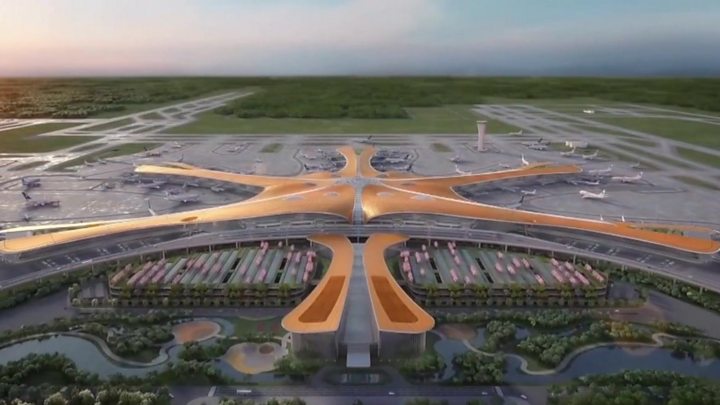
Image captionChina's new mega-airport is the size of 98 football fields
China's new $11bn (£8.8bn) mega airport has opened its doors, days before the country's 70th anniversary celebrations.
The Daxing International Airport in the capital Beijing was formally opened by President Xi Jinping on Wednesday.
Beijing's existing airport is the world's second busiest behind Atlanta, according to the Airport Council.
But officials say a new airport was needed to take the pressure off the overcrowded Beijing Capital International Airport.
Media captionWhat does the world's largest single-building airport terminal look like?
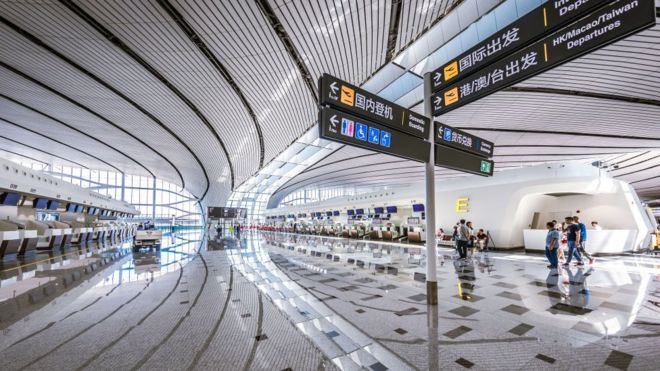
The Daxing airport - said to be the world's largest terminal in a single building - is expected to receive a large amount of the 170m passengers the city expects to welcome by 2025.
According to state agency the Global Times, seven domestic airlines were expected to begin operations out of the new airport on Wednesday. The first flight - a China Southern Airlines A380 - took off at 16:23 local time.
And international carriers including British Airways, Cathay Pacific and Finnair have already announced routes to Daxing.
The new airport, which is located around 46km (29 mi) south of Tiananmen Square, was designed by famed architect Zaha Hadid.

Source: www.bbc.com 

Wednesday, September 2, 2015

MSC Lirica To Homeport In Shanghai, China, Starting May 2016

caissa-logo


Beijing, PRC – September 2, 2015 - CAISSA Touristic Group, China's leading outbound tourism service provider, and Geneva, Switzerland-based MSC Cruises, the world’s largest privately-owned cruise line, announced today that they have entered into a strategic partnership. As part of the agreement, starting in May 2016, MSC Lirica will homeport in Shanghai to serve the Chinese home market.

The strategic cooperation agreement between the two companies will be the longest-running and financially most significant between a cruise line and a tour operator in the history of cruising in China.

In a statement, CAISSA Touristic’s President Chen Xiaobing emphasized the popularity of MSC Cruises’ European and South American routes with travelers from around the world and that it had recently been named number one cruise line in Europe. Xiaobing added: “MSC Cruises’ distinctive European flavor resonates well with Caissa Touristic’s brand spirit, as it also originates from Europe. This partnership stands out from other traditional agreements between China-based tour agencies and cruise lines by the emphasis that will be placed on the training of the entire on-board staff to ensure that guests receive MSC Cruises’ best-in-class experience and service as well as the degree of the adaptation of the ship’s hardware and software (like facilities renovation, service design and operation, on-board commodities and more) to fit the customs and tastes of the Chinese guests that it is designed to serve.”

“We are convinced that the newly-renovated MSC Lirica will bring exciting new vacation choices to Chinese guests and are looking forward to welcoming numerous would-be cruisers aboard, at a time when the cruise market in the country for this particular type of product is thriving,” concluded Xiaobing.

Gianni Onorato, MSC Cruises’ Chief Executive Officer, commented: “MSC Cruises has been present in China since 2010, successfully bringing Chinese guests to cruise on its ultra-modern fleet to its many global destinations and, especially, to Europe and the Mediterranean, where our distinctive product made us the number one cruise line across the entire Continent. We are now delighted and excited that through this partnership we are taking our presence in China to the next level. Thus, with CAISSA Touristic we will partner to bring our unique MSC Cruises’ experience directly to Chinese consumers.”

Onorato continued: “The soon-to-be completely renovated MSC Lirica, as part of MSC Cruises’ ground-breaking Renaissance program, will feature many distinctive traits – including some industry firsts in service –especially designed for the cruising enjoyment of Chinese consumers. This will make it a much sought-after choice for cruises in the region.” 

MSC Lirica is scheduled to reach her new homeport of Shanghai on May 1, 2016, after a 60-day grand voyage from Rio de Janeiro via Barcelona, Marseille, Genoa and Dubai. While maintaining its Mediterranean atmosphere and service, the 65,000 GRT, 2,600-passenger MSC Lirica will enjoy an industry-high percentage of native Mandarin speaking guest-facing crew and provide guests with all services in Mandarin. It will also offer popular as well as high-end Chinese cuisine as well as more traditional and popular entertainments.

More in-depth details about how MSC Lirica’s product and services are uniquely tailored to serve the needs of Chinese consumers – including several industry firsts – will be announced at a press conference to be convened in Beijing in the coming weeks.

About CAISSA Touristic:
CAISSA Touristic was founded in 1993 from Europe. After 20 years of steady development, it has become an outstanding business brand in China outbound tourism industry. It has set up branches in London, Paris, Hamburg, Los Angeles and other global core cities. In China, CAISSA Touristic has established decades subsidiaries including Beijing, Guangzhou, Shanghai and many core commercial cities. It has provided over 8,000 kinds of high-end tourism products which covering 100 countries worldwide, that could serve different needs and consumers.

About MSC Cruises:
MSC Cruises, part of the Mediterranean Shipping Company, is the market leader in the Mediterranean, South America and South Africa, and sails year-round in the Mediterranean and the Caribbean. Its seasonal itineraries cover northern Europe, the Atlantic Ocean, the French Antilles, South America, southern Africa, the Emirates and Oman.

MSC Cruises feels a deep responsibility for the environments in which it operates, and was the first company ever to earn the Bureau Veritas "7 Golden Pearls" for superior management and environmental stewardship.

In 2009, MSC Cruises began an enduring partnership with UNICEF to support various programs assisting children worldwide. So far, more than $3m has been collected in voluntary guest donations.

MSC Cruises was born in the Mediterranean, and draws inspiration from this heritage to create a unique experience for vacation goers worldwide. Its fleet comprises 12 modern ships: MSC Preziosa; MSC Divina; MSC Splendida; MSC Fantasia; MSC Magnifica; MSC Poesia; MSC Orchestra;MSC Musica; MSC Sinfonia; MSC Armonia; MSC Opera and MSC Lirica.

Friday, July 24, 2015

Revealed By Sofitel Comes To Beijing, Shanghai And Guangzhou

Revealed by Sofitel comes to Beijing, Shanghai and Guangzhou

Sofitel Luxury Hotels is launching the compelling photo exhibition “Revealed” to China for the first time - taking an intimate look at the world’s greatest modern artists at work as they reveal themselves to the photographer. Olivier Widmaier Picasso, grandson of Pablo Picasso and author of Picasso, Portrait Intime (Albin Michel/Arte éditions), has curated the exhibition, hand-selecting 30 photographs from the archives of Paris Match, the famous French weekly magazine.
This worldwide exhibition will be showcased at three Sofitel hotels in Beijing, Shanghai and Guangzhou in China from September onwards. The China exhibitions are part of a world tour that has already been to five cities in North America and five in Europe. Aside from China, “Revealed” will also take place this year in Bangkok, Auckland, Sydney and Melbourne.
Among the prized photographs to be displayed is a black-and-white image of Pablo Picasso eyeing a Dalmatian longing to climb upon his lap; Salvador Dalí seen sitting in an animal exhibit at the Paris Zoo; Jeff Koons styling a BMW for the 24 Hours of Le Mans; Pierre Soulages crouching over a work in progress; Kees Van Dongen painting a posing Brigitte Bardot; and other striking images depicting Rene Magritte, Marc Chagall, Fernando Botero, Joan Miro, Jean Cocteau, Francis Bacon, and more.
“As an international ambassador of French elegance, Sofitel links its collection of addresses with culture, and collaborates with celebrated artists, writers and photographers,” says Michel Molliet, Senior Vice President, Operations, Luxury and Upscale, AccorHotels Greater China.
““Revealed” offers a glimpse behind-the-scenes at the artistic process as inspiration comes to life through expression. It is my distinct pleasure to bring “Revealed” to China as this compelling exhibition takes an intimate look at the world’s greatest modern artists at work: from Picasso to Dali, Chagall to Jeff Koons, Miró to Matisse.”
To launch the “Revealed” exhibitions in China, Olivier Widmaier Picasso will be in Beijing to personally meet guests and open the exhibition on September 1st, 2015. “We are delighted to have been able to draw on the talent of Olivier Widmaier Picasso and to have him in Beijing in person to launch “Revealed”,” continues Michel Molliet. “We are also proud to uphold Sofitel’s pillar of culture, which together with gastronomy, design and well-being combines into the French art de vivre that flows through our 120 Sofitel addresses on five continents.”
“Revealed” by Sofitel will be on exhibit in the following hotels in China throughout the Autumn of 2015 at:
Sofitel Beijing Wanda – September 1, 2015 to September 20, 2015
Sofitel Shanghai Hyland – October 13, 2015 to November 2, 2015
Sofitel Guangzhou Sunrich – November 13, 2015 to December 3, 2015

Wednesday, June 24, 2015

Travelore News: Hong Kong's Pro-democracy Street Camps Come To A Quiet End

View gallery
Policemen look on as workers from the Lands Department remove encampments outside government headquarters …
HONG KONG (Reuters) - Hong Kong authorities began clearing away the last pro-democracy encampments near government headquarters on Wednesday, watched by a handful of demonstrators in a quiet but poignant end to nine months of street protests.
The so-called Occupy Central movement kicked off on Sept. 28, when tens of thousands of protesters streamed onto major highways in a push for full democracy, demonstrations that became the biggest political challenge to Beijing's Communist Party leaders for decades.
The protesters dug in over the ensuing weeks, with hundreds of tents and marquees filled with free provisions and medical supplies mushrooming in the financial hub, as well as protest art and outdoor classrooms.
Hong Kong police cleared away most of the sites in mid-December but a small cluster of tents and hardcore protesters were allowed to remain on pavements until Wednesday, marking 270 straight days of demonstrations at the same site.
Officials from the Lands Department, dressed in hard hats and green vests, read out a notice calling for a final clearance of the remaining site on a rainy morning.
Two protesters were taken away by police, including one who was identified by demonstrators as Wang Dengyao, a Chinese activist who survived the 1989 Tiananmen Square crackdown in Beijing.
There was little resistance from around 20 others who watched quietly as the site was cleared away, their sodden tents and possessions thrown into dump trucks.
"We didn't succeed, but we also didn't fail," said 71-year-old Simon Wong, whose black T-shirt bore the slogan: "I want real universal suffrage".
"I feel calm but I'll also be missing this," he said.
The protests failed to persuade China to allow a fully democratic vote for the city's next leader in 2017, instead of a list of pre-screened, pro-Beijing candidates.
The clearance came six days after Hong Kong's legislature vetoed a Beijing-backed electoral reform package that was criticized by pro-democracy lawmakers and activists as undemocratic.
The city's pro-Beijing lawmakers failed to vote for the package in a mysterious, last-minute walk-out of the legislature in what was a setback for China's Communist leaders.
Street tensions appear to have eased off, but radical protesters and "localists" demanding greater Hong Kong autonomy have vowed to keep fighting even as China shows signs of tightening its grip on the former British colony.
"The next step for us is to really move into the districts to try to re-awaken the moderate democrats ... and to never stop fighting for democracy," said Benny Mok, 51, who had camped at the site for more than 250 nights.
"Hong Kong deserves better," he said.
(Writing by James Pomfret; Editing by Paul Tait)
Contributed by Yimou Lee and Donny Kwok